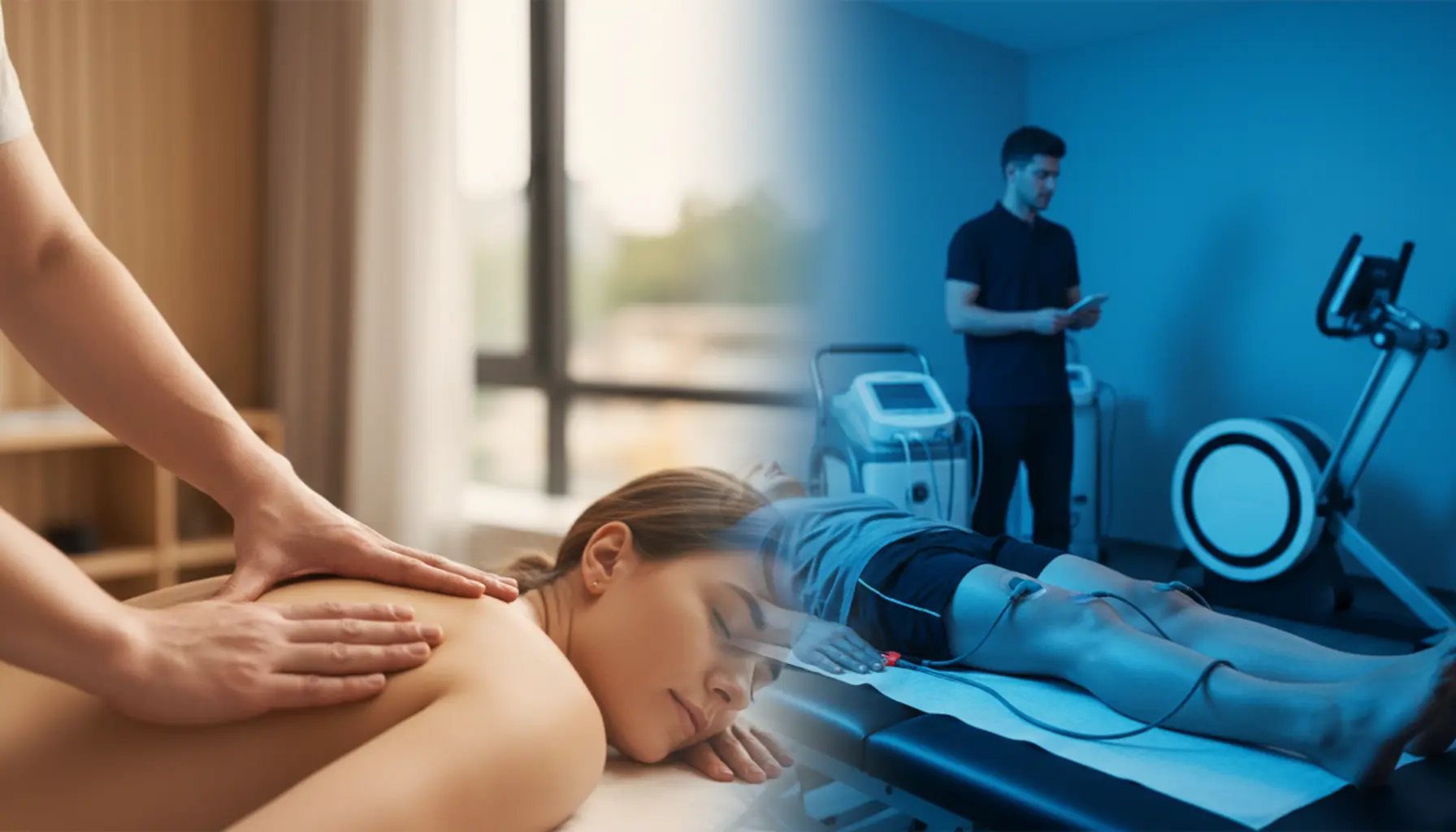
Physiotherapy and manual therapy are effective methods for alleviating chronic pain and helping to restore mobility. Manual therapy can be combined with physiotherapy to achieve better treatment outcomes and improve patients’ quality of life. The effectiveness of physiotherapy and manual therapy depends on an individual approach and the appropriate selection of techniques.
Table of Contents
- What is physiotherapy and manual therapy?
- Techniques Used in Manual Therapy
- Comparison of the Effectiveness of Physical Therapy and Manual Therapy
- Exercises vs. Manual Therapy: How to Choose the Right Method?
- How Does Manual Therapy Relieve Chronic Back Pain?
- Physical Therapy as Support for Manual Therapy
What is physiotherapy and manual therapy?
Physiotherapy is a branch of medicine that involves diagnosing, treating, and preventing movement disorders and pain conditions resulting from diseases, injuries, overloads, or degenerative changes. Its aim is not just to “stimulate” the painful body part, but to restore full functional capacity, improve quality of life, and prevent recurrence of the problem. Before proposing specific treatments, a physiotherapist conducts a detailed interview, analyzes imaging results (X-ray, MRI, ultrasound), performs functional tests, and assesses the patient’s movement patterns. Based on this, they select an individual therapy program, which may include therapeutic exercises (kinesiotherapy), physical therapy treatments (e.g. laser, ultrasound, electrotherapy, cryotherapy), stretching and strengthening techniques, postural education, and ergonomics training for daily life. A very important part of modern physiotherapy is also central stabilization training, motor control work, and gradually increasing loads so that the body adapts to exertion without intensifying pain. In the context of chronic pain, physiotherapy is based on current knowledge of pain neurophysiology – it takes into account phenomena such as central sensitization (hypersensitivity of the nervous system), the roles of stress, sleep, physical activity, and mental attitude. For this reason, elements of so-called pain neuroscience education are increasingly seen in physiotherapy clinics, aimed at helping patients better understand the mechanisms of chronic pain and change harmful beliefs (e.g. that “pain always means damage” or “when in pain, one should rest”). Physiotherapy is thus a broad umbrella covering many methods, one of which – but a very important one – is manual therapy. The two forms of therapy are often confused or regarded as synonymous, but in reality, manual therapy is a specialized part of physiotherapy focused mainly on examining and treating movement tissues with the therapist’s hands. In practice, chronic pain treatment plans rarely involve just exercises or just manual work – most often it’s a combination of techniques tailored to the current state, limitations, activity level, and therapeutic goals of the patient.
Manual therapy is a specialized treatment method within physiotherapy, focusing on diagnosing and treating the musculoskeletal system using precise techniques performed by the therapist’s hands. Unlike general “massage”, its main goal is not just to relax muscles or provide short-term relief but to restore normal joint mobility, soft tissue flexibility, improve nerve gliding, and optimize movement patterns. Manual therapists use a wide range of techniques: joint mobilizations and manipulations (gentle, controlled movements in a specific direction and range to reduce stiffness and improve mobility), soft tissue techniques (trigger point pressure, myofascial release, functional stretching), peripheral nerve mobilizations (so-called neuromobilizations), as well as visceral and craniosacral techniques in approaches that consider the influence of internal organs or the meninges on pain symptoms. Many schools of manual therapy (e.g. McKenzie Method, Maitland, Kaltenborn-Evjenth, soft tissue therapy, osteopathic manual approaches) place special emphasis on detailed clinical examination: assessing pelvic, spinal, and peripheral joint alignment, provocation pain tests, and tissue responses to touch. This makes it easier to determine whether the main source of discomfort is joints, muscles, ligaments, fascia, or an irritated nervous system. In treating chronic pain, manual therapy has several key tasks: reducing tissue tension and sensitivity, improving circulation in the affected area, modulating pain through sensory receptors in the skin, muscles, and joints, and “unlocking” movement where its restriction sustains pathological loading patterns. However, manual therapy alone, without appropriately selected movement and habit changes, mainly provides short-term relief – that’s why experienced therapists always combine manual work with exercise, education, and lifestyle modification. In practice, physiotherapy is a wide therapeutic process whose pillars are functional diagnostics, therapeutic movement, prevention, and education, while manual therapy is one of the most important tools allowing the therapist to “unlock” the tissues and prepare them for active rehabilitation. Understanding this difference helps patients realistically assess what to expect from each method – physiotherapy provides structure for comprehensive care, while manual therapy is often a key but still just one element of an effective chronic pain management strategy.
Techniques Used in Manual Therapy
Manual therapy encompasses a wide range of techniques differing in intensity, purpose, and how they affect tissues. Choice of a specific method depends on the functional diagnosis, type of pain (e.g., mechanical, neuropathic, mixed), its duration, and the overall condition of the patient. One of the basic groups of techniques are joint mobilizations – repetitive, controlled movements performed in the joint with small or moderate amplitude. Their goal is to increase the range of motion, reduce stiffness, improve cartilage nutrition, and modulate pain by affecting receptors in the joint capsule. More advanced cases use manipulation techniques, commonly associated with the characteristic “pop” in the spine – these are quick, short movements at the end range aimed at releasing a blocked joint segment. Contrary to common opinion, this is not about “repositioning vertebrae”, but restoring normal joint play and reducing excessive muscle tension in surrounding tissues. For patients with chronic low back pain, these techniques are often combined with gentler mobilizations to avoid overloading sensitive structures and to gradually accustom the nervous system to new movement stimuli. Another important group of methods are soft tissue techniques, including deep transverse massage, myofascial release, and trigger point work. Deep transverse massage is performed perpendicular to the fibers of muscles or ligaments and aims to break down adhesions, reduce local tension, and improve blood flow. Myofascial release focuses on working with connective tissue surrounding the muscles and organs; through slow, precise movements, the therapist seeks to restore sliding between tissue layers, which can significantly reduce the sensation of pain and improve proprioception and coordination. Trigger point therapy involves finding and deactivating small, very painful nodules in the muscle that can cause referred pain to distant body areas (e.g., a tense gluteal muscle may trigger “sciatica” symptoms in the leg). In chronic pain, recurring muscle and fascial overloads lead to persistence of such points, so their systematic therapy has both symptomatic and causal significance. In clinical practice, physiotherapists often combine joint mobilizations with soft tissue techniques in a single session, utilizing the synergy effect – improved joint mobility facilitates muscle relaxation, and reduced muscle tension enables more effective (and less painful) joint mobilization.
An important element of manual therapy is also neuromuscular and neurodynamic techniques, which work particularly well in treating radiating pain, tingling, or limb numbness. Muscle Energy Techniques (MET) use gentle, isometric contractions performed by the patient under the therapist’s guidance. After a short tension phase comes relaxation, during which muscle length or segment alignment can be painlessly improved. MET is used for muscle contractures, pelvic misalignments, or neck mobility limitations – with patient cooperation, the technique is safe and well tolerated, even by older adults or those more sensitive to pain. Neurodynamic techniques, also called neuromobilization, focus on improving gliding and flexibility of nerve structures in their anatomical channels. Gentle movements in specific joint combinations aim to reduce “nerve entrapment”, improve its blood supply/nutrition, and lower pain sensitivity. This is especially useful for those with carpal tunnel syndrome, sciatica, or cervico-brachial pain radiating to the arm. Increasingly, manual therapy also utilizes pain neurophysiology-based concepts such as “graded exposure” or progressively loading tissues in a controlled manner. By manipulating the intensity, direction, and pace of movement, the therapist can “teach” the nervous system that a given movement is safe, eventually reducing the hyperactivity of pain receptors. Complementing traditional methods are very gentle techniques like positional release or fascia techniques based on holding the tissue in a comfort position until spontaneous relaxation occurs. Though they may seem subtle, for many chronic pain patients prone to central nervous system hypersensitivity, they have a calming effect and help lower overall tension. Modern manual therapy rarely involves just using a single favorite technique; rather, it is a thoughtful combination of methods matched to current tissue reactivity, pain threshold, activity level, and functional goals. This individualization and flexibility – from strong manipulations to delicate neuromobilizations – make manual therapy potentially effective for a broad spectrum of chronic pain conditions, from low back pain to neck and headache pain, and peripheral joint issues including shoulder, hip, or knee.
Comparison of the Effectiveness of Physical Therapy and Manual Therapy
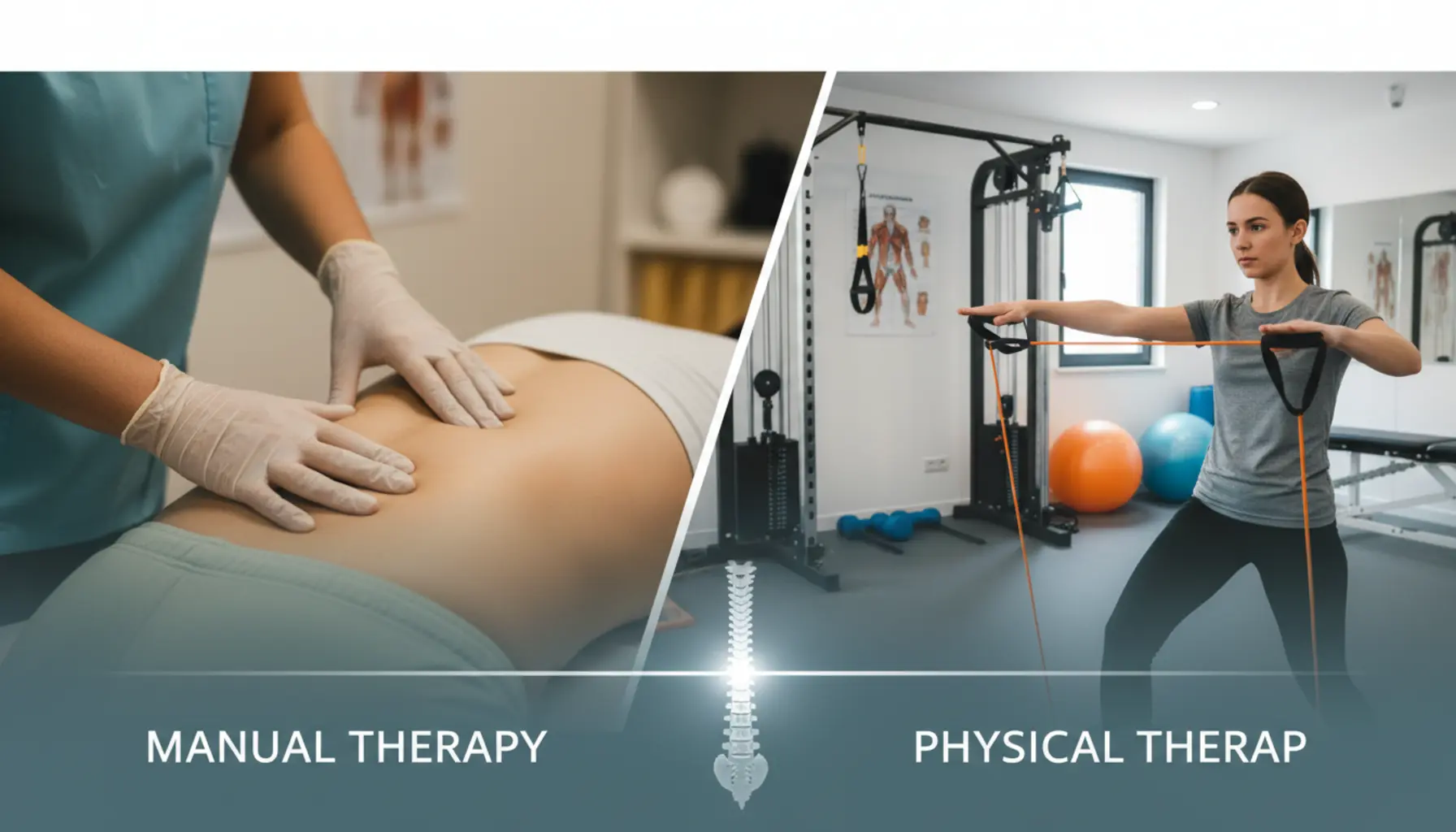
Assessing the effectiveness of physical therapy and manual therapy for chronic pain requires understanding how different these approaches are, despite often being part of the same rehabilitation plan. Physical therapy (i.e. physical modalities such as electric currents, ultrasound, laser, cryotherapy, thermotherapy, magnetotherapy, etc.) acts mainly by modulating symptoms – reducing inflammation, lowering muscle tension, improving microcirculation, and temporarily raising the pain threshold by influencing the nervous system. Manual therapy, meanwhile, focuses more on mechanical causes: joint mobility restrictions, soft tissue dysfunction, motor control disorders, and compensations in myofascial chains. Many studies on chronic low back pain have shown that physical treatments alone often provide short-term improvement (from a few days to a few weeks), but little functional change if not combined with active therapy (exercise, education, manual therapy). On the other hand, manual therapy – especially when integrated with individually selected exercise programs – shows better medium- and long-term effects regarding pain reduction, improved mobility, and daily functional ability. This applies not just to low back pain, but also chronic neck pain, peripheral joint issues (e.g. shoulder, knee), or overload syndromes of muscles and tendons. It’s important to emphasize that physical therapy is not “worse” by definition – its effectiveness is simply different, and it works best as support, for example during acute pain episodes, when patients are not yet able to exercise intensively or undergo more robust manual techniques. In such cases, gentle pain-relief and anti-inflammatory modality treatments can create a “therapeutic window” in which it’s easier to introduce movement and gradual activation, thus increasing the later effectiveness of manual therapy and kinesiotherapy. From a durability perspective, manual therapy has an advantage, as it affects movement patterns and tissue structure, rather than just pain symptoms. For example, spinal or peripheral joint mobilizations can alter the way a joint bears and transfers load and moves in the kinematic chain, and when combined with education and corrective exercise, reduce the risk of recurrence. Physical modalities cannot affect movement mechanics or muscle coordination in the same way, so their long-term impact is limited unless they are just part of a more comprehensive therapeutic program. Conversely, manual therapy places more demand on the patient’s activity and engagement for effects to be sustained – without working on new movement patterns through exercise and habit change (such as work ergonomics, sitting habits, lifting techniques), even the best manual techniques may provide only temporary relief.
Comparing the effectiveness of both methods in specific diagnoses, many clinical guidelines and literature reviews suggest that manual therapy combined with exercise outperforms physical therapy alone in chronic neck and low back pain, as well as certain peripheral joint conditions such as frozen shoulder or chronic knee pain due to overload. Studies often show that adding physical modalities to a standard exercise program does not produce better results than exercise plus education and manual therapy, whereas combining manual techniques with active rehabilitation results in greater pain reduction, functional improvement, and patient satisfaction. However, individual pain tolerance and the stage of illness must be considered: in some cases, with marked pain hypersensitivity or coexisting systemic illnesses, intensive manual techniques may initially be inadvisable, and physical therapy – especially gentle warmth, cold, or electrotherapy – is a safer first step. The methods also differ in their effect on the nervous system: both modulate pain perception, but manual therapy, through precise stimulation of receptors in joints, muscles, and fascia, can more efficiently “reprogram” brain interpretation of pain signals and movement control. Physical therapy acts more globally and passively – the patient is the recipient of the stimulus, not an active participant, which decreases the likelihood of correcting poor movement habits. In the long term, active acquisition of new movement patterns and a conscious approach to loading are crucial to breaking the cycle of chronic pain. From the cost and therapy time perspective, physical therapy is usually more accessible and cheaper in the short run, but the need to repeat treatment courses without introducing functional change may make it less cost-effective overall. Manual therapy, especially when conducted by experienced practitioners, may require fewer visits, but each is usually more intensive, requiring precise functional diagnosis and patient cooperation. In practice, the greatest effectiveness in chronic pain management is achieved not by using one method in isolation, but by their strategic combination: physical therapy for initial symptom relief and comfort, manual therapy for correcting mechanical dysfunction, followed by exercises, education, and lifestyle modification to consolidate effects and reduce recurrence risk.
Exercises vs. Manual Therapy: How to Choose the Right Method?
The choice between exercises and manual therapy for chronic pain is rarely an “either–or” decision. Both methods address different elements of the same problem: manual therapy primarily modifies tissue tension, joint mobility, and the way the nervous system “reads” pain, while exercises strengthen muscles, improve coordination, stability, and endurance, helping to maintain the benefits of manual therapy. For chronic back or peripheral joint pain, manual therapy often brings quicker relief as it directly addresses “blocked” structures – e.g., a restricted spinal segment, overloaded ligaments, or excessively tense myofascial bands. Properly chosen mobilizations, low-force manipulations, soft tissue, or neuromuscular techniques can decrease pain receptor excitability and restore a more balanced function of the involved movement segment. However, if the patient returns to previous movement habits (e.g. slouching in a chair, lifting with a rounded back, neglecting to strengthen weak muscles), the body rapidly reverts to its prior state: structures overload again, and pain returns. That’s where exercises come in – tailored to the specific problem, for example lumbar stabilization, scapular control, balancing the work of hip flexors and extensors, or increasing iliotibial band flexibility. Their purpose is not just “strengthening”, but especially movement re-education: learning new, more economical and less painful patterns, gradually replacing old, maladaptive ones. From the perspective of modern physiotherapy, the most effective approach for chronic pain is a “hands-on + hands-off” model, where manual techniques relieve symptoms and prepare tissues, and the exercise plan – carried out under therapist supervision and independently at home – consolidates change, increases tissue load tolerance, and reduces kinesiophobia (fear of movement), which is often seen alongside chronic issues.
In practice, the appropriate proportion between manual therapy and exercise depends on several key factors: type of pain (mechanical, neuropathic, mixed), its duration, age, general fitness, comorbidities, and the patient’s expectations and willingness to engage in the process. Those with severe, acute pain and greatly limited movement with high muscle tension often initially need more “passive” work – gentle manual techniques to reduce symptoms and enable any movement at all. For younger, active patients with chronic overload pain (e.g. neck pain from computer work or knee pain in runners), corrective, stabilizing, and strengthening exercises may be the priority from the outset, with manual therapy supplementing: freeing up overly tense structures, improving quality of movement, and making training more comfortable. The situation is different for seniors or those with multiple conditions – here, exercises must be selected with particular care with regard to cardiovascular and joint safety, and manual procedures should be gentle, avoiding aggressive manipulations. In all these situations, after a thorough interview and functional assessment, the physiotherapist should explain clearly the goal of manual therapy (e.g., “unlocking” rotational movement, reducing excessive paraspinal muscle tension, improving nerve gliding) as well as the aims of specific exercises (e.g. pelvic stabilization, strengthening the gluteus medius, lengthening tight hip flexors). This helps the patient understand that a single “click” in the spine does not replace consistent movement work, nor does a set of online exercises substitute for individually chosen manual techniques in complex dysfunctions. The final choice should therefore not be based on popular opinions (“massage fixes everything,” “only the gym helps back pain”), but on accurate diagnosis and joint planning of the strategy: for some, optimal is a short, intensive period of manual work and a swift transition to their own exercise program, for others – a longer combination of gentle manual techniques, gradual introduction of movement, and education about ergonomics, load management, and self-monitoring of pain symptoms.
How Does Manual Therapy Relieve Chronic Back Pain?
Chronic back pain rarely has a single, simple cause – it is usually the result of multiple factors: overload, maladaptive movement patterns, weakened stabilizing muscles, and changes in the nervous system, which starts to “overreact” to pain stimuli. Manual therapy works on several levels: mechanical, neuromuscular, and neurophysiological. Mechanically, the therapist works to restore normal movement of the spine and adjacent joints – the pelvis, sacroiliac joints, facet joints, or ribs. Through precise mobilizations and manipulations, joint stiffness can be reduced, joint congruity and load distribution improved, and localized irritation of structures like joint capsules or ligaments reduced. In chronic cases, several spinal segments may be “blocked” while others become overloaded as compensation – manual therapy aims to correct this imbalance. At the same time, soft tissue techniques like myofascial release, trigger point therapy, deep transverse massage, or instrument-assisted therapies relieve excessive tension in the paraspinal, gluteal, and pelvic girdle muscles, which in many people with back pain remain in a state of chronic, protective spasm. Their relaxation not only reduces pain but also restores freer movement, which is essential for the patient to then safely perform stabilizing and strengthening exercises. Fascia – the connective tissue surrounding muscles and organs – also becomes less elastic after prolonged overload, restricting movement and reinforcing pain. Fascial techniques improve tissue sliding, blood flow, and tissue fluid drainage, supporting regeneration processes.
At the nervous system level, manual therapy uses pain modulation – meaning that appropriately chosen mechanical stimuli can “reprogram” how the brain receives signals from the painful area. Gentle mobilizations, tractions, or neurodynamic techniques affect proprioceptors in muscles, tendons, and joints that send position and movement information to the central nervous system, effectively “competing” with pain signals and lowering the hypersensitivity of the spinal cord and brain pain centers. In chronic back pain, central sensitization often occurs – the nervous system responds with pain to stimuli that normally would not be painful, such as slight bending or twisting. Regular, well-dosed manual techniques gradually lower this hypersensitivity, so the patient experiences less pain during the same activities. Additionally, neurodynamic manual therapy techniques – such as mobilizing the sciatic, femoral, or intercostal nerves – improve nerve gliding during movement, decrease local congestion and irritation, which is important with radiating leg pain (sciatica) or gluteal pain. The educational aspect that accompanies modern manual therapy is also crucial: the therapist explains where the pain comes from, which movements are safe at a given stage, and teaches more economical movement patterns in daily activities such as lifting, prolonged sitting, or household chores. Manual work, combined with posture correction and breathing retraining (e.g., activating the diaphragm and deep abdominal muscles), helps normalize tension in the chest and lumbar region, easing the load on spinal structures. As a result, manual therapy not only “calms” pain in the short term but also creates the conditions for long-lasting change by enabling movement, reducing fear of pain, and preparing the body for safely including stabilization and general physical activities necessary for sustained pain relief.
Physical Therapy as Support for Manual Therapy
Physical therapy, understood as the application of physical stimuli such as electricity, heat, cold, ultrasound, or laser light, plays an important supportive role to manual therapy in treating chronic pain. From the perspective of modern rehabilitation, it should not be seen as a standalone, “magical” pain removal method, but rather as a tool to offload tissues, prepare them for manual work and exercise, and relieve discomfort during exacerbation periods. The therapist’s task is to properly select the type of procedure, its parameters, and the timing in the treatment plan. For example, applying local heat before manual therapy can increase tissue elasticity, making joint mobilizations and muscle work easier, while cryotherapy after the session can help limit reactive inflammation and pain. Electrotherapy, including TENS, medium frequency currents, or interferential currents, can modulate pain perception via effects on nerve conduction, which in practice reduces muscle tension and fear of movement. For chronic low back pain sufferers who have avoided activity for months, the combination of TENS and gentle manual techniques often breaks the “pain–tension–inactivity” cycle. In this way, physical therapy not only reduces symptoms but also psychological barriers to entering active rehabilitation. It is worth emphasizing that the effectiveness of physical modalities depends on their integration into the overall therapeutic plan; a series of treatments, disconnected from manual therapy and exercise, usually provides only short-term effects. When appropriately integrated into the process, physical therapy may prolong remission periods, allow for more intensive manual work with less discomfort, and improve exercise tolerance. In clinical practice, a stepwise approach is often used: during acute exacerbations, pain-relieving modalities dominate (TENS, cryotherapy, low-power laser), gradually supplemented with gentle manual therapy and unloaded exercises; as symptoms improve, physical therapy assumes a more “supportive” role, and the focus shifts to manual work, stabilization training, and movement retraining. Such therapy allows the nervous system to adapt gradually to new loads, enabling tissues to rebuild their endurance without excessive risk of flare-ups.
Integrating physical therapy with manual therapy also requires considering the specific features of chronic pain, which is often complex – it involves overload, inflammatory, neuropathic, and central sensitization components. Individual forms of physiotherapy may thus be used with precision. Low-level ultrasound and laser therapy are applied mainly to support tissue regeneration, reduce low-level inflammation, and improve microcirculation – important, for example, with enthesopathies, chronic muscle or tendon overload. Combined with soft tissue manual therapy, myofascial release, and graded eccentric exercise, these procedures can promote quicker remission and improved tissue endurance. Magnetotherapy or shortwave diathermy are often used for patients with low movement tolerance, such as those with chronic degenerative joint changes or elderly patients, for whom intensive manual therapy is more difficult; here, the goal is mainly background pain relief to enable at least basic exercise and gentle manual work. For safety, it is crucial for physiotherapists to know contraindications (e.g. pregnancy, cancer, pacemakers, recent thrombosis, sensory deficits) and to modify therapy plans accordingly – both regarding manual therapy intensity and the dose of physical stimuli. Patient education is also key: explaining that physical modalities do not “structurally repair” the spine or joint, but create favorable conditions for movement, activity, and habit change. This communication prevents excessive reliance on passive methods and maintains the belief that active involvement – regular exercise, load modification, ergonomics – is decisive for lasting pain reduction. When properly positioned in the process, physical therapy can simultaneously fulfill pain-relief, tissue-preparation, tissue-healing, and psychologically “lightening” roles, supporting patients’ trust in movement and their own bodies. Alongside consistent manual therapy and an exercise program, this creates a coherent, multi-level chronic pain treatment model, where each tool has a clearly defined role, and the overarching goal is a gradual return to function and independence – not just short-term “silencing” of symptoms.
Summary
Physiotherapy and manual therapy are key methods in the treatment of chronic pain. Manual therapy offers mobilization and manipulation techniques that help restore joint and muscle mobility, while physical therapy acts as a complement, using supportive procedures. The choice of the appropriate method depends on the individual patient’s needs and the type of pain being treated. Both therapies can be used concurrently or as standalone treatment programs, tailored to patient specifics, giving a chance for effective relief of chronic back pain and restoration of quality of life.