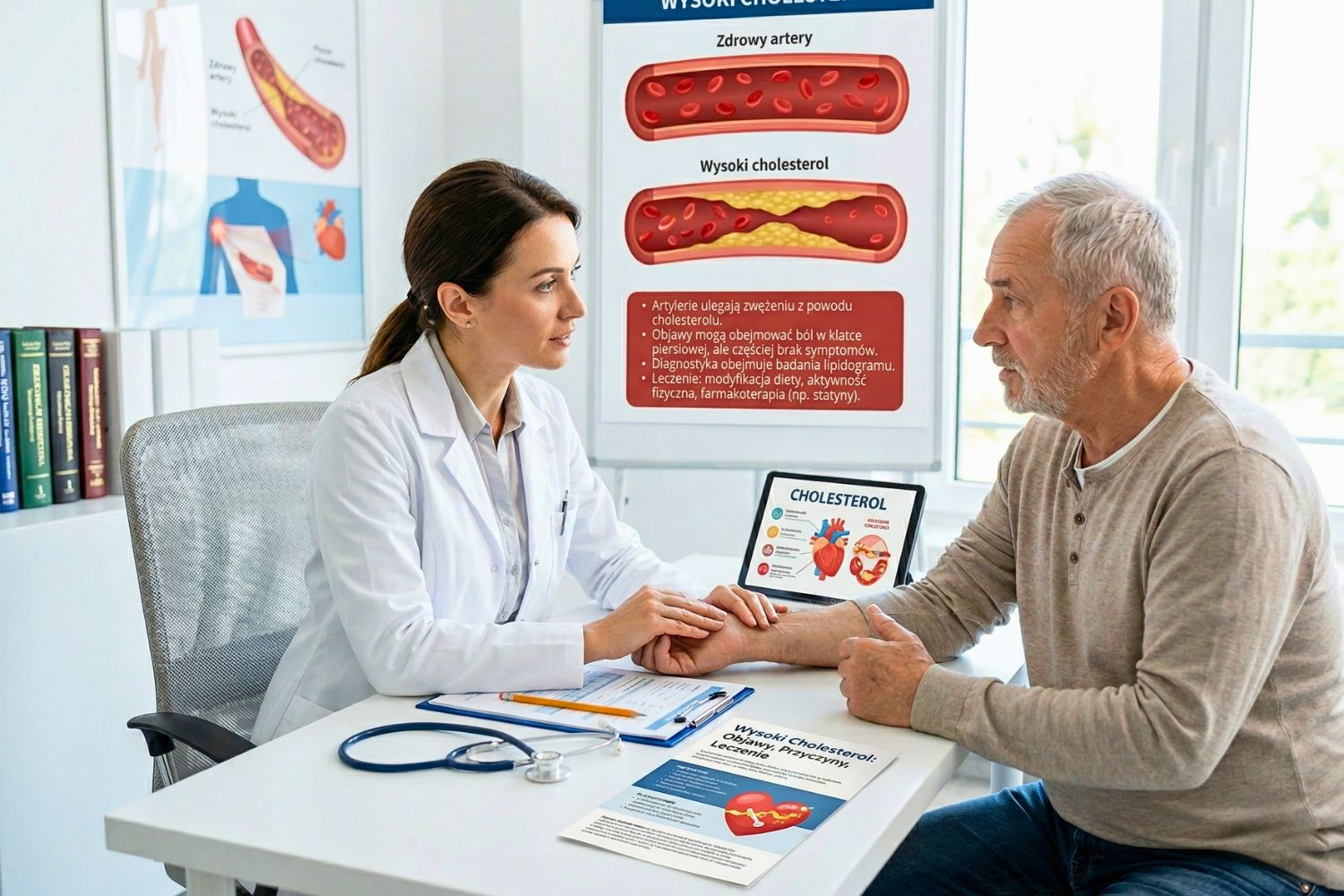
Learn what high cholesterol is, its causes and symptoms, and how to effectively lower your cholesterol through diet and treatment.
Table of Contents
- What is high cholesterol? Definition and basic information
- Most common causes of increased cholesterol
- Symptoms of high cholesterol – what should you look out for?
- Diagnosis: how to check cholesterol levels?
- Effective treatment methods and prevention of high cholesterol
- Diet and lifestyle – how to naturally lower cholesterol
What is high cholesterol? Definition and basic information
Cholesterol is an organic chemical compound belonging to the lipid group, present in all cells of the human body. It is essential for proper body function – it is involved in building cell membranes, producing steroid hormones (such as cortisol, estrogens, or testosterone), bile acids, and vitamin D. Most cholesterol is synthesized by the liver, but some is also supplied by food, mainly of animal origin. In the body, cholesterol is transported in the blood as lipoproteins – mainly LDL (low-density lipoproteins) and HDL (high-density lipoproteins). The proportion between these fractions, rather than cholesterol itself, plays a key role in our health. High cholesterol, also called hypercholesterolemia, is a condition in which the amount of total cholesterol or one of its harmful fractions (most often LDL, the so-called “bad” cholesterol) exceeds recommended standards set by cardiology societies. These standards may slightly differ depending on guidelines and patient health status, but according to European guidelines, a safe level for total cholesterol is below 190 mg/dl, while LDL levels should not be higher than 115 mg/dl in healthy individuals and even lower in people at increased cardiovascular risk.
High cholesterol itself is not a disease, but a risk factor that can lead to serious health consequences. Hypercholesterolemia often develops asymptomatically for years, which is why it is called the “silent killer.” Excess LDL cholesterol builds up in the blood vessel walls, leading to the formation of atherosclerotic plaques. This is the main cause of atherosclerosis, which in turn increases the risk of heart attack, stroke, and other cardiovascular complications. HDL cholesterol, commonly known as “good” cholesterol, acts protectively – it helps remove excess cholesterol from the vessels and transport it back to the liver, where it is processed and eliminated from the body. The proper balance between both lipid fractions is crucial for maintaining a healthy circulatory system. It is worth noting that cholesterol levels are influenced by both unchangeable factors, such as age, gender, and genetic predispositions, and lifestyle factors: an improper diet rich in saturated and trans fats, lack of physical activity, overweight, smoking, or excessive alcohol consumption. The diagnosis of hypercholesterolemia is based on laboratory blood tests, which determine the concentrations of total cholesterol, LDL, HDL, and triglycerides. Early detection and the implementation of appropriate measures allow for effective control of cholesterol levels and the prevention of serious disease development.
Most common causes of increased cholesterol
Elevated cholesterol levels are usually the result of many overlapping factors, with genetic predispositions and lifestyle elements both playing crucial roles. The most important cause of hypercholesterolemia is an unhealthy diet – excessive consumption of products rich in saturated fats and trans fats, which are mainly found in highly processed foods, fast foods, fatty meats, cold cuts, sweets, and full-fat dairy products. Such a diet not only increases the level of “bad” LDL cholesterol in the blood but often also lowers the beneficial HDL cholesterol. In addition to diet, lack of physical activity is important – a sedentary lifestyle promotes overweight and obesity, further worsening the lipid profile and leading to accumulation of LDL in vessel walls. Smoking is another significant factor. Chemicals in cigarette smoke damage the blood vessels, making it easier for plaques to form and lowering HDL levels. Excessive alcohol consumption, especially high-proof drinks, also negatively impacts cholesterol levels by disturbing liver function and fat metabolism in the body.
Another very important risk factor is genetics – some people inherit the tendency for high cholesterol levels even if they maintain a healthy lifestyle. An example is familial hypercholesterolemia, in which cholesterol metabolism disorders lead to its accumulation from an early age. Additionally, increased cholesterol can be caused by other diseases, such as hypothyroidism, nephrotic syndrome, some liver diseases, or chronic kidney failure, which disrupt lipid balance. It’s also important to remember that chronic stress and related hormonal imbalances (overproduction of cortisol) may negatively affect cholesterol levels. Age also matters – as metabolism slows with age, the risk of lipid disorders increases, especially after menopause in women. Furthermore, some medications, such as corticosteroids, certain antihypertensive drugs, immunosuppressants or antipsychotics, can cause cholesterol to rise as a side effect. In summary, raised cholesterol is often the result of a combination of multiple, interrelated factors; therefore, a holistic approach is essential for both prevention and treatment of this condition.
Symptoms of high cholesterol – what should you look out for?

High cholesterol is a silent killer that often does not present any noticeable symptoms for a long time. Very often, people with elevated cholesterol live unaware until they experience serious health complications, such as a heart attack or stroke. The body initially adapts to growing changes, so the first symptoms are usually subtle, non-specific, or easy to confuse with signs of other conditions. Typically, there is no pain, fever, or other symptoms that would force someone to see a doctor right away. The most common warning sign, though not always present, can be so-called xanthomas – yellowish bumps or patches on the eyelids, elbows, knees, or tendons, resulting from fat accumulation under the skin. Also, arcus senilis may occur – whitish or grayish coloring around the cornea, particularly in younger people, which should prompt a cholesterol test.
High cholesterol gradually damages blood vessels, often manifesting only in advanced stages of disease. The build-up of atherosclerotic plaques in the arteries causes narrowing and reduced blood flow to various organs. Some people experience symptoms due to insufficient blood supply to the lower limbs, such as calf pain while walking (intermittent claudication), tingling sensations, or weakness in the legs. In men, increased cholesterol levels may contribute to erectile dysfunction related to poor circulation. The effects of long-term high cholesterol may also be seen as chronic fatigue, decreased physical capability, and memory deterioration. Unfortunately, the first noticeable symptom is often a sudden cardiovascular event – heart attack or stroke, especially in those who have not had regular check-ups. For this reason, doctors emphasize that the most reliable way to detect high cholesterol is a lipid panel – examining total cholesterol, LDL, HDL, and triglycerides in the blood. Regular testing is especially recommended for people over 40, smokers, people with obesity, high blood pressure, diabetes, or a family history of these conditions. Early preventive action is possible only with testing, as the irreversible effects of elevated cholesterol are very difficult to detect from symptoms alone.
Diagnosis: how to check cholesterol levels?
Diagnosis of high cholesterol is based primarily on a laboratory blood test that can accurately determine lipid levels in the body. The most important tool is the lipid panel – a comprehensive test measuring total cholesterol, LDL (“bad” cholesterol), HDL (“good” cholesterol), and triglycerides. Blood is usually drawn in the morning, fasting, after at least 12 hours without food or drinks other than water. Proper preparation increases test reliability, so it is advised to avoid intense physical exercise, fatty foods, and alcohol the day before testing. The lipid panel result allows the doctor to assess not only total cholesterol, but also the ratio of individual fractions, which is crucial in evaluating individual cardiovascular risk. Reference standards are important here; for total cholesterol it is up to 190 mg/dl, and LDL should not exceed 115 mg/dl in healthy adults; target values may differ for people with heart disease risk factors, hypertension, or diabetes.
Cholesterol testing should be performed regularly, especially after age 40, and in people with additional risk factors (such as obesity, high blood pressure, smoking, diabetes, or a family history of heart disease). Those who have not yet had problems should take their first preventive test at least once every 5 years if the result is normal. For people with abnormal results, cardiovascular risk, or cardiac treatment, diagnostics and monitoring may be needed even several times a year. Diagnosis also includes a detailed interview by the doctor to assess risk factors, family history, and comorbid conditions affecting the lipid profile. In some cases – especially if a genetic disorder such as familial hypercholesterolemia is suspected – the doctor may order extra tests, such as liver enzyme activity, hormone tests, or genetic tests. An abnormal cholesterol level found during routine testing is a signal to implement the necessary measures: lifestyle and dietary changes, and if needed, pharmacological treatment under specialist supervision.
Effective treatment methods and prevention of high cholesterol
Effective treatment of high cholesterol and preventive actions primarily involve comprehensive lifestyle changes, accompanied by pharmacotherapy in cases of high cardiovascular risk or familial hypercholesterolemia. The most important aspect in fighting high cholesterol is an appropriate diet rich in whole grains, vegetables, and fruits – providing plenty of dietary fiber, which reduces LDL cholesterol. It is recommended to limit saturated fats (found mainly in fatty meats, butter, full-fat dairy) and eliminate trans fats from fast food and confectionery. Unsaturated fats from marine fish, olive oil, nuts, or seeds are highly beneficial as they raise HDL, helping restore a healthy lipid balance. It is also important to reduce intake of salt, simple sugars, and alcohol, which contribute to atherosclerosis and hypertension. Weight control is vital – even moderate weight loss in overweight people positively impacts cholesterol reduction. Regular physical activity is key – moderate exercise, such as brisk walking, cycling, or swimming for at least 150 minutes weekly, improves HDL and lowers triglycerides, enhancing cardiovascular condition.
If lifestyle modifications do not bring desired outcomes, a doctor may recommend pharmacological treatment. The most commonly used drugs are statins, which inhibit cholesterol production in the liver, thereby lowering LDL and preventing atherosclerosis complications. Some patients may also use other medications such as ezetimibe, which blocks the absorption of cholesterol in the gastrointestinal tract; bile acid sequestrants, or newer PCSK9 inhibitors, especially for very high cardiovascular risk or statin intolerance. Treatment is tailored individually, considering cholesterol levels, risk factors, and comorbid conditions, and the whole process is monitored by a doctor with regular lipid panels. At the same time, effective hypercholesterolemia prevention requires continuous engagement in healthy habits – it is essential to avoid smoking and chronic stress, which promote atherosclerotic changes and adversely affect lipid metabolism. Health education and regular medical consultations play a special role, allowing for early detection of abnormalities, proper intervention, and maintaining motivation for compliance. Early introduction of comprehensive preventive and therapeutic actions significantly lowers the risk of serious complications from high cholesterol, allowing you to maintain cardiovascular health for many years.
Diet and lifestyle – how to naturally lower cholesterol
Naturally lowering cholesterol is mainly the result of conscious changes in eating habits and regular physical activity. The cornerstone of an anti-cholesterol diet is limiting saturated fat intake, primarily found in red meat, fatty cold cuts, butter, lard, cream, and full-fat cheeses. Instead, choose healthy unsaturated fat sources such as olive oil, rapeseed oil, avocados, nuts, or fatty marine fish rich in omega-3 acids, which help lower triglycerides and improve the lipid profile. Another important aspect is eating plenty of vegetables and fruits every day – they are not only low in calories but also rich in dietary fiber, which efficiently binds cholesterol in the digestive tract, limiting its absorption. A cholesterol-lowering diet should also feature whole grain products (oat flakes, whole wheat bread, brown rice, buckwheat), legumes such as lentils and chickpeas, and seeds. On the other hand, ready-processed foods such as fast foods, cookies, chips, and confectioneries containing trans fats should be eliminated, as they raise LDL and at the same time lower HDL. Functional food may also help, such as products enriched with plant sterols, which compete with cholesterol for absorption and lower its level in the blood.
Lifestyle is equally important in maintaining a proper lipid profile. Regular physical activity is critical, at least 30 minutes at least five times a week – brisk walking, cycling, swimming, or dancing, not only support fat burning but also increase “good” HDL cholesterol and reduce LDL levels. Limiting alcohol intake is another crucial aspect, since excessive drinking disturbs fat and liver metabolism. Quitting smoking has a significant effect – toxins from burnt tobacco damage blood vessels, speed up plaque formation, and lower beneficial HDL. Proper stress management and adequate sleep are not insignificant either, since chronic tension and sleep deficit can disrupt hormonal balance, adversely impacting cholesterol levels. Changes in lifestyle, such as maintaining a healthy weight and gradually introducing healthy habits, are not only effective ways to naturally lower cholesterol but also support overall condition and protect against other civilization diseases. Regular control of test results and medical consultations allow you to monitor the effects and adjust the strategy if needed.
Summary
High cholesterol is a serious health problem that often develops without visible symptoms. Regular diagnostics and early detection of abnormalities are crucial. With the right diet, physical activity, and elimination of risk factors, it is possible to effectively lower cholesterol and reduce the threat of cardiovascular disease. By making informed preventive choices and proper treatment, we care not only for the state of our circulatory system but for our overall long-term health.