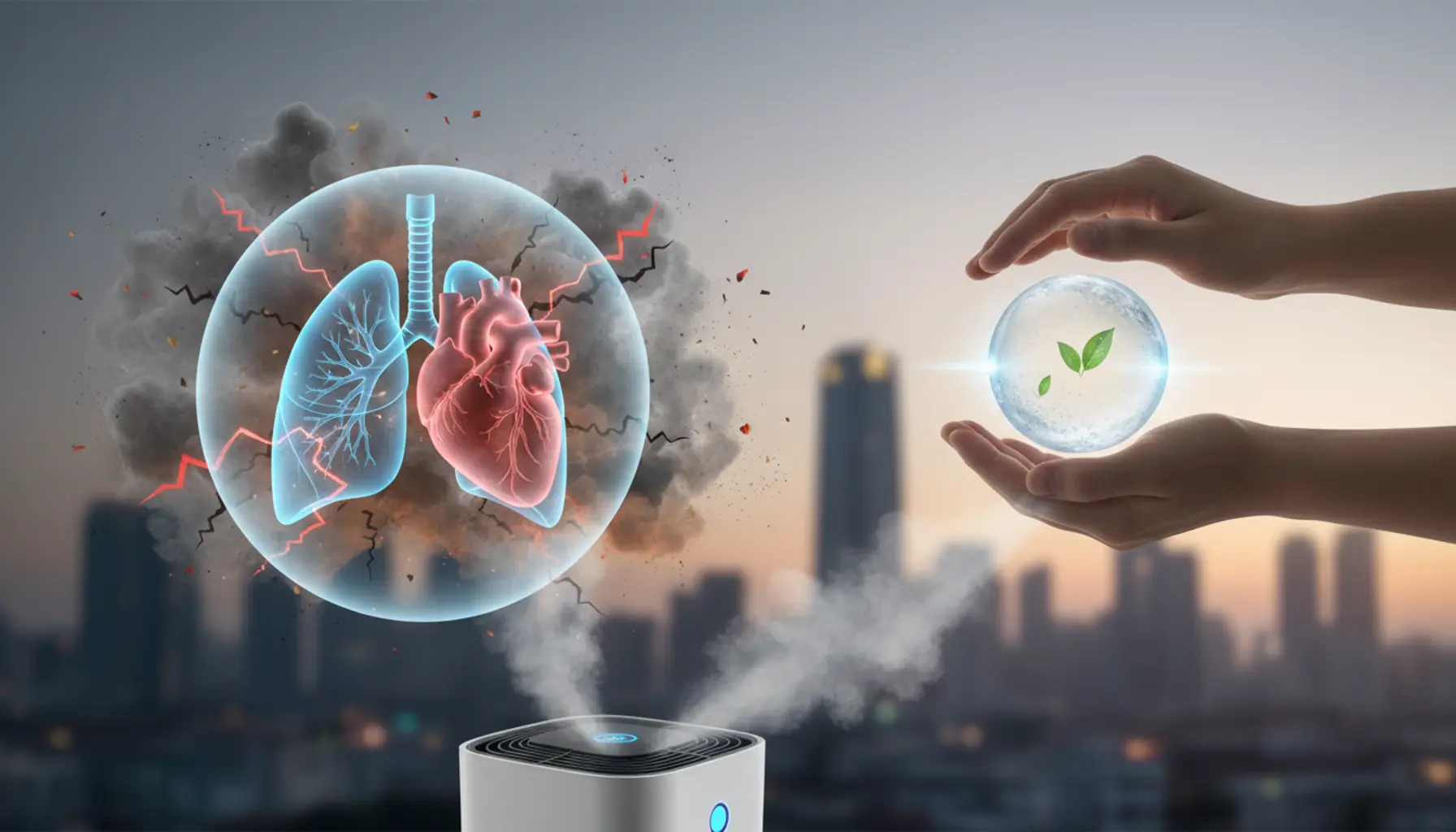
Smog negatively affects health, especially the lungs and heart, increasing the risk of many serious diseases. Effective preventive actions include consciously avoiding outdoor activities, maintaining a proper diet, and practicing breathing exercises. Find out how mobile lungs and antioxidants can support protection against smog.
Table of Contents
- The Impact of Smog on Lungs and Heart
- Health Effects of Polluted Air
- Mobile Lungs: Educational Campaigns
- Breathing Exercises in Combating Smog
- Antioxidants Supporting Lung Protection
- Avoiding Outdoor Physical Activity During Smog
The Impact of Smog on Lungs and Heart
Smog is not just “dirty air”—it’s a complex mixture of gases and particulate matter that penetrate deep into the body, triggering a cascade of inflammatory reactions. It includes suspended particulate matter PM10 and the especially dangerous PM2.5, nitrogen oxides (NOx), sulfur dioxide (SO₂), tropospheric ozone (O₃), benzo[a]pyrene, and heavy metals. PM2.5 particles are so small that they easily bypass the natural defensive barriers of the nose and upper respiratory tract, reaching directly into the alveoli. There they penetrate the bloodstream, from where they are distributed throughout the body, having a particularly strong effect on the respiratory and cardiovascular systems. In the lungs, smog acts like sandpaper—it irritates the airway epithelium, damages the cilia responsible for filtering the air, and encourages mucus build-up, where viruses and bacteria more easily proliferate. People chronically exposed to high levels of pollution more often develop chronic obstructive pulmonary disease (COPD), bronchial asthma, chronic bronchitis, and even pulmonary fibrosis. Smog can aggravate pre-existing diseases—attacks of breathlessness, coughing, or wheezing in asthmatics often occur precisely on days with high particulate levels. For children whose lungs are still developing, exposure to smog is associated with lower lung capacity in adulthood, more frequent lower respiratory tract infections, and an increased risk of developing asthma in the future. Studies show that even short-term episodes of high air pollution increase visits to emergency departments due to shortness of breath, pneumonia, and bronchospasm, resulting in thousands of extra hospitalizations per year. Additionally, free radicals present in smog and those generated in response to its inhalation intensify oxidative stress in respiratory epithelial cells, damaging DNA, proteins, and lipids. This in turn accelerates lung tissue aging, encourages the formation of precancerous changes, and in the long run, increases the risk of lung cancer—not only in smokers but also in people who have never smoked, yet live in highly polluted areas.
The impact of smog does not stop with the lungs—polluting particles and the inflammation they induce directly and well-documentedly affect the heart and blood vessels. After entering the bloodstream, particulate matter damages the endothelium, the delicate inner lining of the vessels responsible for regulating vascular tension, coagulation, and inflammatory processes. Damaged endothelium becomes “stickier”—blood platelets and cholesterol molecules deposit more easily, accelerating the development of atherosclerosis. As a result, arteries lose elasticity more quickly, become narrowed, and the heart has to work harder to supply the organs with the right amount of oxygen. Inhalation of smog also leads to chronic, low-grade inflammation throughout the body, as indicated by elevated CRP levels and other pro-inflammatory cytokines in the blood. This “silent inflammation” destabilizes atherosclerotic plaques, increases the tendency to form blood clots, and can directly trigger acute cardiovascular events such as heart attack or stroke. Epidemiological statistics are clear: on days with increased levels of suspended particles and nitrogen oxides, cardiovascular deaths, cardiac unit admissions, and heart failure exacerbations all rise. Smog also affects heart rhythm regulation—acting on the autonomic nervous system, it can facilitate arrhythmias, including atrial fibrillation, especially in people with pre-existing heart disease. It’s also significant that polluted air contains less oxygen relative to the total inhaled mixture, deepening tissue hypoxia, especially during physical effort. The elderly, those with coronary artery disease, hypertension, diabetes, and obesity are particularly at risk—any exertion outdoors during high smog concentrations can mean a significant increase in cardiac workload. For this reason, the World Health Organization classifies air pollution as one of the key modifiable risk factors for cardiovascular death. Simply put, every day spent in smog not only worsens wellbeing and respiratory function, but also “drains” the health reserves of the heart and vessels, accelerating disease processes that can remain silent for years and then suddenly manifest as a serious cardiac incident.
Health Effects of Polluted Air
Polluted air affects the body much more broadly than many people think—the effects are not limited to coughing or temporary shortness of breath. Inhaled suspended particles (especially PM2.5 and PM10), nitrogen oxides, tropospheric ozone, benzo(a)pyrene, and heavy metals initiate a cascade of inflammatory processes throughout the body. Tiny particles penetrate deep into the respiratory tract and can pass into the blood via the alveoli. This means that the respiratory and cardiovascular systems are most vulnerable, but the nervous, immune, and even hormonal systems are also affected. Even short-term episodes of high smog concentration irritate mucous membranes of the nose, throat, and conjunctiva—causing burning eyes, hoarseness, dry cough, and “scratchy” throat. For people with airway hypersensitivity or allergies, this can provoke bronchospasm, wheezing, and worsening hay fever symptoms. Long-term, repeated exposure to pollution damages the ciliated epithelium, which normally helps filter and clean the airways. As a result, mucus containing microbes and soot particles is harder to expel, increasing susceptibility to infections—more frequent bronchitis, sinusitis, and even pneumonia, especially in children and seniors. Among the youngest, smog can impede normal lung development, leading to permanent reductions in their capacity and function in adulthood. For adults, especially smokers and city dwellers, prolonged pollution exposure is linked with a higher risk of developing bronchial asthma and chronic obstructive pulmonary disease. In practice, this means chronic cough, exertional dyspnea, reduced exercise tolerance, more frequent exacerbations, and a gradual decline in life quality. Inhaled toxins also have an irritating effect on the skin—exacerbating dryness, itchiness, erythema, encouraging acne breakouts, and accelerating skin aging. Damage to the skin barrier and chronic inflammation may influence the development of dermatological diseases, such as atopic dermatitis or psoriasis, and worsen existing issues.

An important, though often overlooked, aspect is the systemic health consequences of smog resulting from the absorption of harmful substances into the bloodstream. Dust particles and toxic gases damage the vascular endothelium, impairing its ability to regulate vessel tone and blood clotting. This accelerates atherosclerosis, promotes the formation of atherosclerotic plaques, and increases their propensity to rupture, which is a direct cause of heart attack or stroke. Air pollution also increases blood pressure, disrupts heart rhythms, and increases arrhythmia risk, especially in those with existing coronary disease, previous heart attacks, or heart failure. On days with high levels of dust and ozone, such patients more often experience sudden exacerbations that require hospitalization or even result in death. Increasing scientific evidence also points to the neurotoxic effects of smog. Ultrafine particles can reach the central nervous system not only through the blood but also via the olfactory nerve. In the brain, they intensify oxidative stress and inflammation, which in the long term can contribute to faster aging of neural structures, impaired cognitive function, increased risk of neurodegenerative diseases such as Alzheimer’s or Parkinson’s, and in children—problems with concentration, learning, and emotional regulation. Polluted air also affects hormonal and metabolic balance—studies link exposure to smog with increased rates of insulin resistance, type 2 diabetes, and lipid disorders. Smog negatively impacts reproductive health: in women, it may increase the risk of miscarriage, pregnancy complications, low birth weight, and premature labor; in men, it can lower semen quality. All of these processes are accompanied by increased oxidative stress—an excess of free radicals in the body damaging cell proteins, lipids, and DNA. This encourages mutations and raises the long-term risk of developing cancers, especially lung cancer, but also cancers of the bladder and other organs. In this context, the WHO classifies air pollution as one of the most important modifiable risk factors for chronic lifestyle diseases, emphasizing that health effects concern virtually every age group—from unborn children, through working adults, to the most vulnerable seniors.
Mobile Lungs: Educational Campaigns
Mobile lungs are a spectacular and highly illustrative form of health education that has become increasingly common in Polish cities, schools, shopping malls, and during sporting events in recent years. Most often, these are large inflatable or plastic models of human lungs, which can literally be walked around, looked inside, touched, and seen how lung tissue changes under the influence of smog, cigarette smoke, and other pollutants. This type of display has a much greater impact than charts or leaflets—visitors can see black soot deposits, fibrosis, and tumor-like regions, which helps them understand that every inhaled pollutant leaves a mark on the body. Mobile lungs often contain interactive elements: illuminated zones showing where PM2.5 particles land, touchscreens with short films on lung tissue damage mechanisms, or boards comparing “the lungs of someone exposed to smog” with “lungs of someone living in a cleaner environment.” As a result, even young school-age children can instinctively grasp the difference between healthy and diseased lungs, without needing to delve into complex medical terminology. Campaigns using mobile lungs are also a valuable tool for doctors, nurses, and health educators, who can conduct mini-lectures, breathing exercise demonstrations, or even brief spirometry tests for interested visitors. In this way, abstract concepts such as “chronic inflammation,” “oxidative stress,” or “vital lung capacity decline,” are embedded in practical, memorable stories that can later be retold to family or friends—significantly strengthening the educational effect on the whole community.
The huge advantage of mobile lungs is, of course, their “mobility”—the ability to reach locations where regular health lectures have little impact: small towns, municipalities with poor medical infrastructure, vocational schools, senior clubs, or local community centers. Campaign organizers increasingly combine the exhibits with local air quality monitoring, presenting real-time data from PM2.5 and PM10 sensors and explaining what different levels on the AQI indicator mean. This allows participants to immediately relate what they see inside the lung model to their daily lives: understanding why, on days with high smog, they should limit strenuous outdoor activities, keep windows closed near busy roads, use anti-smog masks, and air purifiers at home. Such campaigns often include workshops for various age groups—for children, quizzes and games teaching how to recognize smog days and what to do; for adults, consultations with a dietitian on the role of antioxidants (vitamin C, E, polyphenols) in protecting lung and heart cells from oxidative stress; and for seniors, individual talks with a cardiologist or pulmonologist about how smog exacerbates symptoms of coronary disease, hypertension, or COPD. Mobile lungs are also becoming a tool for advocacy: local governments, NGOs, and climate activists use them during public debates to show residents how directly air pollution affects the health of their communities and to justify anti-smog resolutions, expanding public transport, or financial support for furnace replacement. Additionally, modern campaigns combine the physical presence of mobile lungs with a digital layer—QR codes on the model direct users to apps with daily breathing exercises, tips on minimizing smog exposure, video materials on filters and masks, and maps of local air-quality monitoring points. Such a hybrid educational approach promotes long-term habit change, since it does not end with visiting the exhibition: attendees leave with a specific plan—they know how to monitor air quality, care for their lungs through exercise and diet, discuss smog with their children, and support local clean-air initiatives.
Breathing Exercises in Combating Smog
Although you can’t “sweat out” or exercise away smog, properly selected breathing exercises can genuinely support the respiratory and cardiovascular systems in dealing with oxidative stress and inflammation caused by air pollutants. Regular respiratory training improves chest flexibility, increases diaphragm mobility, and facilitates air reaching the lower parts of the lungs, which are better supplied with blood and more efficient at gas exchange. This helps the body utilize oxygen better, especially on poor air quality days when every “breath” is more taxing for the lungs. Breathing exercises, familiar from pulmonary physiotherapy, also help reduce tension in the respiratory muscles, lower the feeling of breathlessness, and improve exercise tolerance in people with asthma, COPD, or hypertension—those particularly sensitive to smog. The key technique is diaphragmatic (abdominal) breathing, focusing on consciously engaging the diaphragm rather than shallow chest movement. Lying or sitting, place one hand on your chest and one on your belly, and try to breathe in through the nose so that mainly your abdominal hand moves. A slow inhale, short pause, and a slightly longer, relaxed exhale through partially pursed lips improve alveolar ventilation, help expel carbon dioxide, and have a calming effect on the nervous system. In practice, 5–10 minutes of such breathing two to three times a day can lower heart rate and blood pressure—important when polluted air increases vascular inflammation and burdens the heart. Complementary are slow-breathing techniques—such as a 4–6 ratio (inhaling for 4 seconds, exhaling for 6 seconds)—which help reduce the hyperventilation typical for stress and anxiety associated with smog alerts. A longer exhale activates the parasympathetic nervous system, aiding in recovery, better tissue oxygenation, and lower stress hormone levels, which otherwise worsen smog’s negative effects on the vessels and heart.
There are also specialized breathing exercises used in pulmonary rehabilitation that anyone can include in a simplified form in their daily routine, especially during the heating season. These include “pursed lips breathing”—helpful when breathless: inhale calmly through the nose, then exhale very slowly through tightly pursed lips, as if blowing out a candle. This keeps airways open longer, reduces trapped air in the lungs, and encourages better removal of pollutants with exhaled air. Chest-opening exercises—such as slow shoulder rolls, squeezing shoulder blades together, or side stretches—increase mobility, release tense intercostal and neck muscles, and make deep inhalation easier without excess effort. These can be combined with diaphragmatic breathing, which strengthens respiratory muscles and improves their capacity, so the body better tolerates periods of increased pollution. Simple yoga breathing (pranayama) sequences are also increasingly recommended, such as gentle alternate nostril breathing, or consciously extending the exhale. However, during high-smog days, avoid intensive breathing practice “outdoors,” especially in busy urban areas. It’s safest to exercise indoors with an air purifier or with well-sealed windows, preferably after checking the current air quality index via an app. Aside from technique, regularity counts—short, 5–10 minute sessions several times a day usually bring better results than occasional long workouts. People with chronic lung or heart diseases should consult a doctor or a respiratory physiotherapist before starting more advanced exercises to select a safe range and avoid sudden drops in oxygen saturation. Incorporating breathing exercises into your daily plan—along with mechanical protection (anti-smog masks with HEPA filter), reducing outdoor activities during high PM2.5 levels, using dietary antioxidants, and staying hydrated—creates a coherent, multi-level support system for lungs and heart exposed to smog. With this approach, breathing becomes not just an automatic activity but a conscious health preventive tool anyone can use at home, at work, or in transit.
Antioxidants Supporting Lung Protection
Smog intensifies so-called oxidative stress in the body—a state in which too many oxygen free radicals damage cells, proteins, and DNA. Especially vulnerable are tissues in frequent contact with air—the airway epithelium and the delicate structures of the alveoli. Antioxidants are compounds that “catch” excess free radicals, stabilize them, and thus reduce inflammation and micro-damage caused by air pollution. While they are not a magic shield nullifying all smog inhalation, they can clearly support the body’s natural defense mechanisms and slow down the degradation of lung tissue and blood vessels. The most important antioxidants for lung health are vitamins A, C, and E, plant polyphenols, carotenoids, as well as certain minerals such as selenium and zinc, which participate in antioxidant enzyme activities (e.g., superoxide dismutase and glutathione peroxidase). Glutathione, an internal “cell guardian,” plays a special role in respiratory system protection, but its level drops with chronic smog exposure. By supporting the organism with an appropriate diet, you can indirectly boost its ability to regenerate and neutralize harmful metabolic byproducts in response to pollution. In practice, your plate becomes a tool of anti-smog prevention—alongside masks, air purifiers, and breathing exercises. Regular consumption of fresh fruits and vegetables provides whole complexes of bioactive substances that act synergistically: vitamin C helps regenerate oxidized vitamin E, polyphenols support vascular function and reduce “stickiness” of blood, and carotenoids stabilize cell membranes of the respiratory tract. Well-nourished, antioxidant-rich mucosa is better at removing pollutants thanks to more active cilia and higher quality mucus, which directly translates to more effective airway cleansing and lower risk of persistent irritation or infection.
An everyday diet supporting lung protection against smog should be rich mainly in intensely colored vegetables—green, red, orange, and purple—as these contain the most antioxidants. The green hues of spinach, kale, broccoli, or parsley signal high content of vitamin C, folates, magnesium, chlorophyll, and sulfur compounds, which support liver detoxification of toxins absorbed from air. Orange and red vegetables and fruits—carrots, pumpkin, sweet potatoes, bell peppers, apricots, peaches, or tomatoes—provide carotenoids (beta-carotene, lycopene) from which the body produces vitamin A, essential for airway cell regeneration and mucus barrier maintenance. Berries, cherries, plums, black currants, and chokeberries are rich in anthocyanins and other polyphenols with strong antioxidant and anti-inflammatory properties—studies show their regular consumption may improve blood vessel function, especially important for cardiovascular load due to smog. Also, include foods high in vitamin E and healthy fats—walnuts, almonds, pumpkin seeds, sunflower seeds, flax seeds, and cold-pressed vegetable oils. Vitamin E incorporated into cell membranes acts as a “shield,” protecting them from oxidation by free radicals and helping slow down lung and vessel tissue damage. Supplement with selenium-rich foods (sea fish, eggs, Brazil nuts) and zinc-rich options (legumes, pumpkin seeds, whole grains, and breads), as a lack of these elements hinders the body’s ability to produce antioxidant enzymes. In Polish climate conditions, especially in winter and heating season when smog exposure is highest, access to fresh produce can be limited—then, it’s worth using high-quality frozen foods, pickled vegetables (cabbage, cucumber, beetroot), and store winter root vegetables that retain a significant portion of their properties. Approach antioxidant supplements cautiously. High, uncontrolled doses of single compounds (e.g., beta-carotene in smokers) may sometimes have effects opposite to those intended and even increase the risk of certain cancers. Therefore, a well-balanced diet should always be the foundation, and supplementation—especially with higher doses of A, E, or selenium—should be discussed with a doctor or dietitian, taking individual health, medications, and risk factors (such as smoking or chronic illness) into account. A carefully planned menu combining diverse antioxidant sources will not eliminate the threats of smog, but can realistically help the body deal with the consequences of polluted air and enhance the effects of other preventive measures.
Avoiding Outdoor Physical Activity During Smog
Intensive physical activity outdoors during periods of high smog significantly increases the amount of pollution inhaled, since with increased exertion, minute ventilation of the lungs rises—we breathe faster and deeper, often through the mouth, bypassing some of the nose’s natural filtering mechanisms. This means more PM2.5 and PM10 particulates, nitrogen oxides, and other harmful substances reach the alveoli, provoking inflammation, irritating the airway epithelium, and potentially accelerating the development of asthma, COPD, or hypertension. In practice, what is usually beneficial—running, cycling, Nordic walking, or brisk walking—becomes a burden for the lungs and heart during smog, especially for children, seniors, pregnant women, and people with chronic diseases. Thus, monitoring air quality and flexibly planning workouts is one of the simplest and most effective preventive steps. Use apps and services that show real-time pollution levels (e.g. CAQI index, PM2.5, PM10, NO2 levels), and enable push notifications to alert you when limits are exceeded. If an app signals bad or very bad air quality, especially during a smog alert, it’s best to reschedule your workout for another time or move it indoors. Better times for outdoor activity are usually after rainfall or on windy days when pollutants are dispersed, while the worst conditions often occur in the evening and night during heating season, as solid fuel burning intensifies and temperature inversions are common. Avoiding outdoor exercise does not mean giving up movement altogether—what matters is wisely shifting effort to a safer environment that does not further strain the respiratory system.
On days with raised smog levels, intensive running, interval training, or endurance workouts are best done indoors, in well-ventilated rooms or fitness clubs with air conditioning using HEPA or other high-efficiency filters. At home, you can arrange a complete workout using your own body weight, simple equipment (dumbbells, resistance bands, a skipping rope), or training apps—from HIIT to yoga or functional training. If you have an air purifier in your home, it’s best to exercise in the room where it runs regularly, maintaining proper air humidity and taking breaks for calm diaphragmatic breathing to further aid respiratory recovery. For otherwise healthy people, a short, moderate walk at borderline pollution levels may be acceptable, but children, seniors, those with asthma, COPD, heart disease, diabetes, or hypertension should completely refrain from outdoor effort on bad air days or limit themselves to a slow, short walk, preferably wearing a certified anti-smog mask (such as FFP2 or FFP3) that fits tightly to the face. Also avoid running or cycling along busy streets, intersections, or so-called street canyons, where exhaust concentration is several times higher than in green areas—even on days when the general pollution level is not dramatically high. Better alternatives are parks, forests, or recreational areas away from main thoroughfares, but in the case of poor smog forecasts, it’s safest to stick to indoor activities. Teach children and teens that exercise and movement are important, but must be adapted to the air quality—a good habit is to check the smog app together before heading to the playground or sports field, and to suggest appealing “at-home” activities such as fitness videos, dancing, gymnastics, or active games. Such an approach not only reduces the risk of exacerbation of respiratory and cardiovascular diseases but also builds awareness that protecting health in the context of smog is about daily, practical decisions—not giving up physical activity, but planning it wisely, combining it with breathing exercises, an appropriate diet rich in antioxidants, and when possible, taking advantage of cleaner air spaces, even if it means small changes in your daily schedule.
Summary
Smog is a serious health threat, negatively impacting the lungs and heart. Educational campaigns like mobile lungs raise awareness of the problem. Breathing exercises and antioxidants help protect the respiratory system. During periods of high air pollution, outdoor exercise should be avoided. Through these actions, we can effectively minimize the risks associated with smog.