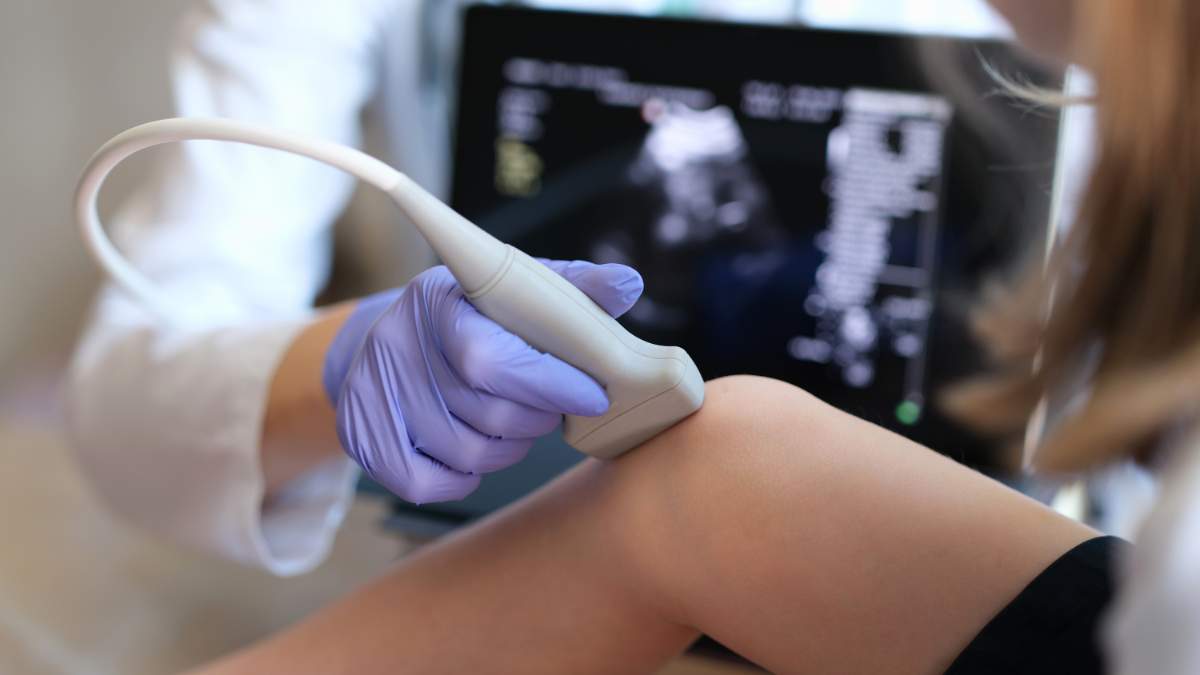
Ultrasound uses ultrasound for safe diagnosis. Learn about the types, indications, and procedure of ultrasound examinations, as well as their key benefits.
Table of Contents
- What Is an Ultrasound? – Definition and Uses of Ultrasonography
- Types of Ultrasound Examinations – From Abdominal to Doppler
- Indications for an Ultrasound – When Is It Worth Doing?
- Ultrasound Procedure – How to Prepare and What to Expect
- Safety and Benefits of Ultrasonographic Diagnostics
- Most Frequently Asked Questions About Ultrasound – FAQ
What Is an Ultrasound? – Definition and Uses of Ultrasonography
Ultrasound, also known as ultrasonography, is a modern and widely used diagnostic method that utilizes high-frequency sound waves to obtain images of the internal structures of the human body. It is important to underline that ultrasound is a completely safe, non-invasive, and painless examination—unlike radiological techniques such as X-rays or computed tomography, ultrasonography does not expose the patient to ionizing radiation. Thanks to these features, ultrasound has broad applications in the diagnostics of adults, children, and pregnant women, for whom fetal safety is a priority. The examination involves placing a special probe on the surface of the skin; the probe emits sound waves that penetrate tissues and bounce back differently depending on their density, returning to the probe where they are registered and analyzed by a computer. The resulting images allow for the assessment of shape, size, structure, and function of organs and tissues, enabling physicians to quickly and precisely detect various pathologies such as inflammations, cysts, tumors, degenerative changes, hemorrhages, or abnormalities in blood flow.
Ultrasonography is utilized in almost all fields of medicine, from internal medicine and gynecology to cardiology, endocrinology, and orthopedics. Abdominal ultrasound is primarily used to assess the liver, pancreas, spleen, kidneys, or urinary bladder, and to detect gallstones and kidney stones, neoplastic changes, urine retention, inflammations, or traumatic injuries. In gynecology, it is the first-line exam for uterus and ovaries assessment, pregnancy monitoring, localization of ectopic pregnancy, or diagnosis of cysts and fibroids. Breast ultrasound allows differentiation of benign and malignant lesions and assessment of glandular structures, and is used in young women for whom mammography is often not recommended. It is exceptionally valuable in pediatric and neonatal diagnostics—enabling the examination of abdominal organs, hip joints (screening for dysplasia), the head, and other structures without stressing or burdening the patient. Cardiologists use echocardiography (heart ultrasound) to assess the structure and function of the myocardium and blood flow through the valves and heart chambers, which is key for diagnosing congenital defects, inflammatory changes, or coronary artery disease. Additionally, ultrasound is essential for imaging the thyroid, salivary glands, lymph nodes, and is widely used to guide medical procedures—such as fine-needle biopsies, drainages, and punctures. Modern ultrasound devices include advanced technologies such as Doppler (for vascular flow assessment), three- and four-dimensional (3D/4D) imaging, and elastography for evaluating tissue stiffness, further broadening the diagnostic possibilities. Advantages of ultrasound include its wide availability, short preparation time, and the ability to repeat examinations frequently in short intervals, which is crucial for monitoring treatment progress, detecting complications, and conducting prophylactic health screenings.
Types of Ultrasound Examinations – From Abdominal to Doppler
Modern ultrasonography is an extremely versatile tool, covering a wide range of examinations tailored to patients’ diagnostic needs of all ages and various medical fields. One of the most commonly performed tests is an abdominal ultrasound, which evaluates the liver, gallbladder, pancreas, spleen, kidneys, adrenal glands, major vessels, and the bladder. It detects focal changes (e.g., tumors, cysts), gallstones, inflammation, and also allows monitoring of organ size and structure. In women, transvaginal ultrasound enables precise assessment of the uterus, ovaries, and fallopian tubes—it is standard in gynecological diagnostics, monitoring ovulation cycles, infertility, and detecting diseases such as fibroids or cysts. Sonography plays a key role in obstetrics as well, enabling fetal development assessment, nuchal translucency measurements, detection of congenital defects, and pregnancy monitoring throughout its stages. In men, scrotal and testicular ultrasound is indispensable for the diagnosis of nodular lesions, varicoceles, post-traumatic conditions, or fertility disorders.
Another group of examinations includes superficial organ ultrasonography—ultrasound scans of the thyroid, salivary glands, lymph nodes, or breasts. During breast ultrasound, it is possible to detect tumors, cysts, mastopathy, or nodules, even in young women for whom mammography is less effective. Thyroid ultrasound allows assessment of the gland’s morphology and detection of goiter, nodules, or inflammations. Orthopedic examinations encompass ultrasound of joints, tendons, muscles, and subcutaneous tissue—ultrasonography detects traumatic conditions, effusions, degenerative changes, or chronic sports injuries. A cutting-edge development is the Doppler ultrasound, visualizing blood flow in arteries and veins using the Doppler effect. Doppler ultrasound measures the direction and velocity of blood flow, which is invaluable for diagnosing vascular diseases, deep vein thrombosis, venous insufficiency, aneurysms, or arterial stenosis. In cardiology, echocardiography and Doppler of the heart are used for evaluating cardiac structure, function, and valve competence, detecting congenital and acquired defects as well as chronic disease outcomes. Increasingly, advanced options like 3D and 4D ultrasound are employed, providing spatial images of tissues for even more precise morphological assessment or real-time detection of pathological changes. Pediatric ultrasound enables internal organ assessment in infants, cranial ultrasounds via the fontanelle, and hip joint screening for dysplasia. Diagnostic possibilities continue to expand with transvaginal, transrectal, and endoscopic ultrasound (EUS), which, thanks to specialized probes, allow highly detailed imaging of hard-to-access structures such as the prostate, rectum, or the wall of the gastrointestinal tract. This wide palette of ultrasound examinations makes ultrasonography an irreplaceable tool in detecting, monitoring, and preventing many diseases, guaranteeing safety, speed, and comfort for both patient and physician.

Indications for an Ultrasound – When Is It Worth Doing?
Ultrasonography (ultrasound) is an imaging diagnostic technique with extremely broad clinical and preventive applications. It is prescribed both as part of routine health screenings and in response to specific ailments reported by patients. The indications for ultrasound are highly varied and depend primarily on medical history, symptoms, age, and general health status. In clinical practice, ultrasound is most often applied for abdominal organ evaluation—especially with symptoms such as pain, palpable masses, abdominal distension, recurrent bloating, weight loss, or hematuria. This non-invasive test enables the assessment of the liver, gallbladder, biliary tract, pancreas, spleen, kidneys, and urinary bladder; important indications include suspected gallstones, pancreatitis, kidney failure, cysts, neoplasms of particular organs, or ongoing disease monitoring. In gynecology, transvaginal and obstetric ultrasound play a key role, routinely performed for pregnant women to assess fetal development, detect congenital defects, monitor multiple pregnancies, or determine the cause of bleeding and lower abdominal pain. For non-pregnant women, gynecological ultrasound is recommended in the case of abnormal menstruation, pain during intercourse, fertility problems, or suspected cysts and uterine fibroids. It is also essential for prevention and monitoring of breast lesions, detecting even subtle, non-palpable tumors and determining the nature of benign or malignant changes.
Indications for ultrasound are also common in the case of urinary tract issues (e.g., frequent urination, hematuria, recurrent infections, suspected kidney stones), as well as for monitoring children’s development (mainly neonatal cranial ultrasound and abdominal ultrasound for parenchymal organ assessment). In cardiology, echocardiography is performed when symptoms such as dyspnea, chest pain, palpitations, suspected heart defects, or arterial hypertension are present. Vascular disease diagnostics—Doppler ultrasound of lower limb and carotid vessels—enables blood flow assessment, early detection of thrombosis, aneurysms, stenoses, and atherosclerosis, which is crucial in the prevention of thromboembolic complications and stroke. Superficial organ ultrasound scans (thyroid, salivary glands, lymph nodes, scrotum, or testicles) are recommended for suspected enlargement, asymmetry, masses, or palpable abnormalities. In orthopedics and rheumatology, ultrasound is prescribed for injuries, chronic or acute joint pain, suspected degeneration, joint effusions, and monitoring treatment effects. Sometimes ultrasound is performed preventively, even in the absence of worrying symptoms—allowing early detection of pathological changes and prompt intervention, significantly improving prognosis. Certain ultrasound examinations may also be recommended before surgery or for evaluating treatment effects, including oncological treatment follow-up. Indications for ultrasound should also cover suspected pathological changes in the abdomen, pelvis, neck, or in high-risk groups for cancer development (such as ovarian, breast, or prostate cancer prevention). Laboratory abnormalities (e.g., elevated bilirubin, tumor markers, blood count abnormalities), or unexplained effusions, are also relevant for determining the source of problems and planning further diagnostics or treatment via ultrasound.
Ultrasound Procedure – How to Prepare and What to Expect
Ultrasonography (ultrasound) is regarded as one of the safest and least invasive imaging procedures, with the actual process being quick, comfortable, and painless. Preparation for ultrasound depends on the type of examination and the body area assessed. For example, abdominal ultrasound is recommended on an empty stomach—last light meal 6–8 hours in advance, and avoid gas-producing foods for 24 hours prior. Drinking water is advised to have a full bladder if required by the doctor—especially for pelvic or prostate ultrasounds. For other types, such as thyroid, breast, or joint ultrasound, no special preparation is needed and it can be done regardless of meals or daily routine. Inform your doctor of current medications, allergies, and any chronic conditions that may affect result interpretation. The test is usually performed in a treatment or diagnostic room—the patient is asked to expose the relevant area, after which a special gel is applied to ensure good contact of the probe with the body and improve image quality. During the procedure, the patient lies comfortably on a couch, while the doctor slides the probe over the skin, generating real-time images of internal organs and tissues—this enables dynamic evaluation of structures, their mobility, and vascularization.
Some ultrasound examinations require special probes, such as transvaginal, transrectal, or endoscopic ultrasound transducers. These procedures require additional privacy and attention to patient comfort; medical staff always explain the process, and patients can ask questions and raise concerns at any point. The examination typically lasts from a few to several minutes, but in complex or multi-organ assessments may take longer. Ultrasound is painless, though occasionally, especially with firmer pressure to better visualize organs, a slight temporary discomfort may be noticed. After the test, the doctor wipes off the gel, and the patient can immediately return to daily activities—no recovery period or special precautions are necessary. For gynecological, urological, or breast exams, it’s advisable to bring previous imaging results for comparison and monitoring progress. Ultrasound results, including descriptions and printed images, are usually available right after the examination and discussed with the doctor during the same visit. It is important to dress for easy access to the examined area and to ensure psychological comfort—ultrasound has no side effects, no contraindications for repeated use, and most importantly, enables quick health assessment, detection of even minor abnormalities, and monitoring of treatment effects.
Safety and Benefits of Ultrasonographic Diagnostics
Ultrasonography is a diagnostic method recognized in medicine mainly because of its exceptionally high safety profile for the patient. A key advantage is the absence of harmful ionizing radiation present in computed tomography and X-rays. This allows ultrasound to be safely performed in patients of all ages, regardless of health status, including pregnant women and newborns. Its safety enables repeated exams for treatment monitoring and regular health screenings without the risk of cumulative negative impact. Ultrasonography uses harmless high-frequency sound waves, which penetrate tissues and return according to tissue density, enabling precise imaging of internal organs. Unlike some imaging methods, such as MRI, ultrasound has no risk of complications related to metal implants, which further extends its patient applicability.
Another important advantage of ultrasound is its wide diagnostic range combined with examination comfort. Ultrasounds are non-invasive and absolutely painless, reducing patient anxiety and stress. The lack of a need for contrast administration (except in some specialized studies) means that allergic reactions and post-procedure complications are virtually nonexistent. The procedure is short, usually lasting no more than several minutes, requiring no hospitalization or recovery—patients can return to their daily activities immediately. High availability is another advantage—most diagnostic centers are equipped with modern ultrasound devices, so wait times are short, and results are almost immediately available for discussion. Additionally, ultrasound is used across many branches of medicine: from internal and gynecological practices to cardiology, orthopedics, and oncology, enabling rapid diagnosis of cancer, inflammation, injuries, or organ pathologies. High sensitivity and the ability to repeat exams support monitoring therapy progress, fetal development, detecting complications, and planning surgeries. Doppler technology allows for accurate blood flow assessment, and modern devices with 3D/4D functions provide detailed morphologic analysis, significantly improving imaging diagnostics. Because of its non-invasive nature and safety, ultrasound is an essential part of health prevention—allowing for the early detection of worrying changes and rapid intervention long before the disease advances. For many conditions, ultrasound is the first-choice diagnostic tool and is widely recommended by physicians across multiple specialties.
Most Frequently Asked Questions About Ultrasound – FAQ
Ultrasound examinations raise many questions among both first-time patients and those who regularly monitor their health. The most common concerns relate to ultrasound safety, preparation for different exam types, and technical or practical issues. Many people wonder if ultrasound is completely safe and whether it can be performed multiple times. According to current medical knowledge, ultrasound is fully non-invasive and free from harmful radiation—there is no evidence of adverse effects from the sound waves used in standard studies on the human body. Therefore, ultrasonography can be conducted repeatedly, even in pregnant women and newborns without any risk of complications, making it especially advantageous compared to other imaging techniques. Another frequent question is about the duration and pain associated with the procedure. Most ultrasound examinations take from a dozen up to 30 minutes and are entirely painless, causing no discomfort except perhaps a transient cold sensation when gel is applied. Exceptions include the use of transvaginal, transrectal, or endoscopic probes, which might cause moderate discomfort, but procedures are always performed with respect for privacy and medical staff support.
A large group of questions concerns preparation for ultrasound. For abdominal ultrasound, fasting and avoiding gas-forming foods are recommended for optimal imaging. Adequate hydration is advised, though consuming large volumes of fluids right before the test is discouraged, as it could affect visibility. For gynecological or prostate ultrasound, doctors may advise arriving with a full bladder, which improves pelvic imaging quality. Surface organ ultrasound (thyroid, breast, lymph nodes) requires no special preparations. Can ultrasound detect all diseases and conditions? It is a very sensitive method for assessing parenchymal organs, detecting tumors, cysts, inflammations, traumatic changes, and evaluating blood flow (Doppler study), but it does not detect all phases of cancers or bone pathologies as comprehensively as MRI or CT. Thus, results must always be interpreted against the clinical picture and additional lab tests. Patients also ask about exam availability—ultrasound is widely accessible in hospitals and clinics, often without the need for a referral, and results are typically discussed immediately after the exam. If deemed necessary, repeat ultrasounds may be ordered to monitor treatment progress or health status. Another common question is whether ultrasound requires medication or diet changes—usually not, but any regular medication should be reported to medical staff. Parents of young children worry about the burden of ultrasound—pediatric ultrasounds are entirely safe and frequently used to monitor infant organ development and detect congenital abnormalities. Pregnant women are eligible for ultrasound, as it is the mainstay of pregnancy and fetal development monitoring, with no risk to mother or child. Lastly, how quickly are results available? In most cases, both descriptions and images are available immediately after the procedure, enabling prompt clinical decisions and further therapy steps.
Summary
Ultrasound (ultrasonography) is a non-invasive, safe, and widely used imaging method that plays a key role in the rapid assessment of the condition of internal organs. Thanks to a wide range of tests—from classic ultrasound, Doppler, to specialized gynecological or thyroid imaging—it is possible to detect many diseases early and monitor the course of treatment. A simple procedure and the absence of side effects make ultrasonography a popular choice for both prevention and diagnostics. Remember: regular ultrasound examinations as recommended by your doctor are an investment in health and a guarantee of a prompt response to alarming symptoms.