
Complications of diabetes, such as the diabetic foot and diabetic retinopathy, can lead to serious health problems and loss of function. In this article we explain how to recognize symptoms, what modern prevention looks like, how treatment is performed and which daily habits are essential to effectively protect the health of your feet and eyesight.
Table of contents
- What is the diabetic foot? Key symptoms and causes
- Diabetic retinopathy – how diabetes affects vision
- Modern methods of treating diabetes complications
- The importance of diet and physical activity in complication prevention
- Daily prevention: how to care for feet and eyesight with diabetes
- When to see a doctor? Tips for people with diabetes
What is the diabetic foot? Key symptoms and causes
The diabetic foot is one of the most serious chronic complications of diabetes, encompassing a range of changes in the feet that result mainly from nerve damage (neuropathy), blood vessel disease (angiopathy) and impaired wound healing. In practice, this means that in a person with long-standing or poorly controlled diabetes even a small abrasion, a blister from new shoes or a minor cut can turn into a hard-to-heal wound, an ulcer, and in extreme cases – necrosis and the need for amputation of a toe, part of the foot or even the entire limb. The diabetic foot is not a single disease but a syndrome of symptoms and consequences that develops gradually, often over years, initially almost painlessly. For this reason many patients downplay the first warning signs, which greatly increases the risk of severe complications. The key problem is that elevated blood glucose levels damage the small nerve fibers in the feet, leading to sensory neuropathy – the patient gradually loses the sensation of pain, temperature and touch. As a result they do not feel minor injuries, shoe pressure, chafing or burns (e.g. from overly hot baths), so small skin injuries go unnoticed and are not treated early. At the same time micro- and macroangiopathy develop, i.e. damage to small and larger blood vessels, which leads to tissue ischemia, poorer nourishment of skin and muscles, increased susceptibility to infections and much slower wound healing. Added to this are foot deformities typical of advanced neuropathy (e.g. hammer toes, flattening of the foot arch, Charcot joint), which change the distribution of forces during walking and cause areas of excessive pressure – most often on the forefoot and heel. Corns, cracks and then ulcers easily form in these spots. The clinical picture of the diabetic foot is very diverse – from dry, cracked skin and calluses, through chronic exudative ulcers, to deep wounds involving bone and extensive infections. Reduced immunity and impaired leukocyte function in chronic hyperglycemia also play an important role, favoring the development of bacterial and fungal infections; even an apparently trivial superficial wound can quickly turn into an infected ulcer.
The most common symptoms of the diabetic foot include: chronic dryness of the foot skin, excessive keratinization and cracks (especially on the heels), abrasions and corns that appear more often and heal more poorly, as well as reduced or completely lost sensation of pain, touch or temperature. It is characteristic that a patient may not feel pain even in the presence of a marked ulcer – which is why regular, thorough self-examination of the feet is so important. Early symptoms of neuropathy include tingling, burning, stabbing pain, a feeling of “walking on cotton wool” or “socks pulled halfway down the foot”, as well as night-time calf cramps. In ischemia of the foot, cold, pale or bluish feet may appear, slowly growing or thinning nails, absent pulses in foot arteries, as well as calf pain when walking that subsides after a short rest (so-called intermittent claudication). Alarming signs are any wounds, blisters, cracks, abrasions or scratches that do not heal within several to a dozen days, as well as redness, swelling, warmth of the skin, wound exudate or an unpleasant smell – they may indicate an emerging infection. Key causes of the diabetic foot include long-term poorly controlled diabetes (high HbA1c values), arterial hypertension, dyslipidemia, smoking, obesity, lack of physical activity and improper diet, which exacerbate atherosclerosis and vessel damage. Improper foot care also matters: overly hot baths, incorrect cutting of corns and nails, walking barefoot, poorly fitting, tight or rubbing shoes, synthetic socks that limit ventilation. The risk increases in people with previous foot ulcers or past amputations, bone deformities (e.g. hallux valgus, flat feet) and in older patients who have problems with self-inspection of their feet (limited mobility, obesity, impaired vision). An important, often overlooked factor is also the lack of regular check-ups with a diabetologist and a specialist in diabetic foot care (podiatrist, vascular surgeon, orthopedist), which delays recognition of early changes. The combination of neuropathy, ischemia, mechanical injuries and infection creates a vicious circle – the worse diabetes is controlled and the lower the awareness of risks, the faster changes in the foot progress and the harder they are to treat effectively.
Diabetic retinopathy – how diabetes affects vision
Diabetic retinopathy is one of the most common and most insidious complications of chronic hyperglycemia, leading to progressive damage to the blood vessels in the retina. The retina is a structure with a huge demand for oxygen and nutrients, and long-term elevated blood glucose causes microdamage: thickening of vessel walls, loss of elasticity, breakdown of the blood–retina barrier and closure of small vessels. In practice this means retinal ischemia and edema, the formation of microaneurysms and hemorrhages, and at more advanced stages – proliferation, i.e. abnormal growth of new, fragile vessels that easily rupture and lead to bleeding into the vitreous body. In the early stage the patient usually experiences no complaints, which is why retinopathy is so dangerous – it can develop silently for years, only “hinting” subtle signals such as a slight decline in visual acuity, difficulty reading small print, problems seeing at night, the appearance of “floaters” before the eyes or brief blurring of vision. In some patients the first serious symptom may be a sudden, unilateral deterioration of vision after an intraocular hemorrhage or the appearance of spots and dark areas in the visual field, which requires urgent ophthalmologic consultation. The risk of diabetic retinopathy increases with diabetes duration – after about 10–15 years of disease most patients with type 2 diabetes and a significant portion of those with type 1 show visible changes on fundus examination, even if they report no complaints. Main factors favoring retinal damage include persistent hyperglycemia (high HbA1c values), uncontrolled arterial hypertension, dyslipidemia (elevated cholesterol and triglycerides), obesity, smoking and kidney disease. Chronic fluctuations in blood sugar from hyperglycemia to sudden drops also destabilize vessels, accelerating complication development. Pregnancy in women with diabetes also plays a significant role, as intensive hormonal and metabolic changes can accelerate retinopathy progression – more frequent ophthalmic checks are necessary in this group.
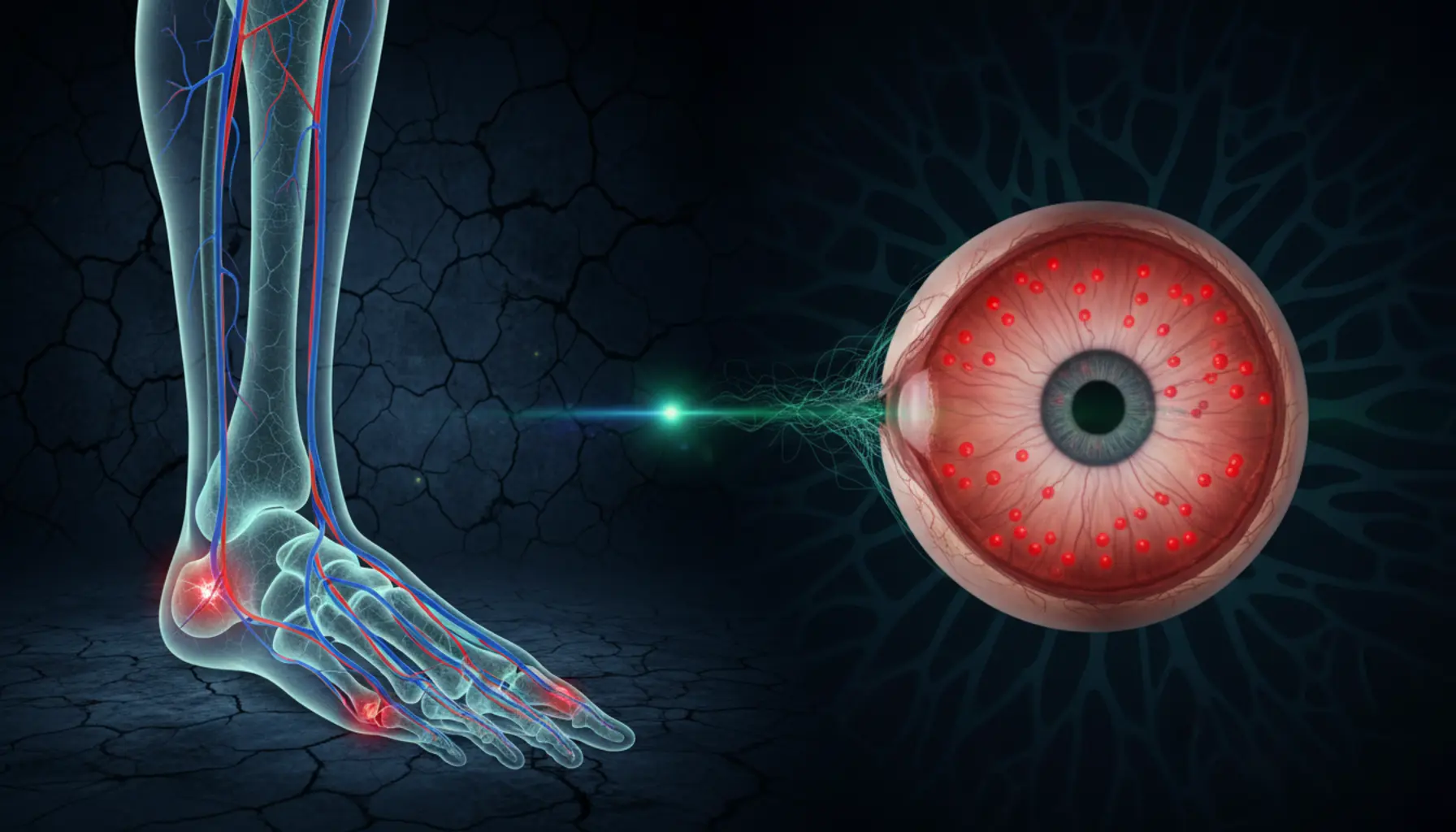
In clinical practice several stages of diabetic retinopathy are distinguished, each accompanied by certain visual disturbances and other symptoms. In the early, non-proliferative stage there are small microaneurysms, dot hemorrhages, hard exudates and early signs of retinal edema, especially in the macula area responsible for central and precise vision. At this stage the patient may notice worse near vision, problems reading, recognizing faces or working at a computer, but these symptoms can be nonspecific and are often mistaken for “natural” age-related vision decline. As ischemia and vessel damage progress, preproliferative and then proliferative retinopathy develop – pathological new vessels appear on the retina, larger hemorrhages occur, fibrous-vascular membranes form and there is a risk of retinal detachment. At this stage visual disturbances become pronounced: large dark spots in the visual field, a “veil” sensation before the eye, severe blurring of vision and even sudden, severe vision loss in one or both eyes may occur. Crucially, the development of retinopathy can be significantly slowed and early changes effectively treated – provided regular exams and good metabolic control of diabetes are maintained. The standard of prevention is an annual fundus examination, and for those with detected changes even more frequent checks, increasingly supported by modern imaging methods such as optical coherence tomography (OCT) or fluorescein angiography. Good glycemic control, systematic monitoring of blood sugar, blood pressure and lipids, and quitting smoking significantly reduce the rate of retinal damage. If retinopathy is detected, the ophthalmologist may propose treatment tailored to the disease stage: from observation and modification of diabetes therapy, through focal or panretinal laser therapy, to intravitreal injections of anti-VEGF drugs or steroids that reduce edema and inhibit neovascularization. In advanced cases surgical procedures such as vitrectomy are used to remove blood from the vitreous body, fibrous membranes and to restore the best possible conditions for the retina to function. Although some changes in advanced retinopathy are irreversible, prompt reaction to the first warning signs and long-term diabetes control allow many patients to retain useful vision for life.
Modern methods of treating diabetes complications
Medical progress means that complications of diabetes, such as the diabetic foot and retinopathy, can increasingly be effectively treated and their progression slowed. The basis remains good control of glycemia, blood pressure and lipids, but classic insulin therapy and oral medications are now supported by a range of innovative solutions. In treating the diabetic foot an interdisciplinary team plays a key role: diabetologist, vascular surgeon, podiatrist, physiotherapist and specialist nurse. Already at an early stage advanced offloading methods are used, such as custom orthoses, thermoplastic insoles or off-loading footwear that reduce pressure on ulcerated areas and protect against worsening changes. Modern specialized dressings are also increasingly used to create an optimal healing environment – hydrogel, foam, alginate dressings, dressings with silver or medical honey, as well as negative pressure wound therapy (NPWT). Negative pressure therapy involves applying a sealed dressing connected to a pump that creates negative pressure, which removes exudate, reduces swelling, stimulates healthy granulation tissue formation and accelerates healing even of chronic, hard-to-heal wounds. Selected patients may receive dressings with growth factors, skin matrices and autologous skin grafts or so-called artificial skin that support reconstruction of damaged tissues. Improving limb perfusion is equally critical – modern vascular surgery offers minimally invasive endovascular procedures such as balloon angioplasty, stent implantation or mechanical thrombectomy that open narrowed or occluded arteries and restore blood flow to the ischemic foot. This has allowed avoidance of extensive amputations in many cases. In the presence of severe infections targeted antibiotic therapy based on wound cultures is used, along with modern surgical debridement protocols that preserve as much healthy tissue as possible. Hyperbaric oxygen therapy, in which the patient breathes pure oxygen under increased pressure in a special chamber, is also gaining popularity; it improves tissue oxygenation, stimulates angiogenesis and can support healing of chronic ulcers in appropriately selected patients. Experimental methods such as stem cell therapy and tissue bioengineering are also emerging, showing potential in clinical trials for regenerating nerves, vessels and skin, although they are currently mainly available in research centers.
Modern treatment of diabetic retinopathy focuses on the earliest possible detection of changes and precise, targeted therapy of damaged retinal areas. Diagnostics today rely not only on classic fundus examination but also on advanced imaging techniques such as optical coherence tomography (OCT), fluorescein angiography and increasingly OCT angiography without contrast. This allows precise assessment of macular edema, the degree of ischemia and the presence of pathological vessels. Intravitreal injections of anti-VEGF drugs (e.g. ranibizumab, aflibercept, brolucizumab) play a key role in treatment by inhibiting vascular endothelial growth factor responsible for formation of fragile, abnormal vessels and leakage of fluid into the retina. Regular administration of these agents can significantly improve visual acuity and halt retinopathy progression, especially in the case of macular edema. Some patients also receive intravitreal steroid implants with sustained release that reduce inflammation and edema, which is important particularly for patients with recurrent or anti-VEGF-resistant diabetic macular edema. Laser retinal therapy (panretinal photocoagulation) still has a significant role in advanced stages of retinopathy – by destroying ischemic areas it reduces oxygen demand and inhibits neovascularization, lowering the risk of vitreous hemorrhage and retinal detachment. Laser technology is also evolving – modern micropulse lasers and scanning systems allow precise, less damaging procedures to healthy tissue. In complications such as massive vitreous hemorrhage, tractional retinal detachment or advanced fibrous membrane changes, vitrectomy is performed – a micro-surgical intraocular procedure using ultrathin instruments, often aided by membrane staining and 3D visualization. Digital technologies supporting prevention and early detection of ocular complications are developing rapidly: telemedicine using non-mydriatic fundus cameras in primary care clinics, automatic retinal image analysis supported by artificial intelligence (AI) and reminder systems for check-ups help detect retinopathy at an asymptomatic stage. Similar digital solutions are used in monitoring the diabetic foot – smart socks and insoles with temperature and pressure sensors, apps for daily self-checks with the ability to send wound photos to a specialist, and AI algorithms assessing ulcer risk allow faster reaction to first worrying signals. All these modern methods do not replace the need for long-term diabetes control but complement it, allowing slowing and sometimes partial reversal of chronic complication effects.
The importance of diet and physical activity in complication prevention
A well-balanced diet and regular exercise are the foundation of preventing chronic diabetes complications such as the diabetic foot and eye diseases. Appropriate nutrition helps maintain stable blood glucose levels, reducing damage to blood vessels and nerves responsible for neuropathy and retinopathy development. It is crucial to pay attention not only to the amount of carbohydrates but also to their type and glycemic index – whole grains, legumes, non-starchy vegetables and high-fiber products slow glucose absorption, limiting rapid sugar spikes that accelerate inflammatory and atherosclerotic processes. It is particularly important to limit simple sugars, sweetened drinks, processed snacks and excess saturated animal fats and trans fats, as they worsen insulin resistance, raise LDL cholesterol and triglycerides, and consequently damage blood vessels in the feet and the retinal vessels. A Mediterranean-style diet is beneficial in practice – emphasizing vegetables, low-glycemic fruits (e.g. berries), whole grains, marine fish, olive oil and nuts – which supports better glycemic control, blood pressure and body weight. Adequate protein intake (especially from lean meat, dairy, legumes) supports tissue regeneration and wound healing, which is extremely important for micro-injuries of the feet. Vitamins and micronutrients also matter – vitamin D, B vitamins, antioxidants (vitamins C, E, beta-carotene) and zinc and selenium support the nervous, circulatory and immune systems, helping limit processes that damage retinal vessels and small vessels in the lower limbs. It is also very important to adjust calorie intake to individual needs – losing even a few kilograms in overweight individuals can significantly improve tissue insulin sensitivity and lower the risk of complications. Patients with existing vascular problems, ulcers or ocular changes should pay special attention to regular meals, avoiding fasting and binge-eating that cause large glucose fluctuations, and should work closely with a clinical dietitian to tailor the diet to medications and comorbidities (e.g. hypertension, kidney disease). Maintaining proper hydration, limiting salt and quitting smoking are additional pillars of a nutritional strategy that together reduce the risk of vessel damage and complications affecting feet and eyes.
Physical activity is the second, equally important pillar of diabetes complication prevention because it improves cellular insulin sensitivity, helps lower blood glucose and lipid levels, supports weight reduction and enhances peripheral circulation. Regular exercise promotes better blood supply to the lower limbs, which directly reduces the risk of foot ischemia, ulcer formation and accelerates healing of existing wounds. Aerobic exercise – such as brisk walking, swimming, cycling or Nordic walking – improves cardiovascular fitness and stabilizes blood pressure, reducing stress on the delicate retinal vessels. Strength training using body weight or light weights helps build muscle mass, increasing basal energy expenditure and facilitating weight maintenance, which is key for long-term diabetes control. It is recommended that people with diabetes aim for at least 150 minutes of moderate activity weekly, spread over several days, and complement it with 2–3 strengthening sessions, but always after consulting a physician, especially when vascular complications, neuropathy or eye problems are already present. In the case of the diabetic foot the choice of exercise must be carefully considered – activities that expose the feet to strong loads and injuries (e.g. running on hard surfaces, contact sports) are generally avoided, favoring offloading activities like swimming or stationary cycling, always with appropriate footwear and foot protection. It is also necessary to systematically inspect the feet before and after exercise to detect any abrasions, blisters or redness that in a patient with neuropathy may not cause pain yet can quickly turn into ulcers. Equally important is monitoring blood glucose before and after exercise, adjusting meals and insulin doses to prevent both hypoglycemia and exercise-induced hyperglycemia. Regular activity combined with a proper diet also improves psychological well-being, reduces stress and supports better sleep, which makes daily adherence to diabetes recommendations easier. Such comprehensive lifestyle metabolic therapy slows the progression of micro- and macroangiopathy, thereby significantly reducing the risk of severe complications – including diabetic foot, retinopathy, as well as nephropathy and cardiovascular disease.
Daily prevention: how to care for feet and eyesight with diabetes
Prevention of diabetes complications begins at home with daily, repeatable habits. For feet it is crucial to inspect them systematically – preferably every evening in good lighting. Look at the skin from above, from the sides and underneath, using a mirror or the help of a close person. Pay attention to any redness, blisters, abrasions, cracks, calluses, ingrown nails or discharge with an unusual odor. Every, even seemingly minor wound can become a starting point for an ulcer, so it should not be ignored. Skin of the feet in people with diabetes tends to dry out, so after gentle washing in lukewarm water and thorough drying (especially between the toes) apply a moisturizing or emollient cream, avoiding the interdigital spaces to prevent maceration and fungal infection. Always check water temperature with your hand or a thermometer, not with your foot – in neuropathy sensation may be impaired and burns can occur easily. Footwear should be comfortable, with a soft, flexible sole, without hard seams that press the skin and with adequate toe space; it is recommended to buy shoes in the afternoon when the foot is slightly larger. Avoid walking barefoot, even at home and on the beach, to prevent unnoticed injuries, and choose cotton or breathable socks without tight cuffs. Nails should be cut straight across, not too short, to reduce the risk of ingrown nails – if there are foot deformities, thickened skin or vision problems, it is safer to use a podiatrist’s services. Weight control and physical activity are also important in diabetic foot prevention – they improve circulation in the lower limbs, but exercise should be adapted to foot condition; with ulcers or deformities choose offloading forms of movement such as swimming or stationary cycling after consulting your doctor. Regular visits to the diabetologist, examination of foot sensation, pulses in foot arteries and consultations with a vascular surgeon or diabetic foot clinic specialist help detect changes before serious complications occur.
Protecting vision in diabetes requires an equally disciplined approach. The basis is regular ophthalmologic control – usually every 12 months, and more often if retinopathy is detected, according to the doctor’s recommendation. The examination should include fundus assessment after pupil dilation, measurement of visual acuity and – if necessary – additional imaging diagnostics such as OCT or angiography. At home pay attention to the first subtle signs of problems: the appearance of “floaters” before the eyes, flashes, blurred vision, difficulty reading small print, worse night vision or sudden “veils” in the visual field. Any sudden change in visual acuity or the appearance of dark spots should be treated as an urgent signal to contact an ophthalmologist, because early intervention significantly increases the chance of preserving vision. Prevention of diabetic retinopathy is inseparably linked to overall disease control: stable blood glucose, normal blood pressure and lipid values, and quitting smoking are the most important “medications” for the retina. Limit exposure to smoke-filled rooms, ensure proper lighting when reading and working at a computer, take regular breaks from screens (e.g. the 20–20–20 rule: every 20 minutes look 20 seconds into the distance of at least 6 meters) and lubricate the eyes with drops if dryness occurs. A diet rich in leafy green vegetables, marine fish, nuts and products containing lutein and zeaxanthin supports retinal health. For both feet and eyes it is also important to maintain sleep hygiene, reduce stress and take antidiabetic and antihypertensive medications regularly as prescribed – fluctuations in glucose and blood pressure particularly adversely affect small vessels in the eyes and feet. Establishing a consistent daily routine – measuring blood sugar at the same times, inspecting feet, taking medications and planning meals – helps maintain good metabolic control and detect worrying symptoms early, before irreversible vision loss or hard-to-heal wounds develop.
When to see a doctor? Tips for people with diabetes
People with diabetes should treat medical check-ups not as a “necessary evil” but as a regular part of effective treatment and prevention of complications such as the diabetic foot and eye diseases. It is worth visiting the diabetologist regularly, usually every 3–6 months, even if you feel well and glucose levels seem stable. During these visits the doctor assesses diabetes control, modifies medication doses, orders tests (including HbA1c, lipid profile, creatinine, urinalysis) and can detect subtle warning signs early. Separate but equally important are check-ups with specialists – an ophthalmologist (usually every 12 months, and more often if retinopathy is detected) and a podiatrist or vascular surgeon if foot deformities, ulcers, calluses or ischemic symptoms are present. Every person with diabetes should also see a doctor whenever there are difficulties in self-managing glycemia, frequent hyperglycemia or episodes of severe hypoglycemia, because rapid blood sugar fluctuations accelerate changes in retinal vessels and small vessels in the feet. Alarm signals also include sudden weight changes, persistent fatigue, reduced exercise tolerance, frequent infections or slow-healing wounds; they may indicate not only uncontrolled diabetes but developing organ complications, including renal and cardiovascular, which further increase the risk of diabetic foot and retinopathy. It is very important not to wait for a “scheduled” visit if a new worrying symptom appears – in such situations arrange an earlier consultation with your family doctor or diabetologist, who will, if necessary, refer you to the appropriate specialist.
In the context of the diabetic foot, any foot injury that does not begin to heal within 1–2 days, any blister, skin crack, bleeding or oozing from a wound, as well as the appearance of redness, swelling, increased warmth of the skin or conversely – pronounced cooling of the foot, should prompt urgent contact with a doctor. Such symptoms may indicate an emerging infection or ischemia that, without appropriate treatment, can very quickly lead to deep ulcers, bone infection and ultimately – amputation. Sudden, severe pains in the foot or calf while walking, the need to stop after a short distance (intermittent claudication), color change of the skin (paleness, bluish tint), loss of hair on the lower legs and absence of palpable pulses in foot arteries are also alarming and require prompt medical evaluation, preferably by a vascular surgeon or at the nearest emergency department if symptoms are acute. Do not ignore neuropathy symptoms either: feelings of tingling, burning, numbness, a “shock” sensation in the feet, especially intensified at night. Although they often do not cause acute pain, they indicate nerve damage that impairs perception of pain and temperature, increasing the risk of unnoticed injuries and ulcer formation. The same vigilance is necessary for vision – an immediate ophthalmic consultation is required for sudden vision deterioration, appearance of dark spots, “floaters”, flashes, a “veil” before the eye, image distortion (e.g. letters “wavy” when reading) or eye pain. These symptoms may indicate a vitreous hemorrhage, retinal detachment or acute worsening of macular edema – situations that threaten permanent vision loss. Progressive, gradual deterioration of visual acuity, needing more frequent changes of glasses, difficulty reading small print or recognizing faces at a distance are also worrying signs – in such cases do not postpone an ophthalmologist visit, because early treatment (e.g. anti-VEGF injections or laser therapy) can significantly slow diabetic retinopathy progression. As a practical rule, any clear, new or worsening change concerning the feet or vision in a person with diabetes should be treated as a reason for as soon medical consultation as possible, not for experimenting with home remedies.
Summary
Complications of diabetes, such as the diabetic foot or retinopathy, require early recognition and a comprehensive therapeutic approach. Regular blood glucose monitoring, a proper diet and daily care of the feet and eyes significantly reduce the risk of complications. Modern treatment methods and interdisciplinary medical care improve patients’ comfort and safety. Remember not to ignore the first symptoms and contact a specialist promptly if in doubt. Taking care of your health with diabetes is effective prevention and a chance to maintain a good quality of life.