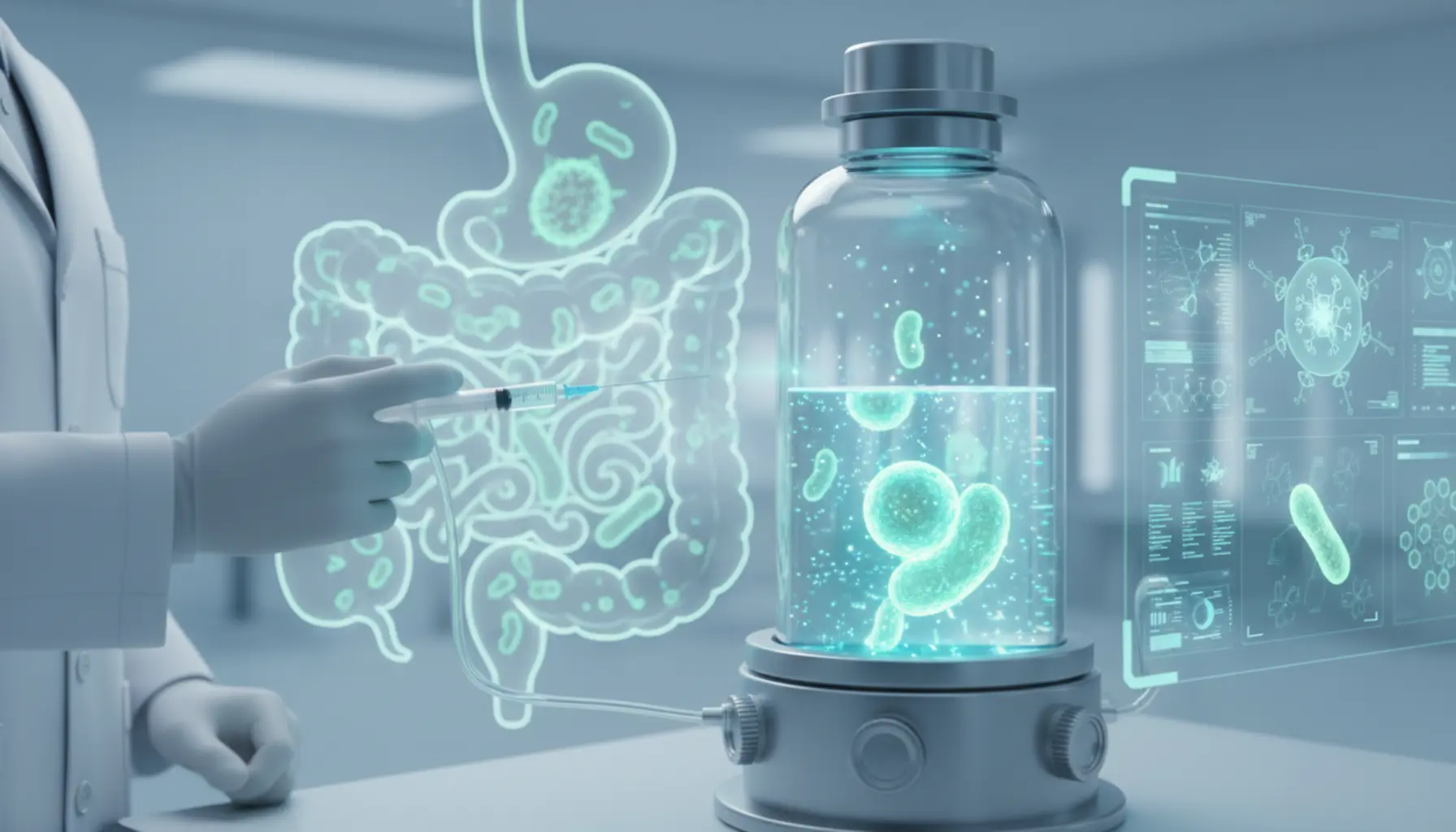
Fecal microbiota transplantation is a groundbreaking procedure that restores balance in the digestive tract. FMT supports the treatment of infections and selected digestive system disorders. Properly selected microbiota promotes gut regeneration and improves overall health.
Table of Contents
- What is a fecal microbiota transplantation?
- How FMT Works
- Indications for FMT
- Step-by-step Transplantation Process
- Efficacy of Microbiota Transplantation
- Microbiota Transplantation and Gut Health
What is a fecal microbiota transplantation?
Fecal microbiota transplantation (FMT) is a medical procedure that involves introducing fecal material from a healthy donor into the digestive tract of a patient in order to restore the normal intestinal bacterial flora. In practice, this means “transplanting” a community of microorganisms—mainly bacteria, but also viruses, archaea, and fungi—that naturally inhabit the human gut and play a key role in digestion, immunity, and regulation of inflammatory processes. FMT is therefore not a classic organ transplant, but a transfer of a complex microbiological ecosystem designed to restore balance in the intestines disrupted by diseases, antibiotic therapy, or an improper lifestyle. Unlike probiotics, which usually contain a few selected bacterial strains, fecal microbiota transplantation provides a vast diversity of microorganisms, more akin to the natural makeup of a healthy person’s microbiota, making it a tool with a much broader and more powerful therapeutic potential. FMT material is obtained from thoroughly screened donors who undergo detailed blood and stool tests to exclude pathogens, infectious diseases, and disorders that could be transmitted with the microbiota. Feces are then processed in laboratory conditions: mixed with a saline solution or other carrier, filtered to remove solid residues, and prepared as a suspension ready for administration. The procedure itself can be performed in various ways, most often via colonoscopy, rectal enema, naso-intestinal tube, gastroscopy, or in specially prepared oral capsules resistant to stomach acid. The choice of method depends on the patient’s condition, medical indications, the technology available at a given center, and the preferences of the doctor and patient. Colonoscopy allows precise delivery directly to the colon, while capsules are the least invasive and make it easier for patients to accept the therapy, though they require appropriate technological preparation. The foundation of the FMT concept is based on the assumption that a disturbed, impoverished, or pathologically altered microbiota (dysbiosis) favors the growth of harmful bacteria, weakens the gut barrier, and leads to chronic inflammation, while “transplanting” a healthy ecosystem can reverse these processes. When donor microorganisms enter the patient’s gut, they occupy free ecological niches, compete with pathogenic bacteria for nutrients and space, produce compounds that inhibit pathogen growth, and support the regeneration of the intestinal epithelium. Over time, this leads to the rebuilding of a healthy, stable microbiome, which is reflected not only in the reduction of digestive symptoms, but also in improved overall well-being, better immune response, and often normalization of laboratory parameters related to inflammation. It is important to note that, although FMT is sometimes portrayed as a “natural” method, it is a strictly medical, regulated procedure carried out in accordance with rigorous safety standards, and the fecal material itself is treated as a specific biological product, requiring proper preparation, storage, and documentation.
Contemporary understanding of fecal microbiota transplantation goes far beyond the simple exchange of bacteria between two individuals and takes into account complex interactions between microorganisms, intestinal cells, the immune system, and the host’s metabolism. The gut microflora is involved in the production of short-chain fatty acids (SCFA), vitamins (especially B and K groups), neurotransmitters (e.g., serotonin), and numerous metabolites that influence inflammatory responses and the permeability of the gut barrier. Transplanting healthy microbiota means interfering in a network of metabolic and immunological pathways that can modulate the course of many diseases—not only typically intestinal ones but also potentially systemic disorders. The mechanism of FMT includes, among others, restoring proper proportions between the main bacterial phyla (e.g., Firmicutes and Bacteroidetes), increasing species diversity, reconstructing the mucus layer covering the intestinal epithelium, and stimulating local immune cells to produce protective antibodies and anti-inflammatory cytokines. This makes the gut barrier less “leaky”, reduces the translocation of toxins and bacteria into the bloodstream, and decreases the overall level of chronic inflammation in the body. However, fecal microbiota transplantation has precisely defined indications and is not a universal “reset” for everyone—currently, it is primarily a recognized standard for treating recurrent Clostridioides difficile infections, but its role in other disorders such as inflammatory bowel diseases, irritable bowel syndrome, obesity, or autoimmune diseases is still being intensively researched. It should also be mentioned that FMT can be performed either as a one-time procedure or as a series of transplants, depending on the etiology and the body’s response—some patients’ microbiota stabilizes after one dose, while others may require repeat treatments to consolidate the effects. The procedure itself is relatively short, but the entire therapeutic process also includes patient qualification, preparation (e.g., discontinuation of some drugs, targeted antibiotic treatment before FMT), monitoring results, and possible lifestyle modifications (such as dietary adjustments, limiting alcohol, and avoiding unnecessary antibiotics) that support the colonization of new microorganisms. Despite media reports with a sensational overtone, in medicine, FMT is seen as another tool in the therapeutic arsenal—one with enormous potential but requiring caution, personalization, and solid scientific foundations before extending it to other clinical indications.
How FMT Works
The mechanism of action of fecal microbiota transplantation is complex and multi-layered because it concerns not only bacteria themselves but the entire ecosystem of microorganisms cooperating with intestinal epithelial cells, the immune, and nervous systems. A key role is played by “niche competition”—the healthy microbiota delivered during FMT occupies ecological space in the gut, consumes available nutrients, and produces substances that inhibit pathogen growth. In the case of Clostridioides difficile infections, this leads to effective “displacement” of pathogenic bacteria and restoration of diverse gut flora, thereby reducing the risk of disease recurrence. In practice, this means restoring the natural balance between different groups of microorganisms (bacteria, archaea, bacteriophages, and fungi), which cooperate in digestion, vitamin production, and protection against external microbes. One of the most important effects of FMT is the normalization of dysbiosis, or disturbed gut microbiota composition—after the procedure, species diversity increases, the presence of beneficial Bifidobacterium and Lactobacillus bacteria rises, and the number of opportunistic microbes associated with chronic inflammation decreases. Additionally, transplantation influences the structure of the bacterial biofilm on the gut mucosal surface, strengthening the protective barrier and making it harder for pathogens to directly contact host cells. A stable, diverse microbiome also produces many metabolites (including short-chain fatty acids) that play a key role in modulating inflammation and regeneration of the intestinal epithelium.
At the molecular level, FMT’s impact on the production of short-chain fatty acids (SCFAs) such as butyrate, propionate, and acetate is crucial. These substances are produced by gut bacteria during the fermentation of dietary fiber and have anti-inflammatory, nourishing, and gut barrier-regulating properties. Butyrate is the main energy source for colonocytes (colon cells), stimulates their regeneration, and strengthens the tight junctions between cells, thus limiting “leaky gut” and the passage of toxins and bacterial antigens into the bloodstream. As a result of effective FMT, the SCFA profile changes favorably, reducing local inflammation and improving gut comfort. At the same time, donor-derived microbiota interacts with the host’s immune system: the number of regulatory T cells (Treg) responsible for dampening excessive inflammatory responses increases, and the gut-associated lymphoid tissue (GALT) improves its ability to distinguish between harmless food antigens and real threats. Thanks to this, FMT can alleviate immunological over-responsiveness seen in some inflammatory bowel diseases or IBS with an immune basis. The gut–brain axis is also significant: gut bacteria synthesize neuroactive substances (e.g., GABA, serotonin in the gut, dopamine precursors), affect the vagus nerve, and modulate the body’s stress response. Preliminary studies suggest that by altering microbiota composition, FMT may indirectly influence mood, visceral pain perception, and cognitive functions. Additionally, transplanted microbiota is involved in the metabolism of bile acids and some drugs, which may modify fat absorption, glucose regulation, and body weight, and affect the effectiveness of pharmacotherapies. All these mechanisms—from microbial competition for resources to modulation of immune responses and the gut barrier’s integrity, and up to influencing metabolism and communication with the nervous system—make FMT act as a complex “reset” of the intestinal ecosystem, enabling its reprogramming towards a healthier, more balanced state.
Indications for FMT
Fecal microbiota transplantation (FMT) is a procedure with strictly defined clinical indications based on current guidelines from gastroenterology societies and an increasing body of scientific research. The most thoroughly documented and globally accepted indication is recurrent or treatment-resistant Clostridioides difficile (C. difficile) infection, especially in patients for whom standard antibiotic therapy (usually vancomycin or fidaxomicin) failed to achieve lasting improvement. In such cases, FMT may be considered after the second or third recurrence, and some guidelines advise even earlier use in high-risk patients for severe or complicated cases. C. difficile infection is marked by severe diarrhea, abdominal pain, dehydration, and the potential for pseudomembranous colitis, so rapid restoration of healthy intestinal microbiota is crucial to breaking the vicious cycle of recurrence. Here, FMT is one of the best-documented examples of microbiome-based intervention, with cure rates in studies often exceeding 80–90%. Another group in which FMT may be considered are patients with severe intestinal dysbiosis due to prolonged and repeated antibiotic therapy, hospitalizations, or oncological treatment. Such patients experience deep disruptions to microbiological balance, favoring opportunistic infections and exacerbated gastrointestinal symptoms such as chronic diarrhea, bloating, abdominal pain, and decreased immunity. In this group, FMT is considered as supportive therapy, especially within clinical trials with a focus on improving quality of life and reducing infectious complications, although outside C. difficile infection, it is still regarded as an experimental therapy requiring participation in controlled research protocols. A widely discussed special indication includes patients with immunosuppression, e.g., post-organ transplant, during biological therapy, or chemotherapy, in whom microbiota disorders may influence infection risk and treatment response. Nevertheless, FMT decisions in this group are highly complex and require individual risk-benefit evaluation.
The range of (mainly research) indications for FMT is expanding to include inflammatory bowel diseases (IBD) such as ulcerative colitis (UC) and Crohn’s disease. In some patients, flare-ups correlate with significant changes in gut microbiota composition, which inspired trials using FMT. In UC, studies have shown that some patients reach clinical and endoscopic remission after a series of microbiota transplants, though results vary and depend on many factors, including administration scheme, donor selection, disease stage, and concurrent pharmacotherapy. Thus, FMT in IBD is currently considered an adjunct within clinical trials, not a standard treatment. Likewise, in irritable bowel syndrome (IBS), some patients report improvement in symptoms like bloating, abdominal pain, and bowel movement issues, but the variability in responses and lack of clear protocols preclude FMT being routine therapy for IBS so far. Potential future indications under intensive study include metabolic diseases such as obesity, insulin resistance, or non-alcoholic fatty liver disease (NAFLD) as well as certain neurological and psychiatric disorders (e.g., autism spectrum, depression, Parkinson’s disease) where links between microbiota composition and disease course have been observed. In these areas, FMT remains strictly experimental and should only be performed in clinical studies with appropriate ethical oversight. Other potential indications include supportive therapy in oncology—e.g., improving immunotherapy response in selected cancers—and reducing complications after hematopoietic cell transplantation, especially regarding prevention of severe diarrhea and gut inflammation. In all these situations, it is crucial that patients are aware of FMT’s experimental nature, potential risks, and the lack of long-term safety data. There are also clear relative and absolute contraindications, such as severe uncontrolled systemic diseases, advanced immunosuppression, acute gut inflammation at risk of perforation, or a patient’s refusal. Clinically, this all means FMT indications must always be individually assessed, considering current guidelines, alternative therapies, and the safety profile for a specific patient, and that the procedure should only be conducted in centers experienced with patient selection and monitoring of effects and side-effects.
Step-by-step Transplantation Process
The fecal microbiota transplantation process begins with patient qualification, which includes a detailed medical history, review of previous treatments, analysis of test results, and risk assessment for complications. The physician checks whether FMT indications are present (e.g., recurrent C. difficile infection) and excludes contraindications such as severe systemic diseases, decompensated organ failure, advanced immunodeficiencies, or lack of patient consent. Blood tests (CBC, inflammatory parameters, liver and kidney function), stool tests (screening for intestinal pathogens, parasites, C. difficile), and sometimes imaging or endoscopy are ordered, as needed, to assess colon health. At this stage, alternative treatments, possible FMT benefits and risks, and administration method are discussed with the patient. Upon obtaining informed consent, detailed preparatory instructions are given. Usually, existing medications are modified several days prior (e.g., restricting some antibiotics, NSAIDs, or immunosuppressants, if safely possible); depending on the center, the patient may undergo a short course of antibiotics targeting pathological gut flora. A low-residue, easily digestible diet is typically recommended 24 hours before FMT, and bowel cleansing agents (as used prior to colonoscopy) the evening before, to facilitate colonization of the new microbiota. On the procedure day, the patient arrives fasting (for several hours), signs final documents, and, if FMT is to be performed under sedation via colonoscopy, undergoes an anesthesiology consultation.
Simultaneously, the donor undergoes rigorous health screening: detailed history (including chronic diseases, past infections, medications—especially antibiotics—lifestyle, foreign travels, and risk behaviors) and an extensive battery of laboratory tests such as blood screening (HIV, HBV, HCV, syphilis, other viral and bacterial infections) and stool screening (intestinal pathogens, C. difficile toxins, parasites, carriage of drug-resistant bacteria). Only healthy individuals, free of current infections or health burdens, are qualified. Many centers use so-called stool banks, where prescreened “super-donors” provide material that is frozen and stored under controlled conditions, increasing both safety and procedural standardization. Once collected, fresh stool is transported quickly to the laboratory, where it is mixed with a solution (e.g., saline or another carrier), homogenized, and filtered to remove undigested food particles and large solids before being portioned. Depending on the administration form, the material can be used directly (as with colonoscopy), frozen, or processed into a lyophilized powder to make enteric-resistant capsules. The method of FMT administration is chosen individually. The most effective method—especially for recurrent C. difficile infections—is colonoscopic infusion: after inserting the endoscope, the material is dispersed throughout the colon, allowing for direct colonization of its large surface. Other options are rectal enema, nasogastric or naso-intestinal tube delivery, and oral capsules, often preferred for greater patient comfort. After the procedure, patients are monitored for vital signs and early adverse events such as abdominal pain, nausea, fever, or diarrhea. In the following days and weeks, dietary recommendations are key (usually a microbiota-friendly diet: rich in soluble fiber, vegetables, and fermented foods, limiting ultra-processed foods and excess sugar), avoiding unnecessary antibiotics, and regular check-ups. Appointments monitor symptom resolution, possible complications, and, if needed, follow-up stool or endoscopic tests—especially in inflammatory bowel disease patients. The FMT process does not end at material administration but requires patient cooperation, lifestyle compliance, and regular therapy monitoring.
Efficacy of Microbiota Transplantation
FMT efficacy depends on the specific clinical indication, administration mode, and patient profile, but in some areas—primarily recurrent Clostridioides difficile infection (rCDI)—results are exceptionally promising. Numerous clinical trials and meta-analyses report the success rate for FMT in durable rCDI control at 80–90%, and, with repeat doses in some protocols, even over 90%—decidedly surpassing the effectiveness of antibiotics alone. Patients who previously experienced multiple recurrences often have rapid resolution of diarrhea, reduced abdominal pain, and overall improved quality of life after FMT. This effect is frequently long-term—years-long observations confirm sustained remission in most patients, though some require repeated procedures or adjunct therapies. Clinically, FMT efficacy in rCDI also depends on the quality of material preparation, optimal donor selection, delivery route (colonoscopy, rectal enema, oral capsules), and pretransplant “preparation” of the intestines—e.g., targeted antibiotics and bowel cleansing prior to the procedure. Comparative studies suggest colonoscopy may offer slightly improved efficacy in severe cases (as it allows the material to reach the whole colon), while oral capsules are more convenient and better accepted for milder cases, with comparable results.
Outside rCDI, FMT efficacy is less clear and varies by disease, individual microbiota traits, and observation period. In inflammatory bowel diseases such as ulcerative colitis (UC) or Crohn’s disease, some studies show significant clinical and endoscopic improvement and remission following a series of FMT sessions—rates range from 20–30% in more pessimistic studies to over 50% in trials using intensive multiple-transplant protocols and carefully chosen donors. Efficacy appears higher when FMT is used to complement standard therapy (e.g., mesalazine or steroids), not to replace it, and when donors have highly diverse, SCFA-producing microbiota. In IBS, results are even more variable: some studies indicate reductions in abdominal pain, bloating, and normalization of bowel movements in many patients, while others find no significant benefit over placebo. There is also a “responder” versus “non-responder” effect—some individuals stably adopt donor microbiota with lasting improvement, while in others, changes are minimal and brief. Similar variability exists in studies on FMT in obesity, insulin resistance, fatty liver, or neurological disorders (e.g., autism or Parkinson’s), where improvements such as higher insulin sensitivity, modest weight loss, or mild mitigation of neurological/behavioral symptoms are seen—but effects are often modest, protocol-dependent, and still require confirmation in large well-designed studies. Safety and risk–benefit ratio is also crucial—most studies find FMT is well-tolerated, with side effects limited to temporary GI symptoms (bloating, discomfort, diarrhea), though isolated reports of severe infectious complications serve as a reminder that efficacy must always be considered alongside strict donor screening and procedural controls. For patients, FMT efficacy is affected by non-medical factors: diet after transplantation, avoidance of unnecessary antibiotics, physical activity, and stress all support or hinder long-term microbiota stability. Ultimately, fecal microbiota transplantation is an extremely effective, well-documented tool for a narrow set of indications (rCDI) and a promising—yet still variable—approach for other dysbiosis-related disorders, whose role will likely evolve with the development of personalized medicine and better understanding of individual microbiota architecture.
Microbiota Transplantation and Gut Health
Gut health depends greatly on the composition and diversity of the microbiota—a community of bacteria, viruses, fungi, and other microorganisms inhabiting the digestive tract. Dysbiosis, or disruption of microbial balance, is linked not only with diarrhea or bloating, but also with chronic inflammation, increased intestinal barrier permeability (“leaky gut”), and decreased local and systemic immunity. Fecal microbiota transplantation (FMT) is one of the few medical tools that allows for rapid, direct reprogramming of the gut ecosystem, simultaneously affecting several major pillars of gut health: barrier integrity, immune response, metabolism, and gut–brain communication. Successful FMT typically results in species diversity growth, more bacteria producing short-chain fatty acids (SCFA)—like Faecalibacterium prausnitzii or Roseburia—and a decrease in the number of pathobionts, or potentially harmful microbes. SCFAs, especially butyrate, are the main energy source for epithelial cells, support mucosal regeneration, strengthen tight cellular junctions, and modulate the expression of genes responsible for mucus and protective proteins. Thus, FMT can rebuild the gut barrier and reduce “leakage” of bacterial endotoxins into the bloodstream—a key driver of chronic inflammation. Moreover, a balanced microbiota produces anti-inflammatory and immunomodulatory metabolites, which act on immune cells in the intestinal lamina propria. After FMT, an increase in regulatory T cells (Treg) and a less pro-inflammatory cytokine profile are observed, dampening the immune hyperactivity typical in some inflammatory bowel disorders. For patients, this means fewer symptoms such as diarrhea, abdominal pain, urgency, or a lingering sense of incomplete evacuation. In rCDI, normalization of microbiota often results in the cessation of severe, debilitating diarrhea within days, while in more chronic conditions, improvement may be gradual and prolonged over time.
In recent years, the impact of FMT on the gut–brain axis—crucial for subjective gastrointestinal comfort—has also become better understood. Gut microorganisms synthesize many neuroactive substances, including SCFA, tryptophan and its metabolites, GABA, and serotonin precursors. Shifts in these compounds post-FMT can influence gut motility, visceral pain sensation, and mood. Some patients notice a reduction in co-occurring anxiety or depressive symptoms after FMT, which may result from changes in neurotransmitter production and a decrease in systemic inflammation. It is also important to point out that FMT’s lasting effects depend greatly on patients’ daily habits—a diet high in soluble fiber, limited ultra-processed foods, adequate hydration, and moderate physical activity help sustain the beneficial microbiota profile. Poor diet after FMT, excess alcohol, or frequent use of drugs that impact microbiota (such as unnecessary antibiotics or proton pump inhibitors) may undermine positive outcomes. From a gut-health perspective, FMT might also alter how the body reacts to specific foods or drugs—some studies report improved food tolerance, reduced post-meal bloating and pain, and adjustments in bile acid metabolism, affecting fat digestion and preventing diarrhea. Ongoing debates consider whether FMT can permanently “reprogram” the microbiota or if it acts more as a catalyst, enabling the body to establish a new equilibrium maintained by diet and lifestyle. Research suggests that in some patients, their post-FMT microbiota resembles a hybrid of donor and recipient traits, trending toward stability within months. If this merged microbiota is sufficiently diverse and functionally robust, it can provide lasting support for mucosal integrity, optimal peristalsis, and a balanced immune response, leading to more harmonious gut function in the long term.
Summary
Fecal microbiota transplantation, also known as FMT, is a promising treatment for a number of intestinal diseases and is most strongly supported by evidence in Clostridioides difficile infection. The procedure involves transferring healthy donor gut flora to a recipient, which can significantly improve patient health. Beyond infection management, FMT is being studied as potential support in other conditions, such as irritable bowel syndrome or Crohn’s disease. Understanding the full process—from donor qualification to procedure implementation—is crucial for the proper application of this therapy.