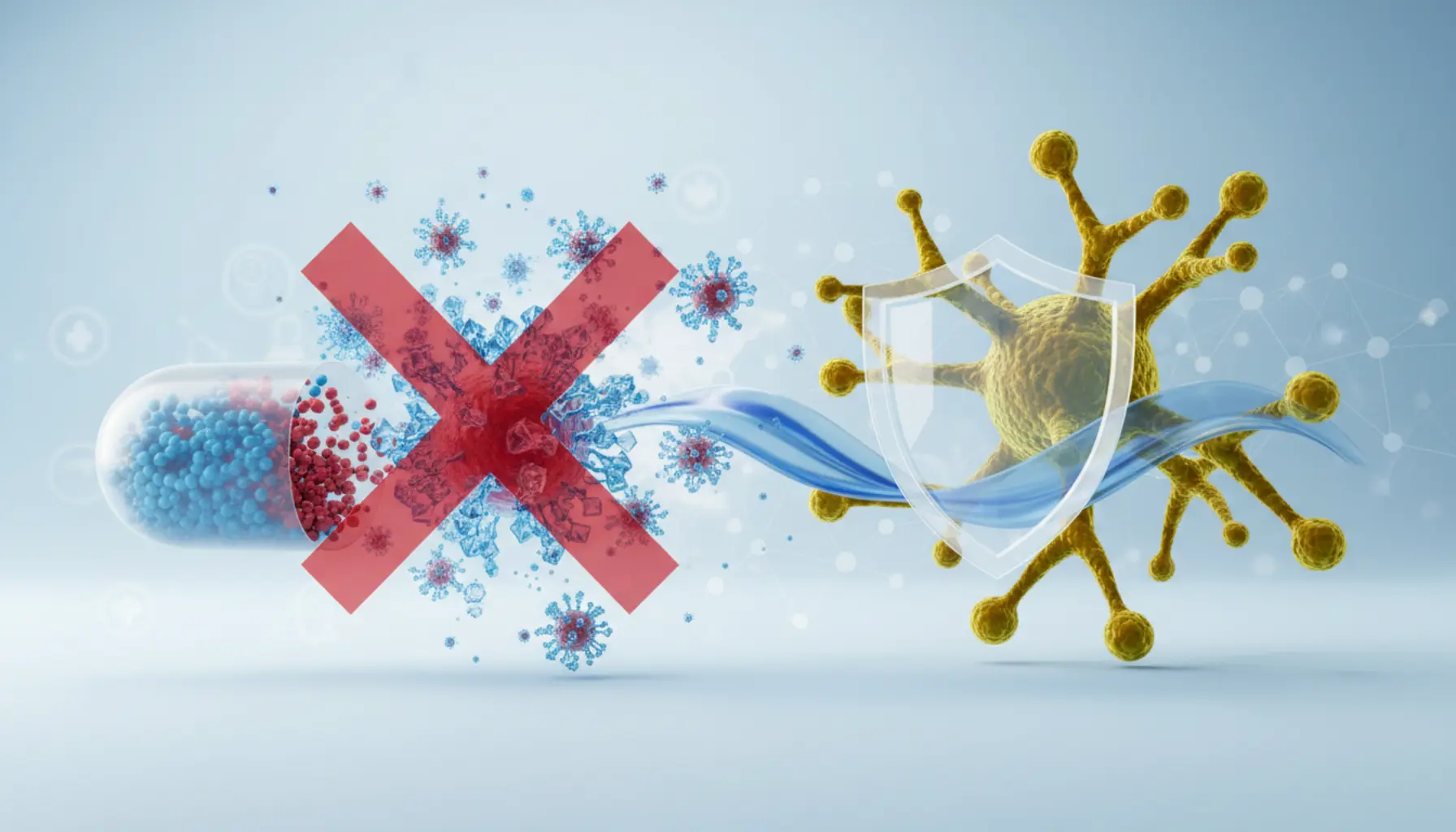
Antibiotics have saved millions of human lives, but their improper use raises many controversies. In this article, we explain what is true and what is a myth, when antibiotics are effective, and how to use them safely.
Discover the facts and myths about antibiotics – check when they are effective, how to use them, and why they do not work against viruses. Protect your health and use them responsibly!
Table of Contents
- What are antibiotics and how do they work?
- The most common myths about antibiotics
- When is an antibiotic effective?
- Antibiotics and viral infections — truth and consequences
- Safe use of antibiotics — key principles
- How to counteract antibiotic resistance?
What are antibiotics and how do they work?
Antibiotics are drugs used to combat bacterial infections, that is, those caused by bacteria, not by viruses, fungi, or parasites. Their name comes from the Greek words “anti” (against) and “bios” (life), which aptly reflects their essence – they are supposed to inhibit the life and reproduction of pathogenic microorganisms while doing as little harm as possible to the cells of the human body. The first widely used antibiotic was penicillin, discovered by Alexander Fleming in 1928, which revolutionized medicine and radically reduced mortality from infections such as pneumonia, sepsis, or wound infections. Today, we know many groups of antibiotics – including penicillins, cephalosporins, macrolides, tetracyclines, fluoroquinolones, aminoglycosides – each with a slightly different mechanism of action, spectrum of activity, and application. Regardless of differences, the common goal of all antibiotics is to disrupt the life cycle of bacteria at some stage: preventing multiplication, weakening, or completely destroying them. In practice, this means an antibiotic may inhibit the synthesis of the bacterial cell wall, proteins, nucleic acids (DNA, RNA), or disrupt important metabolic pathways, without which the bacteria will not survive or cannot divide. Thanks to these targeted mechanisms, antibiotics are effective against bacteria, but remain “blind” to viruses, which are built completely differently and use host cells for their own reproduction – this is why viral infections, such as the common cold or typical flu, are not treated with antibiotics because they simply have no target to “hit”. It’s also important to know that antibiotics may have a narrow or broad spectrum of action: some combat only a relatively small group of bacteria (e.g., a given species or type), while others are active against many different bacteria. The choice of preparation depends on the type of infection, the likely or confirmed pathogen, the patient’s condition, and local guidelines regarding increasing resistance. Using an antibiotic “just in case” or for infections that were not caused by bacteria not only doesn’t help but also promotes the development of resistance and disturbs the balance of the body’s natural microflora, such as in the gut or on the skin.
The mechanism of action of antibiotics can generally be divided into two categories: bactericidal and bacteriostatic. Bactericidal antibiotics lead to the death of bacteria – for example, by damaging their cell wall, as penicillins and cephalosporins do, or by destroying genetic material, thus preventing further function of the bacterial cell. Bacteriostatic antibiotics, on the other hand, do not kill bacteria directly but halt their growth and reproduction, e.g., by blocking protein synthesis; in those cases, the patient’s immune system plays a key role in removing the weakened pathogens. From the patient’s perspective, both types can be equally effective if they are appropriately tailored to the infection and the body’s immune status. When deciding on therapy, a doctor considers not only the “strength” of the antibiotic but also whether the drug will reach the right concentration at the infection site (e.g., lungs, urinary tract, bones), its side effects, required dosing frequency, and the risk of known resistance mechanisms in that bacteria. The effect of an antibiotic starts after the first dose; however, improvement in how the patient feels may appear only after 24–72 hours, as the body needs time to clear out the destroyed microbes and “calm down” the inflammation. It’s also crucial to understand that every antibiotic’s mode of action assumes maintaining the proper drug level in the body for the full prescribed duration – this is why it is so important to take it at regular times, in the doses ordered by the doctor, without shortening the treatment or “saving” tablets for later on your own. Too low a drug concentration or too short a therapy can result in some bacteria surviving, learning to “bypass” the antibiotic, and eventually passing on this ability to future generations and other bacteria. As a result, the same antibiotic may stop working not just in a single person, but in an entire population, which is seen today as the growing global problem of antibiotic resistance. Understanding what antibiotics are and how they interfere with bacterial function in detail helps us better comprehend why these are not “regular antipyretic drugs” and should be used only when there are clear, medically justified indications.
The most common myths about antibiotics
Many myths have arisen around antibiotics, causing patients to use them improperly, expect the impossible from them, or even fear them more than they should. One of the most widespread myths is: “antibiotics work on everything.” Many people believe that if something is “strong,” it will work on both viruses and bacteria, which in practice leads to pressure on the doctor to “prescribe something concrete” for a cold or flu. Antibiotics do not work on viruses and do not shorten the duration of viral infections; they will not cure a typical cold, flu, most cases of sore throat, or acute viral bronchitis. Using them in these situations not only does not bring any benefits but increases the risk of side effects and the development of resistant strains of bacteria, which in the future may cause serious infections. There’s a related myth – “the stronger the antibiotic, the better.” Patients often believe that the “newest,” “strongest” antibiotic by injection will be more effective than a carefully selected, older tablet preparation. But an antibiotic is not strong or weak “by definition” – it simply has a specific spectrum of activity, and the doctor’s role is to match it to the most likely or confirmed pathogen and the patient’s condition. It’s not recommended to “give the strongest just in case” as this increases selective pressure on bacteria, leading to resistance development in situations where more straightforward and safer preparations could still be used effectively. Another persistent myth says: “as soon as I feel better, I can stop the antibiotic.” Many people stop their treatment after 2–3 days when infection symptoms subside, believing that they are healed or wanting to “spare their body from chemicals.” In reality, such actions support the survival of the most resistant bacteria that have not been completely eliminated. These can multiply, causing a recurrence of infection, often harder to treat. They also increase the general pool of resistant bacteria in the environment. That’s why doctors and pharmacists put such heavy emphasis on the need to take antibiotics exactly as long and in the doses prescribed – neither shorter nor “prophylactically” longer. Related to this phenomenon is the belief that “if there are some pills left, they’ll be useful later.” Taking leftover antibiotics on your own initiative, based on similar symptoms from a few months ago, is not only ineffective (because the reason for the current infection may be different), but also dangerous – the dose and treatment duration are then random, and partly “under-treated” infections increase the risk of complications and resistance.

Another popular myth is the claim that “antibiotics are always harmful and should be avoided at all costs.” Such an attitude, often arising from negative personal experiences or those of close ones (e.g., diarrhea after antibiotics, rash, feeling unwell), can be just as dangerous as their overuse. Antibiotics, when used according to recommendations and only when truly needed, save lives – untreated or improperly treated bacterial infections can lead to sepsis, permanent organ damage, or even death. The goal, therefore, is not to “never take antibiotics” but to take them only when medically justified, in the appropriate dose and duration. The myth is often repeated: “since someone in the household had antibiotics for similar symptoms and it helped, it will help me too.” However, even with apparently identical symptoms (e.g., sore throat, fever, cough) the causes may be different – one person may have a bacterial infection, another viral, and another may be experiencing a flare-up of a chronic condition. Moreover, the dosage and selection of antibiotics depend on body weight, age, co-existing diseases, other medications, and allergies. Using someone else’s antibiotic, even if “left over” after a finished therapy, is a high-risk form of self-medication – not only might you not cure the disease, but you may also delay proper diagnosis. There is also the deeply rooted myth that “the body gets used to antibiotics,” so if they are used frequently, they stop working because “the person becomes immune.” In reality, it’s not the body, but the bacteria that become resistant – they develop mechanisms allowing them to survive in the presence of the drug (e.g., producing enzymes that break down antibiotics, changing the structure of their cell walls, or pumping the drug out). The more frequently and less thoughtfully antibiotics are used, the greater the selective pressure for the development of such resistant strains. It is also a myth to believe that “every fever in a child requires antibiotics.” Fever is a natural defense mechanism of the body – it often accompanies viral infections, in which antibiotics will yield no benefit. The decision to administer antibiotics should come from assessing the child’s condition, medical examination, and additional studies (e.g., CRP, blood count, cultures), not just from the temperature reading. Finally, some patients believe that if no noticeable side effects occurred while taking antibiotics, the drug was “too weak” or “did not work.” Lack of side effects does not mean ineffectiveness – it rather suggests that the therapy was properly chosen and well tolerated by the body. The task of doctors and pharmacists is to correct these myths, but equally important is the patient’s role: asking questions, seeking reliable information, and taking a critical approach to “good advice” from the internet or friends, which is very often based on the misunderstandings described above.
When is an antibiotic effective?
An antibiotic is effective primarily when the cause of illness is a bacterial infection, not a viral, fungal, or one due to allergies or irritation. Key to this is correctly identifying the source of symptoms – the doctor, based on history, physical examination, and possibly further testing (including cultures, CRP, blood count, throat swab, urine test), assesses if we are dealing with a bacterial infection that truly requires antibiotic therapy. Antibiotics work best for diseases such as: bacterial pneumonia, streptococcal angina, otitis media with bacterial exudate, bacterial sinusitis, some urinary tract infections, skin infections (e.g., erysipelas, furunculosis), as well as severe systemic infections (sepsis). Their effectiveness, however, depends not just on the presence of bacteria, but also on whether the particular strain is sensitive to the drug – sometimes an antibiogram is necessary, a test showing which antibiotics the microorganism responds to, and which it resists. Only the combination of the correct diagnosis, medication chosen for the pathogen, and administered at the right dose and duration provides the therapeutic effect we expect. Factors such as the patient’s age, coexisting diseases (e.g., kidney failure, liver failure, diabetes), other medication, and general immunity are also significant – in the elderly, chronically ill, or immune-compromised, the doctor may decide on different doses or the intravenous route to increase treatment effectiveness. It’s worth remembering that not every antibiotic works the same: some penetrate respiratory tissues better, others concentrate in the urinary tract, and others are mainly effective for skin or bone infections – which is why the doctor, not the patient, should choose the specific preparation. Poor medication choice (e.g., one that penetrates poorly into the infection site or has the wrong spectrum of action) can result in no improvement, even with regular tablet use, which patients sometimes mistakenly interpret as “ineffectiveness of all antibiotics.”
The effectiveness of an antibiotic also depends on strict adherence to dosing and treatment duration guidelines – even the best-chosen drug won’t work properly if taken irregularly or for too short a period. Antibiotics require the right concentration in the blood and tissues, which is achieved by taking them at regular times, at equal intervals as prescribed (such as every 8 or 12 hours). Skipping doses, randomly “doubling up” after missing one, or shortening the treatment prematurely after symptoms ease weakens the drug’s effect and promotes survival of the most resistant bacteria. Proper intake in relation to meals is important – some should be taken on an empty stomach, others with food to improve absorption or minimize gastrointestinal side effects. The antibiotic will be much more effective if the patient avoids substances during therapy that interfere with its action, such as alcohol or certain supplements and medications (e.g., iron, calcium, antacids, which may lower the absorption of some antibiotics). Providing appropriate support to the body – hydration, rest, a balanced diet, and, if needed, probiotics – can aid recovery, though these do not substitute for the medication itself. Following hygiene rules (washing hands, avoiding contact with sick people, proper wound disinfection) limits bacteria spread and reduces the risk of repeat infections, which in the long run helps retain the effectiveness of antibiotics for the whole population. Thus, antibiotic therapy is most effective when it combines a doctor’s evidence-based, rational decisions with the patient’s responsible adherence, awareness of the limitations of these drugs, and understanding that they are not a “universal remedy for everything,” but a precise tool to fight certain bacterial infections.
Antibiotics and viral infections — truth and consequences
Although the knowledge that “antibiotics do not work against viruses” seems widespread today, in practice, viral infections remain one of the most common reasons for unnecessary prescribing and taking of these drugs. Viruses and bacteria are completely different types of microorganisms – bacteria are cells with their own metabolism and structures that antibiotics target (e.g., cell wall, ribosomes, enzymes). Viruses, on the other hand, lack this structure: they are “packets” of genetic material that exploit human cells to reproduce. Therefore, an antibiotic cannot act on them – its targets simply do not exist in the structure of a virus. This means that in typical viral infections, such as the common cold, flu, mild COVID-19, most sore throats, laryngitis, or uncomplicated acute bronchitis in healthy adults, an antibiotic does not shorten illness, alleviate symptoms, or reduce the risk of complications. Nevertheless, patients often pressure doctors, expecting “something strong,” as antibiotics are associated with a rapid recovery. As a result, antibiotics are often prescribed “just in case” or as a way of “reassuring” the patient, even when there are no medical grounds for this. In truth, the treatment of viral infections should focus primarily on symptom relief (antipyretics, painkillers, nasal drops, moisturizing mucous membranes, rest) and supporting the body’s natural defense mechanisms. An antibiotic is required only when a secondary bacterial infection occurs – for instance, when, after several days of apparent recovery, symptoms return and rapidly worsen, presenting high fever, purulent discharge, or pain in the sinuses or ear. In this situation, a doctor may order tests (e.g., CRP, blood count, throat swab) to confirm a bacterial infection. It is also important to understand that high fever by itself, or cough or runny nose, are not proof that the illness is bacterial – its cause is determined by the overall clinical picture and test results, not by an isolated worrying symptom. An informed patient who understands the differences between viruses and bacteria is less likely to demand an antibiotic “at any cost” and cooperates better with symptomatic therapy.
Unnecessary use of antibiotics in viral infections has specific and far-reaching consequences – both for individual health and that of the entire population. Firstly, every antibiotic affects the microbiota, that is, the natural bacterial flora of the intestines, skin, and mucous membranes. When we receive an antibiotic “just in case” during a viral infection, we destroy part of the beneficial bacteria that support immunity, digestion, and protect against pathogens. The effect may be diarrhea, fungal infections (e.g., oral thrush, vaginal yeast infection), skin problems, and in the longer term – increased susceptibility to other infections and metabolic disturbances. Secondly, every unnecessary antibiotic contributes to increasing antibiotic resistance. When a drug is used without indications, we “train” the bacteria in the body – some survive contact with the antibiotic and develop defense mechanisms. These resistant strains can later cause infections that are harder to treat, require stronger drugs, hospitalization, or sometimes result in therapy failure. Antibiotic resistance is not an abstract risk – the World Health Organization considers it one of the greatest public health challenges globally, and the overuse of antibiotics in viral infections is one of the main factors driving this process. Another consequence is a false sense of security: patients who receive an antibiotic for every cold may ignore other important preventive measures, such as vaccinations against the flu and COVID-19, hand hygiene, airing rooms, or staying home during the acute phase of illness. In children, frequent, unwarranted antibiotic therapy can affect both developing immunity and intestinal microbiota at a crucial stage. On a systemic scale, the overuse of antibiotics also generates costs – not just for the drugs, but for treating side effects and hospitalizing patients with drug-resistant infections. For these reasons, it is vital not to “demand” antibiotics during viral infections and not to use them from home reserves or on the advice of friends. It is much safer and more effective to let the body fight the virus unaided with symptom medication, rest, hydration, and – if the doctor deems appropriate – specific antivirals or vaccines. Awareness of the consequences of inappropriate antibiotic use helps people make more responsible decisions and treat these drugs as a last resort, reserved for situations where they can really make a difference.
Safe use of antibiotics — key principles
Safe use of antibiotics begins before the first tablet is even taken – with proper diagnosis and an honest conversation with the doctor. You should not “demand” antibiotics from your doctor just because an illness has lasted a few days or a fever is present; the specialist, based on examination, interview, and sometimes additional testing (such as CRP, blood count, throat swab, urine or blood cultures), will decide whether there are grounds for antibiotic therapy. The cornerstone of antibiotic safety is to use only those medications prescribed specifically for you and for a given infection – under no circumstances should you take “leftovers” from another course or drugs borrowed from family or friends. Strict adherence to the prescribed dose and schedule is equally important: antibiotics should be taken at regular intervals (every 8 or 12 hours, for example), as their blood levels must remain high enough to effectively combat bacteria. Independently “saving” tablets, reducing the dose, breaking capsules without explicit doctor’s advice, or “keeping some for later” are all practices that weaken the effectiveness of treatment and promote selection of resistant strains. It is also crucial to finish the full course – even if symptoms have resolved earlier, microorganisms capable of multiplying and developing resistance may remain in the body. Safe antibiotic therapy also requires informing your doctor about all medications (including supplements, herbs, over-the-counter preparations), chronic illnesses, pregnancy, or breastfeeding, as some antibiotics may interact with other substances (e.g., decrease the effectiveness of hormonal contraception, increase the effects of anticoagulants) or be contraindicated. Careful attention to instructions for use is just as important: some antibiotics should only be taken with water, not milk or grapefruit juice, which could interfere with absorption; others should be taken on an empty stomach, yet others after meals to limit gastrointestinal issues. Carefully reading the leaflet and clarifying any doubts with your doctor or pharmacist is the basis of responsible and safe use of these drugs.
The second pillar of safe antibiotic use is consciously monitoring your body’s reactions and preventing side effects, while respecting public health principles. During treatment, monitor your wellbeing and the appearance of new symptoms (rash, skin itching, swelling of lips or tongue, shortness of breath, diarrhea, severe abdominal pain, yellowing of the skin or eyes) and report them to your doctor, especially if they suggest an allergic reaction or complications affecting the digestive tract, liver, or kidneys. In emergency situations, such as sudden facial swelling, shortness of breath, or loss of consciousness, immediate medical help is necessary as this may signify a severe anaphylactic reaction. To limit typical side effects, such as intestinal flora disturbances, many doctors recommend simultaneous use of probiotics – preferably selected individually and taken at a distance from the antibiotic dose as advised. During antibiotic treatment, staying hydrated, eating an easily digestible diet, avoiding alcohol (which can intensify toxicity and strain the liver), and refraining from taking painkillers or anti-inflammatories without consulting a doctor are also recommended. Safe antibiotic use also involves correct action after completing the therapy: unfinished packages should never be stored for future illness, and expired or unnecessary drugs should be taken to the pharmacy for proper disposal – throwing them in the trash or down the sink harms the environment and may foster the spread of resistance among environmental bacteria. Hygiene and prevention are also key: frequent hand washing, vaccinations, sensible use of healthcare services, avoiding antibiotics “just in case” or for every minor infection, and following isolation rules for contagious diseases all help not only the individual, but the whole community. Every responsible use of antibiotics reduces selective pressure on bacteria and slows resistance development, which is why patient-doctor-pharmacist cooperation and understanding the principles of safe use positively impact both individual safety and the preservation of antibiotic effectiveness for future generations.
How to counteract antibiotic resistance?
Antibiotic resistance is not an abstract concept from scientists’ laboratories, but a real problem that concerns every patient and the entire healthcare system. Every unnecessary or improper use of antibiotics increases the chance that bacteria will “learn” to evade the drug, making even simple infections difficult or impossible to cure. The key strategy is to limit antibiotics to situations where they are truly necessary – that is, for confirmed or highly likely bacterial infections. A patient should not pressure a doctor to “just in case” prescribe antibiotics for colds, sore throat, or cough if the doctor determines a viral cause. An informed patient understands that not getting an antibiotic prescription can be a sign of good, not bad, care. Avoiding self-medication is also vital – do not reach for leftover antibiotics from your home medicine cabinet, use drugs from illegal sources, or “borrow” tablets from relatives. Every antibiotic has specific indications, doses, and treatment durations tailored to type of infection, age, body weight, coexisting illnesses, or other drugs. Independently changing these parameters – shortening the course, lowering the dose due to fear of side effects, taking the drug “occasionally” when symptoms worsen – promotes survival of the strongest bacteria, which over time become dominant and more resistant. Following your doctor’s instructions precisely — regarding dose, time of day, intervals between doses, therapy duration, and manner of taking (on an empty stomach, after a meal, with plenty of water) — is the basic personal contribution to slowing antibiotic resistance. Informing the doctor about all drugs, supplements, and allergies is also wise, to avoid pharmacological interactions and the need to interrupt treatment because of unforeseen side effects.
However, effective action against antibiotic resistance does not end when the antibiotic is already prescribed – it starts much earlier with prevention and daily habits. The fewer infections occur, the less need for antibiotics, and thus there is less chance for resistant strains to emerge. The foundation is consistent hygiene – regular and proper hand washing, especially before eating, after using the toilet, upon returning home, after contact with a sick person, not touching the face, proper kitchen hygiene (separate boards for raw meat, thorough washing of vegetables, proper thermal food processing), and care for the cleanliness of toys or surfaces touched by children. Vaccinations play a huge role – both mandatory and recommended, e.g., against influenza or pneumococcus – which reduce the number of severe infections and hospitalizations, thus decreasing the need for antibiotic therapy. Boosting immunity through a healthy diet, sufficient sleep, regular activity, and avoiding tobacco and excess alcohol also indirectly decreases the demand for antibiotics. It’s important to use antibiotics responsibly in animals – never take veterinary drugs on faith, follow antibiotic principles in farms where food products originate, and at home, administer medications to pets only as prescribed by the veterinarian. Proper handling of unused medications matters too: don’t throw antibiotics in the trash or pour them down the drain; expired or unused packages should be disposed of at a pharmacy, which will ensure safe destruction so they don’t pollute the environment or foster resistant bacteria in soil and water. Socially, it’s important to support rational antibiotic use programs (known as antibiotic stewardship) – use primary care clinics rather than “arranging” prescriptions by phone or through a friend, take part in health education campaigns, and trust specialists’ decisions to recommend observation, diagnostic tests, or symptomatic treatment instead of immediate antibiotics. In this way, every patient, through daily choices and cooperation with medical staff, becomes an active participant in protecting the effectiveness of antibiotics for themselves and future generations.
Summary
Antibiotics are a powerful tool in fighting bacterial infections, but many myths lead to their overuse and decreased treatment effectiveness. Remember — they do not act on viruses, only on bacteria, so using them for a common cold or flu makes no sense and contributes to rising resistance of bacteria to treatment. Key points are to follow your doctor’s instructions and complete the full course of therapy. Responsible use of antibiotics protects our health and helps avoid the problem of antibiotic resistance, which is why it is worth knowing the facts and dispelling popular myths.