

Learn what removable orthodontic appliances are, how they work, when they are used, what effects they provide, and how to maintain good hygiene during treatment.
Table of Contents
- What is a removable orthodontic appliance and how does it work?
- Indications for using removable appliances
- Removable orthodontic appliance treatment course
- What effects can be achieved with removable appliances?
- Rules for hygiene and care of a removable orthodontic appliance
- Costs, treatment time, and consultation with an orthodontist
What is a removable orthodontic appliance and how does it work?
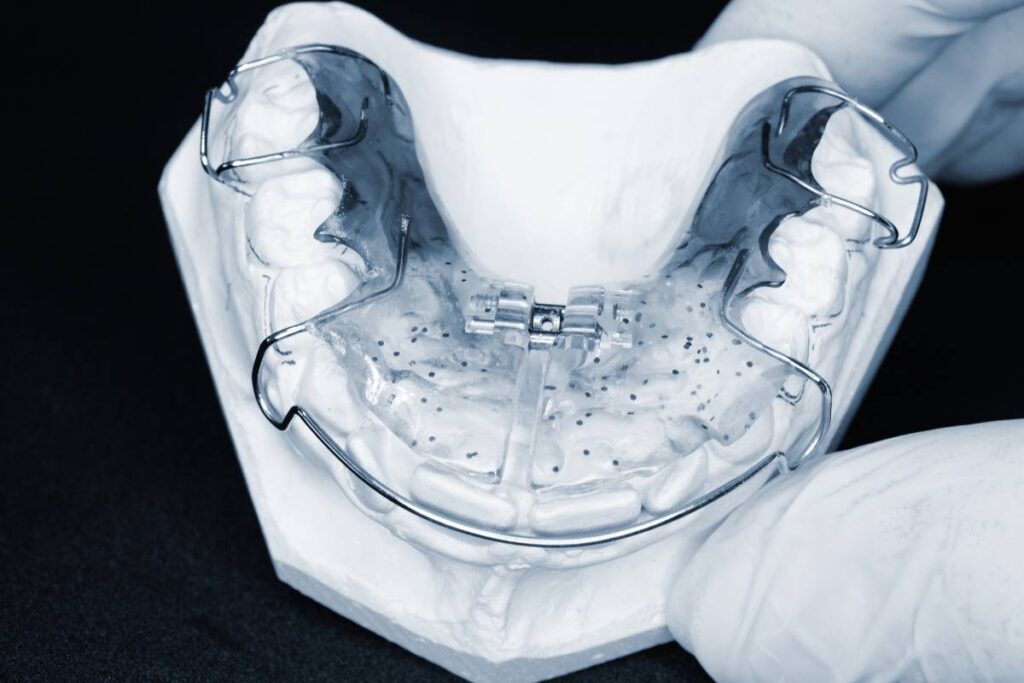
A removable orthodontic appliance is a popular solution used primarily for children and teenagers during the growth period of the jaws, but it is also sometimes utilized in adults as a supporting element of orthodontic treatment. Unlike fixed appliances, which are permanently attached to the teeth with brackets and wires, a removable appliance can be taken out by the patient—allowing convenient adjustment of wearing time to daily activities and making oral hygiene easier. It is most commonly made from acrylic (acrylic plate), with metal clasps, springs, and activating screws attached that influence the appliance’s effectiveness. There are many types of removable appliances, the most popular of which are plate appliances (e.g., Schwarz or Klammt appliances) used for arch expansion and minor alignment corrections, as well as elastic appliances, such as simple retention plates and functional devices (e.g., twin block), which influence bone growth and improve jaw relationships. Each appliance is individually designed for every patient based on impressions and plaster models, ensuring perfect customization to the mouth’s anatomical conditions and to specific malocclusions.
The operation of a removable orthodontic appliance is based on delicate, gradual application of controlled mechanical pressure to the teeth and the upper and lower jaw bones, which stimulates bone remodeling processes and moves teeth into correct positions. The coordinated action of springs, expansion screws, and clasps means that the appliance can act on specific tooth groups or the entire dental arch, depending on its design and the orthodontist’s recommendations. By appropriately activating the screws and spring elements, the orthodontist can precisely control the force and direction of the appliance’s action—allowing for correction of crowding, expansion of narrow dental arches, shifting of teeth in the arches, and even stimulating or inhibiting jaw bone growth in young patients. A particularly important feature of a removable appliance is the ability to take it out for meals, tooth brushing, or important events, but its effectiveness depends on regular wear—usually recommended for at least a dozen hours per day, especially at night. Modern solutions like clear aligner trays minimize discomfort and are less visible, increasing acceptance among patients concerned with appearance. Removable appliances also play a key role in retention, securing the results achieved by fixed appliances or correcting minor relapses. Ultimately, the effectiveness of therapy with a removable appliance depends on individual anatomical conditions, the type and severity of the malocclusion, the patient’s age, and close cooperation with the orthodontist, who regularly monitors progress and appropriately adjusts the appliance’s settings and functionality.
Indications for using removable appliances
Removable orthodontic appliances are exceptionally versatile therapeutic tools, though their use is most often associated with treating children and adolescents during periods of intense bone and dental development. The main indications are mild to moderate malocclusions, such as anterior crossbite, posterior crossbite, open bite, or crossbite. Their effectiveness is tied to the ability to intervene early in orthodontic issues, while the bones are still susceptible to change. Orthodontists often recommend removable appliances for children with mixed dentition (a combination of baby and permanent teeth), as this allows for influencing jaw growth directions and correcting abnormalities during one of the most critical periods for oral development. These appliances are also well-suited for functional issues—arising from bad habits such as thumb sucking, mouth breathing, or tongue thrusting—as they affect not only the position of the teeth but also oral muscle function and the surrounding tissues. Additionally, removable appliances are used prophylactically to prevent the development of more serious malocclusions, potentially minimizing the need for later, more invasive treatments such as fixed appliances or surgical interventions.
It is important to note that removable appliances are sometimes used in adults as well, especially in cases where fixed treatment is medically contraindicated or minor corrections are needed after completing fixed appliance therapy. They may also be indicated for maintaining results (retention) and for preventing relapse—using special retention plates or clear aligners for this purpose. Orthodontists also often choose removable appliances where arch expansion is needed, space must be created for erupting permanent teeth, or proper development of dental and jaw structures in young patients is to be supported. These appliances allow for treatment tailored individually to each patient’s anatomical needs—it is possible to design a device that selectively targets certain tooth groups, which is impossible with fixed appliances. The psychological aspect also plays a role: for many children and teenagers, being able to remove the appliance themselves and personalize its appearance enhances motivation for regular use, directly affecting the therapy’s outcome. Removable appliances may also be recommended after periodontal procedures to stabilize the teeth or as part of jaw orthopedic treatment, supporting overall oral health plans. In summary, the wide range of indications encompasses not only malocclusion correction at various life stages but also prophylaxis and developmental support, making removable orthodontic appliances a fundamental part of modern orthodontics.
Removable orthodontic appliance treatment course
Orthodontic treatment with a removable appliance consists of several well-planned steps, beginning with a detailed consultation with an orthodontic specialist. During the initial visit, the doctor takes a medical history, assesses the teeth, jaw alignment, and the patient’s bite conditions. If needed, X-rays, dental impressions, or digital scans are performed, which help to create an individualized treatment plan and a precise appliance design. Together with the patient or their guardian, treatment goals, projected duration, and expected outcomes are discussed. Then, the appliance is prepared and personalized by a specialized dental laboratory. At this stage, the type of plate, the shape and color of the appliance, and any additional elements such as springs, screws, or clasps are chosen to support specific tooth movements. Once finished, the patient is invited for a fitting appointment, during which the orthodontist adjusts the appliance to the patient’s oral cavity, checks the fit, and instructs on how to put on and remove the appliance independently.
The essential part of appliance therapy is systematic wear in accordance with the orthodontist’s recommendations—usually for a dozen or more hours a day, with overnight use and specified periods during the day being mandatory. Treatment effects depend primarily on regular use, which is why patient motivation and responsibility are key focuses in patient education. Follow-up visits, typically every 4–6 weeks, allow the orthodontist to assess progress and make necessary adjustments—tightening screws, replacing elements, or adapting the appliance’s features as needed. During these visits, the doctor monitors tooth movement, bite changes, soft tissue condition, susceptibility to irritation, and oral hygiene levels, including caries prevention. The duration of treatment with a removable appliance depends on the patient’s age, the severity of the malocclusion, and commitment to using the appliance, but most often ranges from several months up to two years. In some cases, after the active phase, continued appliance wear as retention is recommended to consolidate orthodontic effects and prevent relapse. Patient education also includes care recommendations, eating habits, and safety precautions during sports. Treatment with a removable orthodontic appliance requires close cooperation between the patient and orthodontist, patience, and consistent approach at every stage to ultimately achieve a healthy, functional, and aesthetic bite.
What effects can be achieved with removable appliances?
The use of a removable orthodontic appliance can bring a range of tangible benefits essential for oral health and overall comfort. The most significant result is the effective correction of mild to moderate malocclusions, such as crossbite, open bite, anterior or posterior crossbite. Regular, recommended wear of the appliance applies controlled, gradual pressure to the teeth and dental arches, causing movement and formation of proper alignment. In children and adolescents, whose jaw bones are still growing, removable appliances make it possible not only to move teeth but also to guide jaw growth, expand the dental arch, and correct facial asymmetry. This prevents the development of more severe malocclusions in the future and reduces the need for complicated, invasive therapies later in life. Preventive use is also possible—appliances are employed to eliminate bad habits that trigger malocclusions, such as thumb sucking, incorrect tongue positioning during swallowing, or mouth breathing. Improvement in chewing function, breathing, and articulation are further appreciated outcomes. The aesthetic aspect is also noteworthy—precise alignment corrections make the smile more harmonious, positively affecting self-esteem, especially among younger patients.
Another important result of using a removable appliance is stabilization after previous fixed appliance treatment. Removable appliances often serve as retention devices, securing the new tooth positions and preventing relapse. In cases of minor irregularities or the need for small corrections after fixed appliance therapy, a removable solution may suffice—eliminating the need for advanced orthodontic treatments. Modern removable appliances, including popular clear aligners, offer a comfortable, aesthetic solution for adults, for whom treatment time and appearance are important. Removable appliances are almost non-invasive, and their removability reduces the risk of oral mucosa irritation and makes daily hygiene and dental health easier. Results with removable appliances are usually visible after several months, but their durability depends on diligent adherence to the orthodontist’s recommendations and consistent appliance wear. Early orthodontic intervention with removable appliances promotes harmonious facial and jaw development, improves facial proportions, and reduces risk of temporomandibular joint and other complications. For children and teens, appliance therapy fosters correct swallowing and breathing patterns and builds lifelong healthy oral habits. These effects—from bite improvement, oral function, to psychological and stabilization benefits—make removable orthodontic appliances invaluable in contemporary orthodontics, delivering lasting, multi-dimensional health and aesthetic advantages.
Rules for hygiene and care of a removable orthodontic appliance
Proper hygiene and care of a removable orthodontic appliance are crucial for effective treatment and for preventing oral health problems. Because the appliance can be taken out, both the appliance and the patient’s teeth can be more thoroughly cleaned. After each removal from the mouth, the appliance should be washed under running lukewarm water using a dedicated brush or a soft toothbrush, to remove food debris and plaque. It’s vital to use gentle cleaners—never toothpaste, as it can damage the appliance’s surface and cause micro-abrasions prone to bacteria, fungus, and stains. Clean the appliance regularly, at least twice daily—or preferably after every meal—to prevent odor and microbial buildup. It’s also recommended to use special tablets or liquids for disinfecting orthodontic appliances weekly, which effectively remove deposits and bacteria without damaging the appliance materials. After cleaning, thoroughly dry the appliance—storing a damp device encourages mold and fungus. Store it in a ventilated, original container, which should also be cleaned regularly.
During treatment with a removable orthodontic appliance, correct device care must be combined with daily oral hygiene. Teeth and gums should be brushed at least twice a day, ideally after every meal, with special attention to areas near the appliance where debris and plaque may collect. Dental floss, interdental brushes, and irrigators should be used to clean hard-to-reach spaces. Antibacterial mouthwash supports gum health and reduces inflammation risk. Also, avoid eating and drinking sugary, sticky, or acidic products while wearing the appliance to reduce caries and enamel demineralization risks. After eating, ensure both the mouth and appliance are properly cleaned before reinsertion. Report any damage or visible changes—cracks, discoloration, or loss of retention—to your orthodontist immediately. Regular check-ups not only check treatment progress but also assess the appliance’s condition and address hygiene issues. Keeping the appliance and mouth clean is vital to eliminate odor, prevent infections, caries, or gum disease, and ultimately ensures desired orthodontic results.
Costs, treatment time, and consultation with an orthodontist
The financial and time aspects of orthodontic treatment with a removable appliance are a critical consideration before starting therapy. The cost of removable orthodontic appliances varies depending on several key factors: appliance type, the severity of the malocclusion, patient needs, and the clinic’s location. In Poland, prices usually range from about 600 to 2000 PLN for one plate or aligner set, though most cases require two plates (upper and lower jaw). Control visit costs, usually every 4-6 weeks, must be added—these are essential for progress assessment and appliance adjustments, typically ranging from 100 to 250 PLN per visit. Additional charges may cover impressions, diagnostic consultations, x-rays, or repairs. Poland’s National Health Fund (NFZ) partially reimburses treatment of children up to age 12 for classic plate appliances and specific defect types, but waiting times can be long. Adults and those choosing modern options (like clear aligners) bear full costs. Don’t forget additional spending for appliance care and specialist hygiene products.
Treatment duration with a removable orthodontic appliance varies—it depends on patient age, the type and severity of the defect, commitment to wearing the appliance, and the regularity of check-ups. In children and adolescents, where bone plasticity means more effective treatment, standard therapy lasts from 9 to 18 months, though easier cases can see results sooner, even after several months. More severe or complex cases can require up to two years. For adults, treatment tends to be extended and depends on whether removable appliances are used alone or as part of retention after fixed therapy. A crucial aspect is an orthodontic consultation before treatment begins. The specialist will conduct a thorough oral evaluation, take photographs and X-rays, and analyze dental impressions or 3D scans. The orthodontist will then develop an individual treatment plan, forecast duration, and estimate costs. It’s also a chance to clarify doubts and understand the necessity of following hygiene, wearing, and visit recommendations. A partnership with an experienced orthodontist optimizes treatment effectiveness and minimizes complications. Remember—individual circumstances may require plan modifications or new solutions at any stage, so flexibility from both patient and orthodontist is key to achieving optimal, lasting results with the best cost-effectiveness.
Summary
A removable orthodontic appliance is an effective tool for correcting malocclusions and teeth alignment, particularly in children. It is recommended for minor irregularities and developmental issues. Regular appliance wear, adherence to orthodontist recommendations, and correct hygiene provide the best treatment outcomes. Removable appliances are convenient and facilitate easy oral hygiene. Before starting, a detailed consultation should address costs and therapy duration, ensuring optimized and safe treatment for the patient.