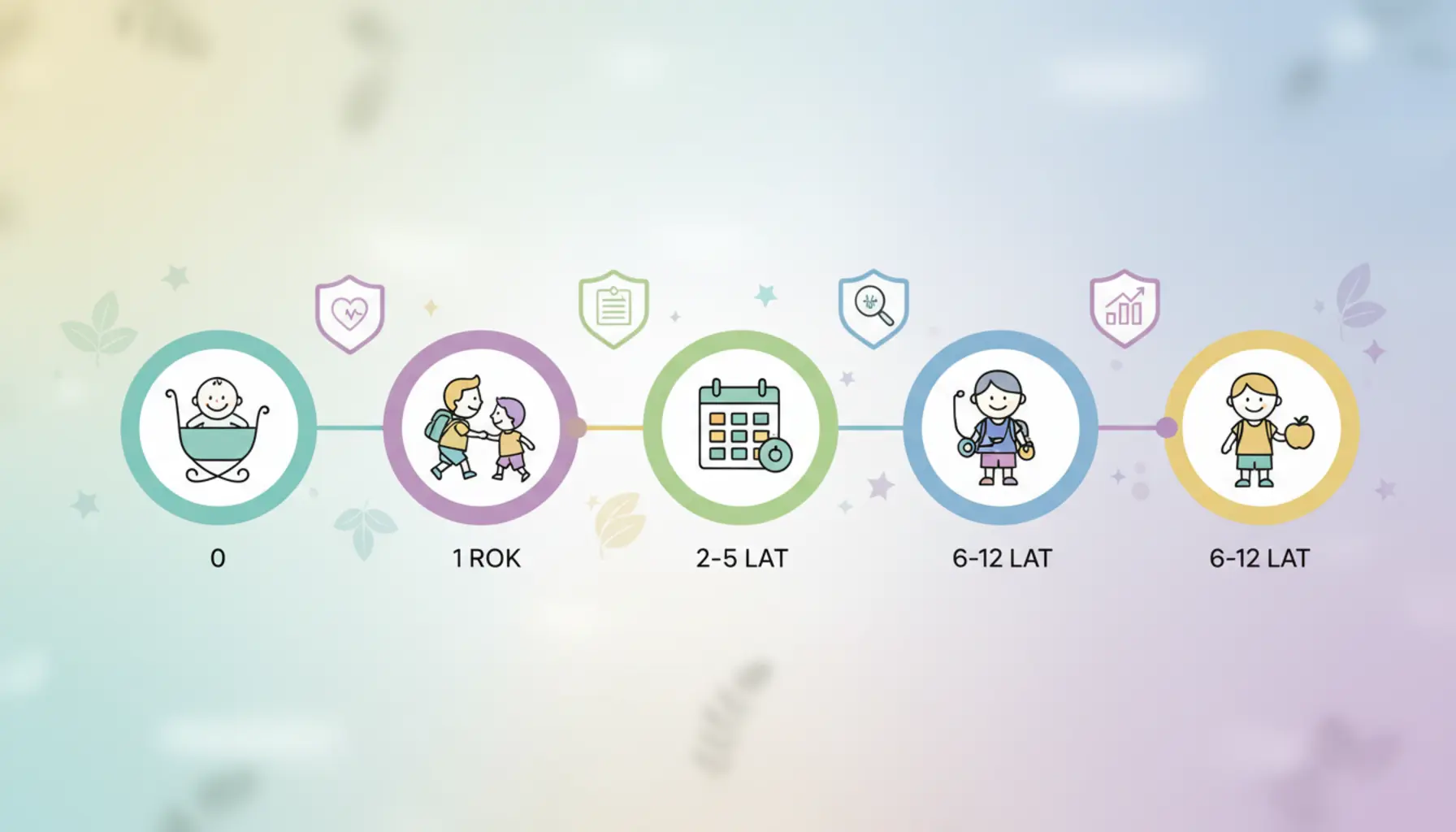
The child health calendar is the key to ensuring your little one has optimal development and protection against diseases. Regular preventive examinations form the foundation of effective care and help with early detection of health problems. Psychological and physical development requires the involvement of parents and conscious observation at every stage of life.
Table of Contents
- Introduction to Child Health Prevention
- Examination Schedule in the First Year
- Child’s Month-by-Month Development
- Why are Preventive Examinations Crucial?
- Assessment of Physical and Emotional Development
- Summary and Tips for Parents
Introduction to Child Health Prevention
Child health prevention is a well-thought-out system of actions aimed not only at early detection of diseases but above all at preventing them by supporting harmonious physical, emotional, and social development. Modern pediatrics emphasizes that it is regular prevention—not just the treatment of existing ailments—that has the greatest impact on health in adulthood. The child health calendar helps parents navigate the maze of vaccination schedules, periodic check-ups, follow-up visits at the pediatrician and other specialists, as well as developmental stages worth consciously observing. Prevention begins already in pregnancy—with caring for the mother’s health, physician-recommended supplementation, avoiding substances, and performing prenatal tests—then smoothly transitions into caring for the newborn, infant, and older child. It is a long-term process where regularity, consistency, and good cooperation with medical personnel are key. For a parent, this may mean the need to plan visit schedules, keep child medical documentation, make notes for the pediatrician, and observe behavior, appetite, and mood. Conscious prevention involves several pillars: recommended vaccinations, health balances and periodic examinations, monitoring growth, body weight, and psychomotor development, age-appropriate nutrition, physical activity, maintaining immunity, sleep and oral hygiene, as well as mental health and building a safe attachment with caregivers. All these elements complement one another—even the best vaccinations cannot replace a healthy diet, fresh air activity, and emotional closeness, which support the maturation of the immune and nervous systems. At the same time, appropriately timed screening exams (e.g., hearing, vision, speech development, or postural defects) allow abnormality detection at a stage when prevention or mitigation is still possible. In practice, prevention means not only following the doctor’s recommendations but also everyday habits at home: shared meals based on unprocessed foods, limiting sugar and sweets, teaching tooth and hand washing, reducing screen time, and encouraging free play. Parents serve as guides and “models”—children learn most effectively by observation, so it’s crucial for adults to care for their own health, activity, and eating as well. In prevention, it’s also important to understand that every child develops at their own pace—schedules and norms are points of reference, not strict orders. The parent’s role is attentive observation and reaction when something is concerning: e.g., lack of eye contact, eating difficulties, disproportionately frequent infections, regression, or behavioral changes. The idea is not excessive worry, but mindfulness and readiness to consult a pediatrician or specialist. Thus, prevention becomes a partnership between family and the healthcare system, not a one-off action during illness.
As part of health prevention, it’s also extremely important to shape proper attitudes toward health among children from the youngest age. Even a preschooler can understand that hand washing protects against “germs,” that vegetables and fruit give strength, and that outdoor exercise leads to a “strong heart” and good mood. Explaining to the child what and why you are doing—for example, the reason for a doctor’s visit, the purpose of vaccinations, or why a helmet is necessary when cycling—builds a sense of security, trust in medicine, and makes later cooperation easier, for example during vaccinations or blood draws. Prevention also involves the topic of emotion: children often feel fear before examinations, may cry during medical procedures, or protest against changes in routine. The parent’s job is not only to “make sure the exam is done,” but to support the child, name emotions, explain procedures in age-appropriate language, and ensure physical closeness. Positive experiences in the first years of life, including medical ones, pay off later—a child who feels heard and respected will cooperate more willingly with doctors, talk openly about ailments, and not avoid check-ups. Prevention also involves cooperation with educational institutions—nurseries, kindergartens, schools—where developmental difficulties are often detected first, such as speech delays, concentration problems, hyperactivity, postural defects, or vision problems. Teachers, pedagogues, speech therapists, and school nurses play a vital role in early intervention systems, so it’s worth maintaining an open dialogue with them and not ignoring their observations. Parents, in turn, can provide the institution with important information about the child’s health, allergies, or medical history for better care. Contemporary child health prevention also includes the digital aspect: responsible internet, gaming and social media usage, protection from cyberbullying, and teaching balance between online and offline worlds. While this may seem more an educational than a medical area, it tangibly affects mental health, sleep quality, concentration, and peer relations. Including these topics in the wider health calendar makes prevention truly holistic. It’s also important to remember that parents don’t need all the answers or to evaluate every concerning symptom on their own—the key is skill in seeking reliable knowledge and professional help, rather than relying on unverified internet forums. Child health prevention is not a single act but an ongoing process where daily small decisions and habits—diet, routine, emotional response, and reaction to illnesses—create the foundation of life-long health.
Examination Schedule in the First Year
The first year of a child’s life is the period of most intense development, which is why the examination schedule is especially dense and meticulously planned. Usually, the first preventive visit happens in the first or second day after birth—still in the hospital, the neonatologist conducts a newborn’s physical exam, evaluates breathing, circulation, muscle tone, reflexes, skin color, and heart function, measures head and chest circumference, length, and birth weight. Basic screenings are also performed: hearing screening with otoacoustic emissions or ABR, metabolic disease screenings (the so-called “heel prick test” for, among others, phenylketonuria, congenital hypothyroidism, cystic fibrosis, certain fatty acid oxidation disorders), and risk assessment for newborn jaundice. After discharge, within a few days, parents usually visit a community midwife, who at home checks umbilical healing, feeding, weight gain, observes parent–child bonding, and answers first concerns. Between the 4th and 6th week, the first pediatric or family doctor visit is recommended; during this, the doctor again performs a comprehensive physical exam, evaluates if the child is nursing well, gaining weight, responding to light and sound stimuli, assesses muscle tone and primitive reflexes (e.g., Moro, grasp), and may refer for the first cranial ultrasound if indicated. This is also typically when the first hip ultrasound is performed (usually between the 4th and 12th week), crucial for detecting hip dysplasia, which, untreated, may lead to permanent disability. In the first weeks, the immunization calendar begins—the child receives TB (BCG) and a first dose of hepatitis B vaccine in the hospital, with the next dose and additional vaccines administered at check-up visits at 6–8 weeks and 3–4 months, combined each time with thorough examination and interview about how the child coped after previous vaccines.
In the second–third month, the pediatric visit focuses not only on health balance but also on psychomotor development assessment: the doctor checks for visual contact, social smiling, more stable head holding, following moving objects, and cooing. Another orthopedic assessment, especially for hip joints and follow-up hip ultrasound (if recommended), usually occurs around 3 months, allowing even minor irregularities to be corrected early with positioning or orthoses. Around 4–6 months, the doctor assesses whether the child can roll from back to belly, support on forearms, grasp toys, and produce varied sounds; this is also when complementary feeding is discussed, as well as iron deficiency and vitamin D prevention and allergy risk. Over the months, health check-ups (usually every 2–3 months in the first year) allow monitoring of growth and head circumference centiles—measurements are plotted on centile charts to check for harmonious growth and watch for signals of obesity, malnutrition, or hydrocephalus. Around 6–9 months, a neurological or physiotherapy consultation is advisable if altered muscle tone, asymmetric positioning, lack of sitting attempts or self-support is noted—the sooner the intervention, the better for posture development. Observing sight and hearing is also important: lack of response to their name, not following toys visually, “wandering” eyes or constant head tilting may require referral to an ophthalmologist or ENT. By the end of the first year, usually around 10–12 months, another health check is performed to assess if the child can sit unaided, stand with support, take first steps with assistance, respond to simple commands, babble, and utter first syllables or simple words. At this stage, laboratory tests such as blood count and iron level may also be ordered, particularly for anemia risk groups. The first-year examination calendar also includes dental prevention—even though the first dentist visit is often postponed, it is advisable to make it after the first teeth appear, to assess enamel, teething, and discuss oral hygiene and habits to avoid bottle caries. All these visits and exams create a cohesive early diagnostics system, where parents—by observing the child daily and reporting issues—are equal partners in caring for health during its most dynamic phase.

Child’s Month-by-Month Development
The first year of life is a time of exceptionally dynamic changes, often surprising parents by how quickly the child acquires new skills. While each child’s development is individual, there are typical milestones worth knowing to observe progress and catch possible anomalies early. In the 1st month, babies sleep most of the day but gradually begin to react more clearly to a parent’s voice, briefly lift their head while lying on their stomach, and follow contrasting objects at short distances. By the 2nd month, there’s more intentional activity: prolonged visual contact, “return” social smiles, excitement at the sight of a caregiver, better muscle tone (though movements are still uncoordinated). In the 3rd month, many babies lift their head higher on their stomach, support on forearms, start babbling, and gaze at faces. It’s also a time for parents to support development—by tummy time, laying on the play mat, gentle conversations and singing. Between 4 and 5 months, babies grow stronger: on their stomach, they lift their chest, support fully on forearms, some attempt rolling, examine their hands with fascination and reach for them, boosting hand–eye coordination. It’s also a period of rapid pre-verbal language development—babies “talk” to caregivers, squeal, laugh, respond to intonation, emotional reactions grow more varied. Around 6 months, many sit with support, grasp toys with both hands, switch them from hand to hand, and begin trying to sit unaided and pull to a sitting position. This is also a key stage for introducing solid foods, relevant not only for nutrition but also for sensory and speech therapy reasons—learning new textures, tastes, tongue and lip movements prepares the way for future speech. Between 7 and 8 months, gross motor development surges: many babies start creeping or crawling, roll freely both ways, test their physical abilities, pull to kneeling at crib bars, and some to standing with support. Cognitive advances show in greater curiosity, manipulation of objects (banging, shaking, dropping), response to their own name, and simple games like peekaboo, helping with object permanence and understanding parent presence.
Around 9 months, babies move about more confidently—crawling in all directions, pulling to stand, standing with support for longer, trying to walk sideways holding furniture. The pincer grasp develops: they learn to pick up small objects with two fingers, which is crucial for future fine motor skills (such as holding crayons or utensils). Socially and emotionally, separation anxiety may appear—the baby protests when a parent leaves the room, a natural stage of forming bonds and self-awareness. Between 10 and 11 months, many begin taking their first tentative steps holding adult hands or furniture, try to sit from lying, and confidently change positions. This is also an intense period for language development: although few full words are spoken, babies consciously repeat syllables, understand simple commands like “give” or “come,” and respond to prohibitions or tone of voice. Parents can support language by naming emotions (“I see you’re upset because the toy fell”), narrating daily activities, and reading short books. Around 12 months, some children take the first steps alone, others still prefer crawling—both are normal if there is overall motor activity, curiosity, and ongoing progress. Comprehension is well developed: the child recognizes familiar objects and people, responds to simple questions, communicates needs with gestures (pointing, arms up to be picked up), and first words or meaningful sound clusters appear. Throughout the first year, parents should remember the development calendar is a general map, not a rigid script—small differences in acquiring skills are normal as long as progress is steady, not regressive. Worrisome signs include prolonged stasis, strong movement asymmetries, lack of eye contact, lack of reaction to sounds, or lack of environmental interest—in such cases, consult a pediatrician or specialist (neurologist, physiotherapist, psychologist) promptly. Mindful month-by-month observation, noting observations in the child health calendar, and regular check-ups help not only appreciate progress but also activate needed intervention if required.
Why are Preventive Examinations Crucial?
Preventive examinations form the foundation of child well-being because they allow for early disease detection and monitoring of normal physical, emotional, and social development. In the early years, the child’s body is changing rapidly—the brain forms millions of new connections, senses develop, and the locomotor and immune systems mature. Many disorders in this time may be subtle, without clear symptoms to concern parents. Regular pediatric visits, health balances, and screenings allow professional health assessment and early response, before an issue becomes a serious disease or permanent developmental disorder. The doctor measures and weighs the child, assesses body proportions, blood pressure, hearing, eyesight, posture, muscle tone, psychomotor development, comparing values on centile charts and age norms. This helps catch delays as well as too-rapid advancements, which may also require specialist attention.
The significance of preventive examinations goes far beyond “screening,” since they are a tool for real disease prevention in the future. During health balances and regular visits, the pediatrician can spot the first signs of problems such as obesity, postural defects, bite anomalies, impaired vision, allergies, anemia, congenital heart conditions, hearing disorders, or the spectrum of neurodevelopmental disorders (e.g., autism spectrum, ADHD, speech delays). Early referral to a pediatric neurologist, speech therapist, psychologist, orthopedist, ophthalmologist, or nutritionist means interventions can be more effective, shorter, and less taxing for the child. Remember, many chronic conditions—type 1 diabetes, thyroid disease, celiac disease, or rheumatic conditions—give only subtle early signs, easily overlooked day to day. Systematic prevention allows extra questions, orders basic labs, ultrasound or specialist consultations, and thus protects the child from complications later on. The educational aspect of preventive visits is also essential: during these, parents get tailored advice about nutrition, exercise, sleep hygiene, skincare, vision and back care, digital hygiene, and fostering emotional resilience. It’s a time to discuss vaccination concerns, health fears, behavioral challenges, pacifier use, diet expansion, preschool readiness, potty training, and more. For many parents, preventive visits offer a safe space to raise their own psychological well-being and ways to cope with parenting stress—and the mental health of caregivers directly affects the child’s health and growth. Regular contact with one primary care physician builds trust, making it easier to share even apparently “trivial” observations and react quickly to anything worrying. In a well-managed child health calendar, prevention becomes an ongoing process where doctor and parents collaborate, not an ad-hoc response to acute health decline. This increases the chance that the child will enter preschool, school, and adolescence with a strong health foundation, good habits, and a sense of security grounded in attentive, regular care.
Assessment of Physical and Emotional Development
Assessing a child’s physical and emotional development is one of the most important elements of the health calendar, as it allows early detection of abnormalities and proper support for the child. During preventive visits, the pediatrician not only weighs and measures the child but analyzes the entire context of their functioning: mobility, muscle tone, sleep quality, appetite, response to stimuli, and interaction with the caregiver. Standard parameters include body weight, height, head circumference, and body proportions, plotted on centile charts to compare the child with peers and to spot both too-rapid and too-slow growth. The trend is more important than a single reading—harmonious, gradual weight and height gain is more reliable than any one “high” or “low” value. In the first year, the doctor also assesses motor development: if the child holds their head up at the right time, rolls, supports on forearms, sits, crawls, pulls to a stand, and takes first steps. The quality of movements is observed—smoothness, symmetry, preference for one side, excessive or low muscle tone. If in doubt, the pediatrician may refer to a pediatric neurologist, physiotherapist, or orthopedist for early exercises or therapy. In later years, physical development assessment includes posture (spine, shoulders, pelvis, feet), coordination, balance, general agility—can the child run, jump, climb, perform age-appropriate activities. In preschool and school age, special attention is paid to postural defects, flat feet, obesity, underweight, and fine motor development—hand and finger dexterity, important when learning to write. Parents can assess physical development daily by noticing whether the child willingly engages in active play, tires too quickly, complains of leg or back pain, or moves markedly differently from peers. Noting milestones in the health calendar and reporting concerns to the doctor is more valuable than comparisons with siblings or friends’ children, who may have a different pace of development.
Emotional and social development is equally important, though often less obvious and easily overlooked. In the first months, the caregiver bond is essential—the child calms in the caregiver’s arms, responds to voices, social smiles appear around 6–8 weeks, and then baby starts mimicking faces, babbling, and initiating “conversations” with the parent. Lack of eye contact, limited reaction to closeness, or lack of smiles in subsequent months are signs for consultation. In the second half year, the child usually shows curiosity, reaches for toys, distinguishes familiar from unfamiliar people, may react anxiously to strangers, and more strongly seeks the caregiver’s presence—a natural stage of separation anxiety. In nursery and preschool age, the doctor and psychologist, if involved, observe emotional skills: expressing anger, sadness, joy, coping with frustration, forming peer relationships, sharing, alternately playing, and learning group rules. Communication skills are also assessed—first words, then sentences, understanding age-appropriate directions, response to names, and efforts to initiate contact. The health calendar often uses simple developmental questionnaires, with parents filling out surveys about the child at home and in the peer group, allowing early detection of challenges such as speech delays, autism spectrum, hyperactivity, anxiety, or emotional regulation problems. Modern prevention emphasizes parents as the key “diagnostic tool”—they observe, daily, how the child reacts to touch, separation, novelty, failure, and routine change. Noting recurring behaviors, talking to teachers, and reporting concerns to a pediatrician or psychologist rather than waiting for the child to “grow out of it” is recommended. Family context is also part of emotional and social development assessment: parental stress, relationship quality, adult responses to the child’s emotions, and time spent together without screens. Experts highlight simple tools for emotional maturation: steady daily rhythm, predictability, clear rules, attentive parental presence, joint play, reading, conversations about feelings, naming emotions. Such an approach turns emotional development assessment into a starting point for consciously supporting the child’s resilience for the stages ahead.
Summary and Tips for Parents
The child health calendar helps organize vast information, but its main purpose is to support parents in making calm, informed decisions. Regular preventive visits, screenings, and systematic observation of development allow early anomaly detection and rapid response, yet daily habits and the home atmosphere are equally important. It’s good practice to keep your own “health and development journal”—a notebook or app, to record vaccination dates, test results, sleep, appetite, behavior, and new skills. This documentation helps conversations with the pediatrician, highlights trends (e.g., gradual downward movement on centile charts), and reduces unnecessary stress as much can be checked in your notes, rather than relying on memory. Remember, the calendar is a guide, not a rigid script—each child develops at their own pace, and milestones are reference points. Instead of comparing to peers, watch your child’s own progress, focusing on overall dynamism, not just a single lag in one skill. If unsure, it’s better to ask one question too many than one too few—contact with pediatrician, midwife, child psychologist, or physiotherapist is responsibility, not overprotection. Preparing for preventive visits should include making a list of questions and bringing the child’s health book, hospital discharge papers, and any specialist results. This ensures a more concrete consultation and a fuller understanding for the doctor.
A key part of health management is information filtering—parents are bombarded with contradictory advice from the internet, social media, and forums. Rely mainly on recommendations from scientific associations (e.g., the Polish Pediatric Society), official public health guidelines, and specialist-prepared materials. If anything is concerning or at odds with your doctor’s recommendations, discuss directly with them rather than changing vaccination schedules, diet, or therapy on your own. Everyday life relies on simple, repeated actions: care for sleep (regular times, a calming evening ritual), age-appropriate balanced diet, regular activity, reducing screen time, and peer contact. These are the foundation for visits and check-ups, strengthening immune and psychological resilience. Mind your own well-being too—an exhausted, overstimulated parent will pick up less on a child’s subtle signals and react with tension rather than calm. Support from a partner, family, parent support groups, or a psychologist can make the demanding early years easier. In interaction with nurseries, kindergartens, and schools, maintain open communication and treat educators as allies in observing your child, especially social, concentration, speech, and emotional functions. If difficulties are signaled (withdrawal, aggression, speech delay, learning problems), react quickly, using psychologists’, speech therapists’, or special educators’ opinions. Parents who take a holistic view of child health—combining medical prevention, emotional development, mindful technology usage, and fostering secure attachment—lay the foundation for a child’s future physical and mental health, self-worth, and the ability to cope with challenges at every life stage.
Summary
Caring for a child’s health requires regular preventive examinations and tracking development at every life stage. With proper health controls, we can detect potential problems early and react effectively. Child development covers both physical and emotional components; therefore, it’s important for parents to be aware of developmental stages and support their children in reaching them. In summary, regular health assessments and meeting emotional needs are the steps toward providing a healthy start into adulthood.