Find out where ticks occur, what diseases they transmit, and how to protect yourself from them. Practical and proven information in one article.
Table of Contents
- What are ticks and where can you encounter them?
- Tick life cycle – when are they most active?
- Why are ticks dangerous for people and animals?
- Most common tick-borne diseases – symptoms and prevention
- How to effectively protect yourself against ticks?
- Removing a tick and what to do after being bitten
What are ticks and where can you encounter them?
Ticks are small arachnids from the order of mites, which play an important role in ecosystems, but at the same time pose a serious threat to the health of humans and animals. Although unremarkable and often difficult to spot with the naked eye, ticks are exceptionally well-adapted to living in terrestrial environments. Their bodies are dorsoventrally flattened, allowing them to easily hide in leaf litter, grass, or bushes. Adult individuals usually reach a length of between 2 and 4 mm, but after feeding on blood they can significantly increase in size. The most common species in Poland is the castor bean tick (Ixodes ricinus), although other, less numerous species are also present. Ticks are external parasites—they feed on the blood of mammals, birds, and even reptiles, using a buccal apparatus equipped with special hooks allowing effective penetration of the host’s skin, enabling them to remain attached for long periods, sometimes several days. The tick life cycle comprises three developmental stages: larva, nymph, and adult, and each of these stages requires at least one blood meal from a host. This process means ticks have wide opportunities for transmitting pathogens, which can be dangerous to humans and domesticated animals.
As for occurrence, ticks are capable of colonizing a variety of environments, making them not just a typical forest problem. They are most commonly found in deciduous and mixed forests where high humidity and dense vegetation provide optimal living conditions. However, contrary to popular belief, ticks are increasingly found in urban areas: city parks, allotments, home lawns, as well as boulevards and playgrounds. They mainly inhabit low vegetation—grass, thickets, ferns, or dense litter—from which they can easily transfer onto passing animals or people. The greatest risk of encountering a tick is from early spring to late autumn, although during mild winters their activity can be observed almost year-round. It’s worth noting that ticks do not fall from trees as is often believed—their preferred height is 20–120 cm above the ground, where, clinging to blades of grass or leaves, they wait for their host. Factors favoring an increased number of ticks include higher air humidity, the presence of animals (e.g., rodents, deer, birds), and a temperate climate with ample rainfall. Due to climate warming and the displacement of natural habitats by human activities, there is a systematic increase in the range of ticks, including in areas previously considered safe. Therefore, nowadays even a short walk on a city lawn or a trip to a lake may carry the risk of contact with these parasites.
Tick life cycle – when are they most active?
Ticks undergo a complex life cycle comprised of three distinct stages: larva, nymph, and adult (imago). At each of these stages, ticks can feed on hosts and transmit pathogens responsible for tick-borne diseases. Their developmental cycle usually lasts from 2 to 4 years, depending on environmental conditions such as humidity, temperature, and the availability of animals on which ticks may feed. Larvae hatch from eggs laid by females in late spring or early summer, measure just 0.5 mm, and are practically invisible to the naked eye. They seek out small mammals or birds to feed on for several days. After feeding, larvae fall to the ground, molt, and transform into nymphs—a stage particularly dangerous for humans, as nymphs are very small, hard to notice, yet actively seek new hosts. Nymphs spend the winter under leaves, then in spring climb up vegetation and wait to feed. After yet another meal and molt, the tick reaches the adult stage—larger in size (2–4 mm before feeding), with activity focused both on feeding and reproduction. Adult ticks, especially females, are most active during warmer months, ensuring optimal conditions for their offspring’s development.
The rhythm of tick seasonal activity is closely tied to weather conditions and the biological cycle of the hosts they feed on. Ticks show peak activity during two main periods: spring (April–June) and autumn (September–October). During warm, humid days of spring and autumn, ticks emerge from hiding, climbing grass blades and low shrubs up to 120 cm high, waiting for passing humans or animals. Tick activity drops sharply during hot, dry summer months, when the risk of dehydration forces them to hide in the litter, though their presence is still possible in shaded and humid locations. Meanwhile, in mild winters, ticks may remain active all year, taking advantage of low temperatures and moisture, which prolongs the exposure season for humans and animals. It’s noteworthy that not all developmental stages are equally active—larvae appear mainly in summer, nymphs in spring and early summer, and adults dominate in autumn, though in practice their periods may overlap depending on climate and region. Climate change, especially rising average temperatures and longer frost-free periods, is also shifting the tick activity calendar and extending the season of greatest risk. As a result, contact with ticks is now possible virtually year-round, not only in traditional summer months; awareness of their life cycle and peak activity times helps plan effective preventive measures and protect against tick-borne diseases.
Why are ticks dangerous for people and animals?
Ticks pose a serious health threat to both humans and animals, mainly because they act as vectors for infectious diseases that can have serious health consequences. These inconspicuous arachnids, while feeding on a host’s skin, draw blood, offering the perfect opportunity to transmit pathogens, including bacteria, viruses, and protozoa. The most well-known and widespread tick-borne diseases are Lyme disease (borreliosis) and tick-borne encephalitis (TBE); however, in Poland there are also reported cases of babesiosis, anaplasmosis, rickettsioses, and tularemia. Lyme disease, caused by Borrelia burgdorferi bacteria, often presents with erythema migrans, joint and muscle pain, and chronic fatigue. Untreated, it can lead to severe neurological, cardiac, and rheumatological complications—even in children. Tick-borne encephalitis is a viral disease transmitted mainly by adult castor bean ticks and may result in serious neurological complications, including paralysis, memory disorders, or even death. In many cases, infection occurs without visible symptoms, and the diseases may develop silently for weeks or months after the bite, making diagnosis and treatment more difficult. Importantly, ticks are capable of carrying several pathogens at once, so a bite from a single tick can result in a so-called co-infection—simultaneous infection with several diseases. In parts of Europe, pathogens such as Ehrlichia, Bartonella, tularemia viruses, and Coxiella burnetii (which causes Q fever) are also of concern. Some of these diseases have severe courses requiring specialized treatment, especially in high-risk groups such as the elderly, children, or immunocompromised individuals.
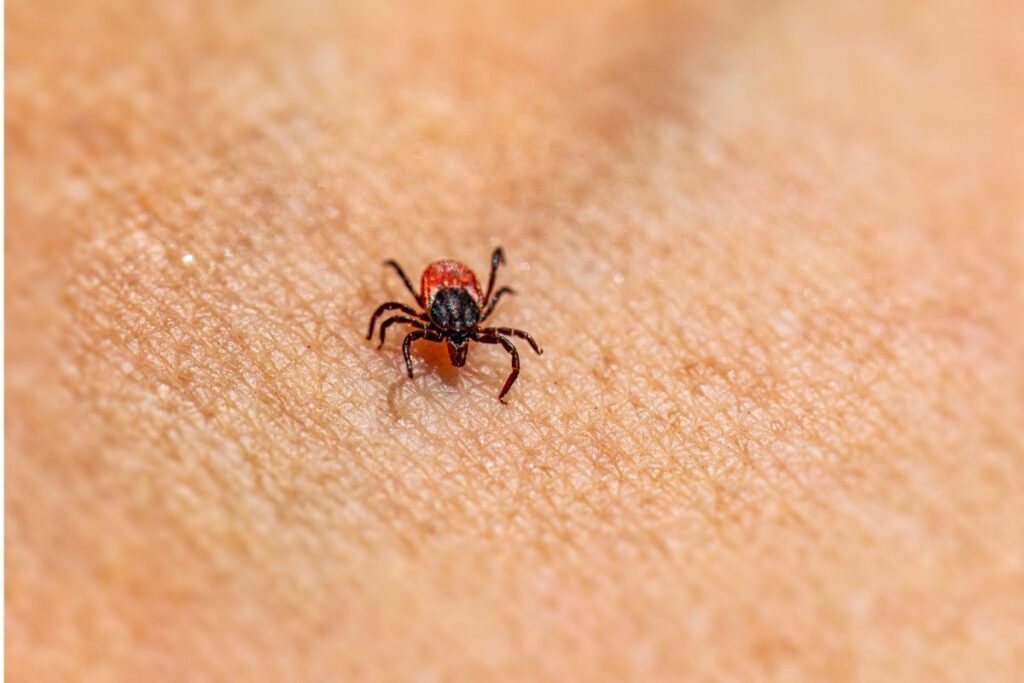
The danger from ticks also concerns pets—mainly dogs and cats, but also farm animals such as sheep or cattle. Dogs can contract, among others, babesiosis following a bite, which destroys red blood cells and leads to severe anemia, and if left untreated, can be fatal in a short time. For livestock, ticks not only cause direct blood loss but also lead to a general deterioration of health, reduced productivity, and may even result in deaths or miscarriages. It’s important to note that not every tick bite results in infection—many ticks do not carry pathogens. The risk of infection increases with the length of time a tick remains attached to the host’s body, as the pathogens present in the arachnid’s saliva glands or digestive tract are usually transmitted after several hours of feeding (for Lyme disease, most often after 24 hours; TBE virus may transmit within minutes). Ticks are also hard to detect—especially larvae and nymphs, which are less than a millimeter long—so they often go unnoticed on the skin for a long time. Tick bites are painless due to anesthetic and anticoagulant substances in their saliva, which further increases the risk of not recognizing the moment of infection. Therefore, systematically checking your skin after returning from green areas is crucial. Besides direct disease risks, a high tick population negatively affects agricultural and forestry sectors due to costs related to treatment, animal protection, and reduced production. Thus, the tick problem is multifaceted, affecting public and veterinary health as well as economic and social spheres.
Most common tick-borne diseases – symptoms and prevention
Tick-borne diseases pose a significant health threat in Poland and other Central European countries. The most common tick-borne diseases include Lyme borreliosis, tick-borne encephalitis (TBE), anaplasmosis, babesiosis, and, less frequently but equally seriously, tularemia or rickettsioses. Of greatest epidemiological significance are Lyme disease and TBE—their numbers rise with the popularity of outdoor activities and climate changes favoring tick migration into new areas. Lyme disease, caused by Borrelia bacteria, progresses in stages and can have various symptoms: in the initial phase a characteristic erythema migrans—red blotch at the bite site that gradually expands and fades in the center—often appears. However, this symptom does not always occur, so the disease may go unrecognized for weeks or even months. Other, less specific symptoms include fatigue, headache, muscle and joint aches, and flu-like complaints. In later stages, Lyme disease may cause neurological complications (neuroborreliosis), joint disorders (usually the knee), as well as skin and cardiac changes. Tick-borne encephalitis, on the other hand, is a serious viral disease with a biphasic course—a flu-like phase with fever, headaches, and muscle pain, followed, after a short respite, by central nervous system involvement, leading to inflammation of the brain, meninges, and spinal cord. Neurological symptoms such as neck stiffness, impaired consciousness, paralysis, or even seizures occur in about 20–30% of symptomatic TBE cases, and even after recovery, persistent neurological complications like balance disorders and chronic headaches can remain. Babesiosis, less commonly diagnosed in humans, is a zoonosis caused by Babesia protozoans that infect red blood cells, resulting in malaria-like symptoms: fever, chills, sweats, muscle pain, and anemia. Anaplasmosis, caused by Anaplasma phagocytophilum bacteria, particularly endangers people with weakened immune systems; it manifests as sudden fever, headache, muscle pain, impaired liver function, and sometimes hematological complications. Tularemia (rabbit fever) and rickettsioses are more rarely diagnosed in humans but also require quick medical intervention and specialist diagnostics. In many cases, symptoms of tick-borne diseases are nonspecific and may imitate viral infections or other ailments, making vigilance—especially after exposure to tick environments—and prompt medical consultation key should any worrying symptoms develop.
Prevention of tick-borne diseases relies on several key pillars—avoiding bites by wearing protective clothing, using tick repellents, and regularly checking your skin after spending time in green areas, especially in high-risk zones. Choose long pants, high boots, and light-colored clothing (to help spot ticks), and use sprays containing DEET, icaridin, or permethrin, which are effective at repelling ticks. After returning home, thoroughly inspect your body, paying special attention to the groin, elbow and knee creases, behind the ears, and the hairline—spots where ticks most often attach. If you find a tick, remove it quickly and properly, preferably with tweezers or special tools, gripping it as close to the skin as possible and pulling it out in one smooth motion, avoiding crushing the abdomen. When it comes to preventing tick-borne encephalitis, vaccination is the most effective method of protection – available and recommended especially for those spending much time in nature, forestry workers, mushroom hunters, or tourists. Unfortunately, there is still no vaccine for Lyme disease, so any actions limiting exposure to ticks are crucial. It is also important to care for your surroundings—mowing the lawn, removing leaves and branches, securing recreational areas, and regularly checking pets and using veterinary tick-prevention products. Early detection and correct diagnosis of tick-borne diseases enables effective therapy—for example, in Lyme disease, early implementation of antibiotics almost always prevents serious complications. Education about symptoms, risk, and responsible behavior in the outdoors is the most important preventive factor, both for individuals and communities, and is a vital part of public health given the increasing threat caused by the spread of ticks and the diseases they carry.
How to effectively protect yourself against ticks?
Effective protection against ticks requires comprehensive actions before going out into the wild and after returning home. The key element is appropriate clothing—long pants, long-sleeved shirts, and high, tight-fitting boots, especially during walks in forests, parks, and meadows. It’s also recommended to tuck pant legs into socks, which limits tick access to skin and helps you spot them quickly on light-colored fabric. Choose neutral, light clothing on which the tiny arachnids are easier to see. In addition to clothing, individual protection is crucial: repellents with DEET, icaridin, permethrin, or similar tick-repelling substances—apply these both to skin and clothing according to manufacturer’s guides. Eco-friendly products based on plant oils (e.g., citronella, lavender, eucalyptus) are also available, though they work for shorter periods and need reapplication every few hours. Impregnated clothing treated with permethrin is available, remaining repellent even after several washes—these must not be used directly on the skin. Anyone heading into high-risk areas should avoid tall grass, dense thickets, and low shrubs, opting instead for beaten paths—ticks most often lie in wait along the edges of grass or in humid places. Also, avoid sitting directly on grass or moss, and be careful when gathering firewood, berries, or mushrooms, as you may inadvertently bring ticks home on plants or animals.
Protection after exposure to tick habitats is just as important as preventive steps taken before going out. After returning from green areas, always thoroughly inspect your entire body, paying attention to places where skin is thin or moist—behind the ears, underarms, groin, hairline, and behind the knees. These self-examinations should become a habit, enabling you to detect and safely remove a tick early, thereby reducing the risk of tick-borne infections as the probability of pathogen transmission increases the longer the tick is feeding. If a tick is found, remove it using special pharmacy tools (tweezers or plastic hooks), grasping it as close to the skin as possible and slowly pulling it straight out without twisting or squeezing the body. After removal, disinfect the wound, and over the following weeks monitor both the bite area and your general health—if any alarming symptoms appear (erythema migrans, fever, headaches, or muscle aches), consult a doctor immediately. For people frequently in risky areas (foresters, hunters, recreational users), vaccination for tick-borne encephalitis (TBE) is worth considering—this is the only effective preventive measure against this serious viral infection. Pet owners should regularly protect animals with veterinary products—collars, spot-on drops, or sprays—that minimize the risk of bringing ticks into the home. For gardens and plots, regular mowing, removing thick weeds, and using repellents or physical barriers (gravel, bark chips) can help prevent ticks from settling near people. Using these methods together with broad ecological education can significantly reduce exposure to ticks and limit the risk of tick-borne diseases in humans and animals.
Removing a tick and what to do after being bitten
Proper and prompt removal of a tick minimizes the risk of tick-borne disease infection, which is why knowing the right technique and correct post-bite procedure is so important. Above all, action must be taken as soon as you notice a tick— the shorter the tick stays attached to your skin, the lower the risk of pathogen transmission like Borrelia or the tick-borne encephalitis virus. To remove a tick, it is best to use special tweezers, hooks, or lassos from the pharmacy; homemade methods, such as removing a tick with your fingers, or smearing it with grease or alcohol, are inadvisable and may increase the risk of pathogen transfer. To remove the tick, grasp it as close to the skin as possible and slowly, with a steady motion, pull vertically upwards or twist slightly (depending on the tool), avoiding squeezing the tick’s body. The key is not to jerk or tear the arachnid out—leaving fragments of the tick in the skin (especially the head or mouthparts) may cause local infection or inflammation. After removal, the bite site should be carefully disinfected—use spirit, hydrogen peroxide, or another antiseptic. Be sure to wash your hands and the tools that touched the tick. Do not crush the tick with bare fingers; you can dispose of it by soaking it in alcohol, sealing it in a container, or flushing it down the toilet. It is recommended to keep the removed tick in a sealed bag or container, especially if you develop worrying symptoms—more and more laboratories offer testing of ticks for pathogens, which can be relevant for further medical steps.
Monitoring your health after a bite is crucial, as tick-borne disease symptoms can appear even after several weeks, and sometimes develop without the classic erythema migrans. For 30 days after removal, regularly observe the bite site—if you notice redness, swelling, rash, erythema, or other skin changes, as well as general symptoms (fever, muscle/joint aches, headaches, or flu-like signs), consult a doctor at once. Early diagnosis and treatment of tick-borne diseases like Lyme disease or tick-borne encephalitis improve the chances of complete recovery and minimize health complications. If you notice tick remnants in the wound, do not attempt to remove them forcefully—see a doctor who can evaluate and remove remnants under clinical conditions. Also, remember that not every tick bite leads to infection, but responsible and informed actions are essential for your health. For risk groups such as children, the elderly, pregnant women, or immunocompromised people, extra vigilance is necessary after every tick contact; sometimes laboratory blood tests for the most common pathogens may be indicated. Recently, pharmacological prophylaxis has developed in Poland – in justified cases, doctors may consider a single dose of antibiotics after documented, short-term contact with a tick, according to current medical guidelines. Educate family members, especially children, to inform caregivers immediately if they find a tick and not to try removing it on their own without proper tools and knowledge. Proper habits and vigilance after a tick bite are the best protection against the chronic and potentially severe consequences of tick-borne diseases.
Summary
Ticks pose a serious health threat to humans and animals, in both forests and urban areas. It’s crucial to know their life cycle and peak activity periods to effectively avoid bites. The most important preventive measures include repellents, appropriate clothing, and checking your skin after outdoor walks. Recognizing the symptoms of tick-borne diseases and responding quickly to tick bites increases your chances of avoiding serious health complications. By following proven prevention and post-bite procedures, you can effectively take care of your safety.