

A quick return to form after an injury is possible thanks to well-planned rehabilitation, with effective physiotherapy at its center. Individually tailored exercises and medical training are crucial, supporting tissue regeneration and restoring full functionality. Working with an experienced physiotherapist minimizes the risk of re‑injury and allows you to return to physical activity safely.
Table of Contents
- The Importance of Proper Rehabilitation
- Physiotherapy as a Key Element
- Home Exercises – What Should You Know?
- The Role of Medical Training After Injury
- Return to Physical Activity After Surgery
- When to Consult a Physiotherapist?
The Importance of Proper Rehabilitation
Properly planned and consistently performed rehabilitation is a key element of a quick and safe return to form after an injury, regardless of whether it’s an ankle sprain, muscle strain, ligament injury, shoulder problem, or issues with the spine. Simply taking a break from activity and “waiting for it to pass” usually leads to prolonged pain, loss of strength and functionality, and a higher risk of re‑injury in the future. The goal of modern rehabilitation is not only to alleviate symptoms but to restore the full function of the injured structure and the entire movement chain: joint mobility, muscle strength, neuromuscular control, coordination, reaction speed, and endurance. Only then does the body truly return to form, rather than merely “stop hurting.” A well-chosen exercise and physiotherapy program affects all stages of tissue healing: in the acute phase, it helps reduce inflammation and swelling; in the subacute phase, it supports the rebuilding of damaged fibers; in the chronic phase, it allows them to strengthen appropriately and adapt to sports or occupational loads. As a result, the scar in muscle or ligament becomes more elastic and mechanically robust, and the joint regains stability. Rehabilitation also plays a huge role in preventing unfavorable movement compensations – when one part of the body is spared, other structures take over its role, quickly become overloaded, and new complaints appear as a result. Therapists analyzing gait patterns, landing after a jump, or running technique can catch such compensations and correct them with appropriate exercises before they lead to another injury. The role of proper rehabilitation in preventing joint stiffness and muscle atrophy is also vital – even after just a few days of immobilization, there is a noticeable loss of strength and worsening of proprioception (deep sensation), which is difficult to reverse without specialist work. Exercises introduced at the right moment help maintain as much functionality as possible while respecting the healing process. Contrary to myths, “absolute rest” is rarely the optimal solution; a much better approach is so-called active rest and gradually dosed, controlled loads under the supervision of a physiotherapist.
Proper rehabilitation also has a tangible impact on the time and safety of returning to sport or physical work. Returning too quickly, without rebuilding adequate strength and stability, usually ends in re‑injury or the development of injury elsewhere – for example, after an ankle sprain, without stability training, there’s an increased risk of knee or hip problems; after a shoulder injury, a lack of scapular and core work promotes further overloads of the shoulder girdle. A well-conducted rehabilitation process thus includes not only the injured area but the whole body and an analysis of the specific activity you want to return to: a soccer player has different demands than a long-distance runner, and they both differ from someone working physically or spending long hours at a computer. The therapist plans load progression step by step – from isometric exercises, through range-of-motion exercises, stabilization, and strengthening, to functional and sport‑specific training. Each stage is based on objective criteria (absence of pain at rest and under load, appropriate strength, stability, range of motion, functional tests), not just subjective feelings like “I feel better, so I can do more.” Education also plays a huge role: understanding the injury mechanism, principles of safe load increases, the importance of warm-up, stretching, and recovery helps reduce fear of movement and gives a sense of control over the recovery process. This translates into better cooperation with the therapist, increased motivation to perform home exercises, and consistency in following recommendations. Proper rehabilitation is not just occasional treatments or massages but a comprehensive, individually tailored process that integrates work with the body, education, and gradual re‑introduction to normal activity – thanks to this, it minimizes the risk of recurrence and allows a real, not apparent, return to full fitness.
Physiotherapy as a Key Element
Physiotherapy is the cornerstone of a quick and safe return to form after injury because it combines knowledge of anatomy, biomechanics, and neurophysiology with practical techniques to restore function. Even in the acute phase, a physiotherapist can select interventions that not only alleviate pain and swelling (e.g., with proper positioning, gentle mobilizations, or soft tissue techniques) but also prepare tissues for further loading. Unlike passively “waiting for recovery,” professionally planned physiotherapy allows for maintaining as much activity as possible within safe limits, reducing the recovery time and minimizing the risk of loss of strength, mobility, or coordination. An individual approach is key here – the same injury type (e.g., ankle sprain) will require different solutions for a long-distance runner, a soccer player, or someone who spends most of their day at a desk. The physiotherapist, after a detailed interview and functional assessment, identifies current limitations (pain, reduced range of motion, muscle weakness, balance issues) and, based on these, establishes the rehabilitation stages and concrete, measurable goals: from pain reduction, through regaining full range of motion and strength, to returning to full dynamics and sport‑specific movements. A very important role for the physiotherapist is also education – the patient learns which movements to avoid at each stage, how to modify daily activities (going up stairs, working at a computer, lifting heavy objects), to avoid aggravating the injury, and how to apply the principle of gradually increasing loads. As a result, rehabilitation goes beyond a few in-clinic visits and becomes a continuous process in which the patient is actively involved daily. Modern physiotherapy increasingly forgoes solely passive methods (such as physical treatments like ultrasound, laser therapy, electrical currents) in favor of active therapy based on movement and exercises adapted to current possibilities. Manual techniques, soft tissue work, or joint mobilizations usually serve as a supplement, creating better conditions for higher-quality exercises – reducing muscle tension, improving tissue glide, or increasing the range of motion, so the patient can perform assigned movements with less discomfort and more control. This combination of passive methods and active work ensures that healing progresses faster and more systematically, preserving the appropriate elasticity, strength, and stability of injured structures.
The key advantage of physiotherapy over self-directed “post-injury exercise” is the precise dosage of load stimuli and systematic monitoring of the body’s response. A physiotherapist knows when intensity, pace, or range of motion can be increased, and when it is necessary to temporarily return to simpler exercises so as not to overload healing tissues. This is especially crucial with tendon, ligament, or post-surgical injuries, where a premature return to full loading can result in re‑injury or serious complications. In rehabilitation, objective assessment tools are increasingly used – muscle strength tests, balance or running analysis platforms, dynamometers, and range-of-motion tracking apps. This means the physiotherapy plan relies not only on the patient’s subjective feelings but also on hard data, allowing better assessment of readiness for the next loading stages, including resuming running, jumping, or full team training. Another important aspect is working with the entire kinematic chain – the physiotherapist analyzes not only the pain site but also segments above and below it, as well as overall body movement patterns. In practice, this means that after a knee pain injury, it is often necessary to strengthen the hip and core, improve pelvic alignment control, or foot stability. Such a holistic approach minimizes compensatory movements, which are often the cause of chronic issues and further injuries. It should be emphasized that modern physiotherapy works closely with the physician, coach, and, for athletes, the coaching staff. Jointly determined stages of return to activity, guidelines for training loads, and potential limitations help avoid the typical scenario where an athlete feels better, returns to full effort too soon, and is subsequently sidelined again a few weeks later. With clear criteria for phase progression (e.g., specific muscle strength values, no pain in functional tests, stability in balance tests), the recovery process becomes predictable and under control. The psychological aspect is equally important – the physiotherapist helps the patient rebuild trust in their body, gradually introduces more challenging exercises and movements similar to those that caused the injury, which reduces fear of re‑injury. The combination of knowledge, experience, an individual approach, and constant specialist communication means that physiotherapy plays a central role in the rehabilitation process and actually determines how quickly and at what level a return to full physical activity will occur.
Home Exercises – What Should You Know?
Exercises performed at home can significantly hasten recovery after injury, but only if they are well-chosen and performed consistently. The home plan should not be a copy of pre‑injury sports training – its primary purpose is to support the healing process safely, restore range of motion, strength, neuromuscular control, and confidence in daily activities. It’s crucial that the first exercise sets be developed by a physiotherapist based on a functional assessment, not found randomly online. The specialist will determine the healing stage of your injury (e.g., acute, subacute, chronic), which structures require protection, and which can be gradually loaded. This way, the home plan will dose stimuli appropriately – too little load slows regeneration, but too much can prolong inflammation and provoke symptom recurrence. From the beginning of home rehabilitation, there are usually breathing exercises, gentle isometric activations (muscle tightening without joint movement), exercises to improve circulation, and simple movements within pain-free ranges to prevent stiffness and congestion. Over time, the physiotherapist introduces more advanced forms: mobility, strengthening, proprioceptive (balance and deep sensation), and, eventually, functional tasks mimicking daily life and the specificity of your sport or work. Progression is also important – home exercises should be regularly modified every few to several days, depending on progress, and not repeated in the same form for weeks. One of the most common mistakes is believing that effective exercises must be associated with significant pain. In fact, mild discomfort or a feeling of “work” in the tissues is normal, but sharp, stabbing pain or increasing symptoms after training signal that the load is too great or the exercise is ill‑chosen. It’s good to establish with the therapist an acceptable pain scale during exercise (e.g., up to 3–4/10), as well as the time after which pain should return to baseline (usually within 24 hours). This makes it easier to assess whether the home plan suits you. No less important is technique – many exercises look simple, but their effectiveness depends on subtle details: pelvic alignment, joint movement path, scapular action, breath control, or deep muscle engagement. That’s why, at the start of rehabilitation, it’s worth performing exercises under the physiotherapist’s supervision, recording short videos of their execution, and consulting during follow-up or online visits. Such “technique checks” help avoid forming bad habits that are difficult to fix later.
A well-designed home exercise program after injury should be integrated into your daily routine, not treated as an isolated one-off effort. Instead of one long session daily, several shorter blocks scattered throughout the day often yield better results – the body tolerates such stimulation better, and the effects accumulate without excessive structural fatigue. In practice, this could mean, for example, a short morning mobility and isometric exercise session, a simple strengthening set midday, and balance and relaxation exercises in the evening. It’s good to set a realistic weekly session number from the outset – it’s better to exercise 5 times a week for 20–30 minutes than to try for an hour daily and give up after a few days due to fatigue or lack of time. Simple tools can be helpful: a weekly planner, phone reminders, marking completed sessions in a calendar, or activity monitoring apps. Visual progress tracking also boosts motivation – for instance, each week, record how your range of motion changed, strength in a particular exercise, time holding an isometric position, or pain level during specific activities. Selecting the right equipment for home exercise planning is extremely important. In most cases, basic accessories are enough: a mat, resistance bands of various strengths, a small ball, massage roller, sometimes small dumbbells or water bottles. The key factor is not equipment sophistication but the precise selection of exercises. Load progression can be achieved by changing repetitions, movement tempo, lengthening the eccentric phase (slow lowering), range of motion, or holding time, without necessarily using heavier weights. For lower limb injuries, it’s also important to include support and standing exercises – staying with floor-based exercises too long makes returning to walking, running, or stair descent more difficult and increases the risk of symptom recurrence. Home exercises should engage the entire kinematic chain – e.g., after knee injury, work on the hip, pelvis, core stabilization, and foot; after a shoulder injury, focus on thoracic spine mobility, scapular function, and deep neck muscles. Remember, regeneration is an integral plan part: sufficient sleep, careful monitoring of your body’s response, light or off days when pain increases, and proper hydration and nutrition to support tissue healing. If any alarming symptoms occur – sudden severe pain, swelling, instability, joint locking, or numbness – contact your physiotherapist or doctor to check if the home program needs adjusting or if complications have arisen.
The Role of Medical Training After Injury
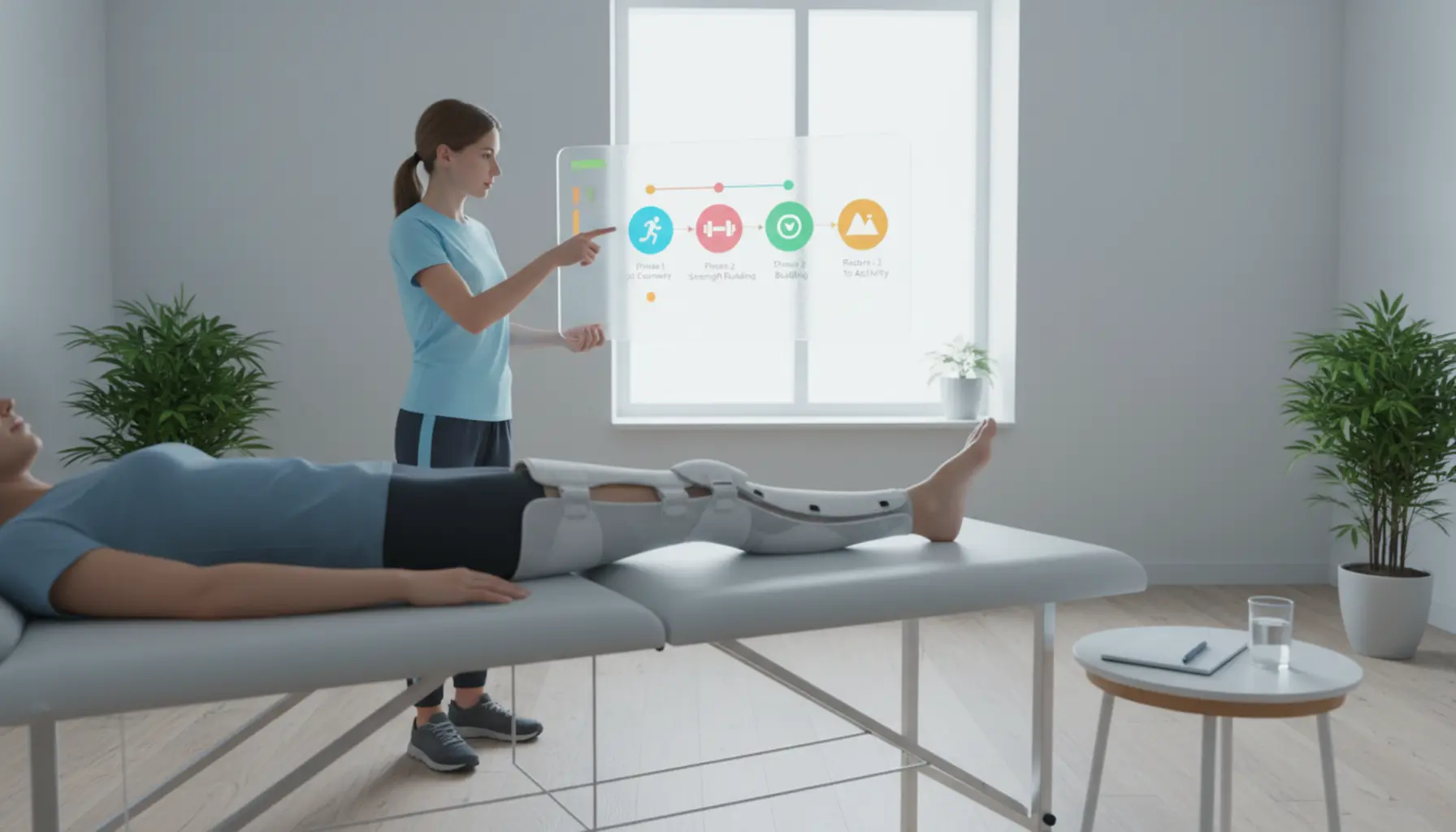
Medical training bridges the gap between classic physiotherapy and a return to full sports or occupational activity, making its post-injury role difficult to overestimate. Unlike typical rehabilitation, which focuses mainly on pain relief and regaining basic range of motion, medical training emphasizes restoring full functional capacity – strength, power, coordination, stabilization, and endurance – under conditions closely resembling real loads. Its task is to prepare the body for what truly awaits on the pitch, at the gym, or at work demanding physical exertion, and to close the so-called “return-to-sport gap,” when the patient feels okay but is not objectively ready for high intensities. The medical training program is based on a detailed functional diagnosis – the specialist assesses not only the original injury site but also the overall movement pattern, core stability, motor control, and compensations developed while avoiding pain. This allows planning exercises that both rebuild the injured tissue and correct improper movement habits, reducing the risk of re‑injury. The key principle is progression – from simple exercises in controlled conditions through more complex movement tasks to high-intensity, dynamic forms that mimic the specific requirements of the given sport or occupation; in practical terms, this means moving from static stabilization training to exercises requiring quick changes of direction, explosive work, jump landings and takeoffs, as well as reactions to unpredictable stimuli.
It is crucial that medical training is based on loading physiology principles – biological structures (tendons, ligaments, muscles, cartilage) adapt to gradually increasing stimuli if they are properly dosed in terms of volume, intensity, and frequency. The specialist monitors the patient’s feelings (subjective pain and fatigue scale), objective indicators (range of motion, isometric or isokinetic strength, jump tests, stability tests), and the body’s post-workout response in subsequent days. This helps avoid two extremes: an overly cautious path, resulting in weakness and under-preparedness for real loads, and an overly aggressive program leading to overload or re‑injury. Medical training combines various methods: free-weight and elastic resistance strength exercises, proprioception training on unstable surfaces, plyometric exercises (jumps, drop jumps, direction changes), mobility work, movement control, and coordination tasks requiring multiple body segments to work in concert. Special emphasis is placed on core stabilization, deep trunk muscle engagement, and correct muscle timing around the previously injured joint – this is vital for protecting passive structures (ligaments, joint capsules) from excessive loading. An integral part of medical training is also patient education and confidence-building: gradual familiarization with harder tasks, repeating previously feared movements, and simulating match or work situations in a controlled environment. This way, alongside improved physical parameters, the psychological barrier is broken – often one of the main brakes on returning to full activity. In professional sports, medical training is a crucial tool in deciding readiness to play – objective functional tests (e.g., comparing the healthy and injured limb’s strength, single-leg jump tests, power measurements) show if the athlete has achieved a safe preparation level. For recreationally active individuals, medical training allows not only a return to previous capacity but often exceeding it by correcting long-standing technical errors and weak links in the movement chain. Importantly, after the strictly medical training phase ends, activity should not stop but transition smoothly into more classic fitness training to reinforce the results and provide prevention against further injuries; in this way, medical training is not just “treating injuries” but becomes a purposeful process of building a stronger, better-prepared body.
Return to Physical Activity After Surgery
Returning to physical activity after surgery is a process requiring patience, a well-planned strategy, and close collaboration with the medical team. Whether the procedure involved the knee, shoulder, spine, or tendon, the first step is understanding the surgeon’s guidelines regarding loads, permitted movements, and time limitations. The early postoperative phase (first days and weeks) focuses on protecting the operated structure, pain and swelling control, and preventing complications like clots or contractures. At this stage, proper limb position, regular cooling of tissues according to recommendations, and the use of breathing and isometric exercises to improve circulation – while not disrupting healing – are crucial. The physiotherapist, in consultation with the doctor, selects safe scar mobilization techniques, gait training with crutches, gradual loading, and basic activating exercises for stabilizing muscles. Especially important is not to be guided solely by pain level – some movements may be painless but are still contraindicated at this stage of healing, so the loading plan must stem from specific postoperative instructions, not just subjective feelings. Patient education also covers wound care, the right way to sit, stand, use stairs, and avoid compensatory movement habits that could overload other body parts.
As healing progresses, the goal is to restore a fuller range of motion, neuromuscular control, and strength, to prepare the body for increasingly complex activities. The physiotherapist gradually introduces active unloaded exercises, then moves to increasing resistance, always monitoring correct technique and symmetry on both sides of the body. Core stabilization training plays a special role, as it improves trunk and pelvic control, which directly influences the safety of peripheral joints. In later stages, balance, proprioceptive, and functional tasks appear, recreating typical daily movements – lifting, carrying, standing up from a chair, or climbing stairs. The pace of progression should not be haphazard: load increases are only made after meeting specific criteria, such as no pain at rest, minimal or vanishing swelling, adequate tissue flexibility, and the ability to repeat a movement pattern multiple times without compensations. For athletes, the next step is medical training, which bridges classic rehabilitation and a full return to sport. This includes functional tests (jumps, single-leg squats, direction changes), plyometric training, and sport-specific exercises such as sprint simulations, starting blocks, vertical jumps, or throwing. Mental preparation is key as well – after surgery, many people feel fear of movement and re‑injury, so the physiotherapist gradually builds trust in the operated limb via clearly explained, logically structured recovery stages. It’s important at every stage to monitor the body’s response: pain intensity, morning stiffness, swelling, or general fatigue. Even after formal rehabilitation “ends,” maintenance activity in fitness training targeting strength, mobility, and movement control for the whole body is necessary; neglecting this increases overload risk and the chance of subsequent injuries, especially for those wanting to return to intense sport or physical work.
When to Consult a Physiotherapist?
In practice, many people wait too long before seeing a physiotherapist, hoping that “it will go away by itself,” which often extends recovery time and increases the risk of chronic complaints. Consulting a specialist is recommended much earlier than most patients think – ideally within the first days after injury, and sometimes even in the acute phase, of course, in accordance with the physician’s recommendations. If pain appeared suddenly during activity (e.g., a distinctive “pop” in the muscle, joint sprain, fall, blow) and persists for more than 24–48 hours, clearly restricting movement, you should arrange a consultation as soon as possible. The physiotherapist will distinguish functional overload from more serious structural damage and, if necessary, refer you to an orthopedic doctor or order appropriate imaging tests. Another alarm signal is pain that increases during daily activities (climbing stairs, bending over, lifting objects, walking on uneven ground) or appears or worsens at night, disturbing sleep – such symptoms should not be ignored and require professional evaluation. Consultation is also particularly necessary if the injury is accompanied by visible, persistent swelling, bruising, a feeling of joint instability (“giving way” of the knee, ankle, or shoulder), morning stiffness lasting over 30 minutes, or significant unilateral muscle weakness. Utilizing clinical tests and functional assessment, the physiotherapist can check whether you are dealing with a strain, rupture, or possible full tear and suggest safe management for the coming days and weeks.
It’s also worth seeking physiotherapist help if pain or discomfort recurs periodically, e.g., with each intensive workout, longer run, several hours at the computer, or city walking. Recurring ailments usually indicate improper movement patterns, disturbed stabilization, uneven muscle strength distribution, or poorly chosen training loads. Simply giving up activity in such cases only temporarily suppresses the symptoms without addressing the cause; the physiotherapist can analyze movement technique (running, strength training, sport‑specific), identify “weak links” in the kinematic chain, and propose corrections and stabilization exercises. Consultation is also a wise step before returning to activity after a longer break – e.g., post-surgery, postpartum, enforced immobilization in a cast, or after months of sedentary lifestyle. This way, you can build a safe plan for load progression and avoid typical “return” injuries such as tendinitis, low back pain, or overload injuries of the knees and ankles. Physiotherapists also help prepare for surgical procedures via so-called prehabilitation – strengthening key muscle groups, improving range of motion, and teaching correct movement strategies, which translates to better post‑surgery outcomes and faster rehabilitation. The service is also helpful for those experiencing fear of movement after previous injuries or feeling a “lack of trust” in the operated limb – the specialist, by gradual loading and education, helps restore confidence and a sense of security. Another important reason to visit is any doubts regarding post-injury or post-surgical recommendations: unclear rules on movement range, allowed exercises, time to return to running, or contact sport. The physiotherapist, in cooperation with your doctor, can clarify the management plan, propose specific rehabilitation stages, and clearly define the criteria for advancing to higher load levels, making the recovery process more conscious, predictable, and based on objective indicators, not just the subjective feeling of “I feel better already.”
Summary
Returning to form after an injury requires carefully planned rehabilitation, with physiotherapy playing a key role. Home exercises can aid the recovery process but should always be consulted with a physiotherapist to avoid further health problems. Medical training will help rebuild strength and mobility, reducing the risk of re‑injury. Returning to physical activity after surgery requires special attention and understanding of individual body needs. Regular consultations with a professional will provide a tailored and safe action plan.