

Find out why you should never borrow someone else’s toothbrush. Learn about the diseases and infections associated with this practice and the principles of oral hygiene.
Table of Contents
- Why shouldn’t you borrow a toothbrush?
- What diseases and infections can occur after borrowing a toothbrush?
- Bacteria, viruses, fungi — the most common threats
- Facts and myths about oral hygiene
- How to care for your toothbrush and ensure oral safety?
- What else should you keep just for yourself?
Why shouldn’t you borrow a toothbrush?
Borrowing a toothbrush, even for a short moment, poses a significant threat to both oral and overall health. A toothbrush is a daily-use item that collects not only food residues and dental plaque, but most importantly billions of bacteria, viruses, and fungi present in every human mouth. Each person has an individual oral microflora that adapts over the years to their body, providing natural resistance to certain pathogens. However, when you use someone else’s toothbrush, you introduce foreign flora that your body may not be prepared for. Toothbrushes are usually stored in moist environments, which facilitates the growth of pathogenic germs — especially anaerobic rods, staphylococci, or even viruses like herpes simplex (HSV-1) or human papillomavirus (HPV). Using such a toothbrush can lead to infections of various kinds, including serious oral diseases such as tooth decay, gingivitis, periodontitis, oral thrush, or even infectious mononucleosis. If a toothbrush has been in contact with small injuries on someone else’s oral mucosa or with bleeding gums during brushing, it can be a carrier for blood-borne pathogens such as hepatitis B virus (HBV), hepatitis C virus (HCV), and bacteria causing strep throat, streptococci, or Staphylococcus aureus.
Borrowing a toothbrush often seems like an innocent gesture — for example, in an emergency while traveling or when guests visit. However, even a single use by another person results in the exchange of saliva, microorganisms, and potential pathogens at a level hard to compare with any other household situation. The mouth is considered one of the main sources of infections transmitted by direct contact, and a toothbrush — due to its structure and the presence of moisture — is the perfect environment for the multiplication and transfer of these germs. Invisible micro lesions on the mucosa, which occur during brushing, create open “gateways” for foreign microorganisms, further increasing the risk of infection and health complications. Remember, cleaning agents — even rinsing a toothbrush under very hot water — do not eliminate the risk of infection completely, because many microorganisms (like viruses or certain bacterial strains) are resistant to brief exposure to high temperatures or detergents. Frequently borrowing toothbrushes, especially among people living together, can lead to the spread of chronic infections and, in extreme cases, to new diseases in the mouth and beyond. This is why dental professionals and healthcare organizations unanimously advise against borrowing or even temporarily using someone else’s toothbrush, emphasizing the importance of individual oral hygiene as the foundation of disease prevention and conscious care for your own health and that of others in your household.
What diseases and infections can occur after borrowing a toothbrush?
Even borrowing a toothbrush only once can transmit many dangerous pathogens threatening oral and general health. The most commonly mentioned are bacterial and viral diseases, which are easily spread via saliva and biological residues gathering on the bristles. One common consequence is the development of tooth decay, since bacteria such as Streptococcus mutans play a key role in demineralizing enamel and forming cavities. If someone in the household already has active tooth decay, the risk of transferring these bacteria via a toothbrush increases severalfold. Gingivitis and more severe periodontitis are similar risks, caused by accumulations of pathogenic bacteria. Even after thorough rinsing, microorganisms can survive on the toothbrush’s surface, causing infections in the next user. Borrowing a toothbrush also increases the risk of oral fungal infections caused by yeast, such as Candida albicans, responsible for oral thrush. Children, the elderly, and immunocompromised individuals are especially vulnerable — for them, even a small amount of pathogens can cause serious clinical symptoms.
One of the most serious threats linked to sharing toothbrushes is viral diseases, notably infectious mononucleosis caused by the Epstein-Barr virus (EBV), often referred to as the “kissing disease.” Saliva is a potent carrier for this virus, which can be transmitted via a toothbrush and cause not only throat pain, fever, and swollen lymph nodes, but also complications like chronic fatigue or even liver and spleen problems. Another risk is herpes simplex virus (HSV-1), which can easily be transmitted through invisible microdamage to the mucosa. For immunocompromised people, HSV-1 infection may result in not only visible sores around the mouth, but also severe systemic complications. Toothbrushes can also be a vector for hepatitis B virus (HBV) — even trace amounts of blood left on bristles after brushing can be enough for infection. The same goes for the bacteria causing strep throat and other throat and tonsil infections, most commonly Streptococcus pyogenes and other beta-hemolytic streptococci. Don’t forget about transmission of microbes causing the flu, common cold, and even throat gonorrhea, which, although rare, may develop from contact with an everyday item contaminated by infected saliva. Additionally, sharing toothbrushes disrupts the individual’s oral microflora, weakening natural resistance to pathogens and possibly leading to superinfections, gum sensitivity, mouth ulcers, or thrush. All the above risks show that the danger of contracting infectious diseases through toothbrush sharing is real and vastly outweighs any possible perceived benefit — even if it seems like a harmless solution in an unexpected situation.
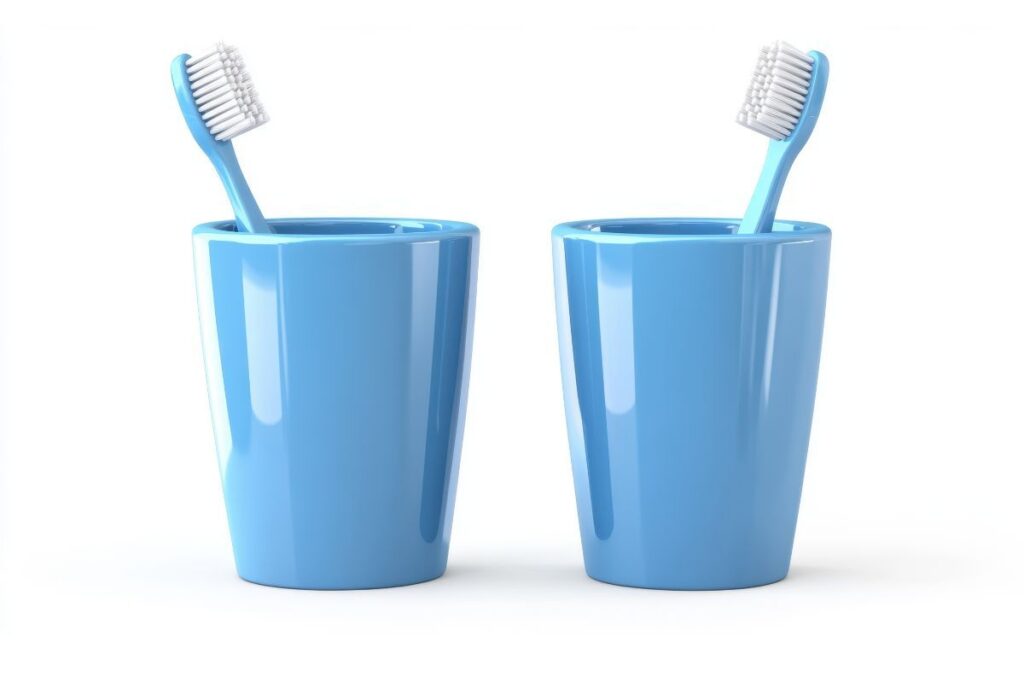
Bacteria, viruses, fungi — the most common threats
Daily use exposes toothbrush bristles to constant contact with a variety of microorganisms that naturally inhabit the human mouth. However, the most serious risks arise when toothbrushes are shared, allowing the exchange of pathogens between individuals. The most numerous group of microorganisms on a toothbrush are bacteria. Most commonly present are bacteria from the Streptococcus mutans family — responsible for tooth decay — as well as Porphyromonas gingivalis and Aggregatibacter actinomycetemcomitans, associated with periodontal diseases such as gingivitis and periodontitis. The danger increases with the use of someone else’s brush, since everyone has their own unique bacterial microflora to which their mouth is not accustomed. Introducing foreign strains can quickly disrupt the microbiological balance, resulting in infection, gum sensitivity, and accelerated disease progression. Additionally, a toothbrush is particularly prone to colonization by E. coli or Staphylococcus aureus, especially when stored in a humid bathroom, further amplifying the threat when shared.
In addition to bacteria, the transfer of viruses via shared toothbrushes carries very serious consequences. Saliva cells and small amounts of blood left on the bristles may contain pathogens such as herpes simplex virus (HSV-1), responsible for painful blisters on the lips and gums, or Epstein-Barr virus (EBV), which causes infectious mononucleosis with symptoms like fever, swollen lymph nodes, sore throat, and chronic fatigue. Unfortunately, a toothbrush can also effectively transmit hepatitis B and C viruses, whose presence in oral microbleeds presents a significant infection risk, even with short-term contact with infected blood. Additional dangers include fungi, primarily Candida albicans yeast, which occurs in small amounts naturally, but easily multiplies under favorable conditions, leading to oral candidiasis (commonly known as thrush). Individuals with weakened immunity — children, the elderly, diabetics, and chronically ill — are particularly susceptible to fungal infections, and sharing toothbrushes between household members or partners increases this risk. Cleaning the toothbrush under running water, even with toothpaste or antibacterial solutions, does not guarantee elimination of all microorganisms, as some viruses and fungi, such as Candida, are highly resistant to such hygiene treatments. Therefore, every loan of a toothbrush nearly immediately increases the probability of transferring harmful pathogens — regardless of age, health status, or adherence to other oral hygiene rules.
Facts and myths about oral hygiene
Oral hygiene is often the subject of much debate and confusion, resulting in both factual information and widely perpetuated myths. One of the most common misconceptions is the belief that thoroughly rinsing a toothbrush in hot water after use makes it safe for another person to use — unfortunately, this is a myth. Research confirms that even thorough cleaning does not remove all bacteria, viruses, or fungal spores that can accumulate deep within the bristles. This myth leads to a false sense of security, while remnants of saliva, skin cells, and microorganisms may remain even after rinsing, creating an ideal environment for infection transmission. Another widely held myth is that sharing a toothbrush within the family, especially between partners or parents and children, is not a health risk, since “household members share bacteria anyway.” In reality, every individual has a unique oral microflora, and abrupt changes from contact with unfamiliar bacteria or viruses can disrupt the balance and cause infections, ulcers, gum diseases, and even severe viral infections such as mononucleosis or hepatitis B. It’s also necessary to debunk the myth that toothpaste or mouthwash alone sufficiently disinfect a toothbrush after use. These substances help remove bacteria from the mouth’s surface, but do not fully sterilize tools that have direct contact with tissue and saliva. Misinformation about repeatedly or jointly using toothbrushes only increases the risk of disease spread.
Among the facts worth knowing is that individual oral hygiene and changing your toothbrush regularly (every 2–3 months or after illness) greatly reduces the risk of illness and supports gum health. Experts emphasize that a toothbrush should be regarded as a personal item — like a razor or comb — because sharing exposes you to microorganisms and even invisible microbleeds. Another often repeated myth suggests that using someone else’s brush “just once” or “in an emergency” causes no consequences; this is false, as even a single contact with foreign microflora can be enough to transfer pathogens. There’s also the misconception that storing a toothbrush in a tightly sealed container prevents bacterial growth — in fact, lack of ventilation encourages moisture, which increases microorganism (especially fungal) growth. Those who believe briefly soaking a brush in disinfectant is sufficient should be aware that many bacteria and viruses, especially those resistant to chemicals, can survive and pose a real danger. It’s also true that proper oral hygiene is multi-faceted: besides brushing, you should floss, rinse, visit the dentist regularly, and maintain a healthy diet low in sugar and supportive of mucosal health. It’s a myth that those without visible oral symptoms don’t need to care for their toothbrush — asymptomatic carriers of pathogens can spread them to others through shared hygiene accessories. Lastly, storing several persons’ toothbrushes in a single cup encourages contact between bristles and exchange of microorganisms, disproving the common myth that “side-by-side storage” is completely safe for household members.
How to care for your toothbrush and ensure oral safety?
Proper oral hygiene begins with the right care for your toothbrush and the awareness of daily habits that directly impact your teeth and gum health. The first step is choosing the right toothbrush — those with soft or medium bristles are best, effectively removing plaque without damaging enamel. Replace your toothbrush every 2–3 months or more frequently if bristles splay or after any mouth infection, to avoid re-introducing pathogens. After each use, rinse the toothbrush thoroughly under running water to remove toothpaste and debris, then store it upright, head up, to dry freely. Every toothbrush should have an individual storage spot — don’t keep multiple household members’ brushes touching in a single cup, as bristle contact aids bacterial transfer. Avoid covering your toothbrush with a plastic cap for extended periods without ventilation, as moisture promotes germ growth. Disinfecting mouthwashes or hot water don’t effectively remove all pathogens, making regular replacement and thorough drying the foundation of toothbrush safety.
Oral safety doesn’t stop at brushing or keeping the brush in good technical condition. Additional key elements of oral care include flossing between teeth at least once daily and using antibacterial rinses to help eliminate harmful bacteria from hard-to-reach places. Don’t forget regular tongue cleaning, since microorganisms accumulating there can contribute to halitosis and infection. A healthy diet limiting simple sugars — the main food for decay-causing bacteria — also helps keep your mouth in good shape. Proper oral hygiene includes watching for concerning changes in the mucosa and gums, such as increased sensitivity, bleeding, or ulcers. Regular dental checkups are also crucial, so a dentist can assess oral health and professionally clean your teeth. Educate all household members, including children, about the importance of personal toothbrushes and not sharing them with anyone, as even a single instance can transfer pathogens that are difficult to eliminate at home. Also monitor the bathroom environment, keeping brushes away from contamination sources like the toilet — the best practice is to store toothbrushes in a well-ventilated spot, far from potential bacteria and dampness. Conscious care for your daily-use tools — as well as tongue cleanliness, flossing, and regularly refreshing your hygiene accessories — forms the basis of safe, effective oral disease prevention for people of all ages and health conditions.
What else should you keep just for yourself?
While a toothbrush is the most obvious item you should never share, many other personal items can spread infections or lower hygiene levels if used by others. Firstly, personal care accessories: razors, nail files, tweezers, sponges, and towels. Razors come into direct contact with the skin and can cause micro-injuries through which viruses (such as human papillomavirus – HPV) and bacteria causing skin infections are easily transmitted. Towels, especially when not thoroughly dry, create an ideal setting for fungi and bacteria like Staphylococcus aureus, which can cause boils or skin fungus. Attempting to save money by sharing these accessories often ends in recurring skin problems or increased susceptibility to viral and fungal infections. Remember that personal care items come in contact with sweat, skin cells, and even invisible blood droplets (especially during shaving), so even in the closest family relationships, these should remain private.
Besides the mentioned personal care tools, other everyday items are equally important to keep personal due to unforeseen health risks from sharing. Hairbrushes and combs can transfer not only dandruff and bacteria but parasites such as lice. Lipsticks, balms, and lip glosses are another example, easily spreading herpes viruses, bacteria, and fungi causing lip skin infections. The same applies to face makeup, especially eye products like mascara and pencils — sharing them increases the risk of conjunctivitis and styes. Don’t overlook underwear, slippers, or house shoes — these have direct contact with areas most prone to fungal infections, like feet and groin. Even sharing a water bottle, cups, or utensils can pass along throat infections, flu, or viruses that cause mononucleosis. Any item in contact with bodily fluids, saliva, sweat, blood, or skin should be treated for individual use only. Commonly overlooked are also in-ear headphones, nail files, or bath sponges, sharing of which raises the risk of inflammatory conditions, bacteria, and fungi. Another threat in sharing personal accessories is that each person has their own skin and mucosal protective microflora, which can be disturbed by contact with another person’s microbes, even if they show no visible skin disease. These are not only good hygiene practices but also simple health prevention rules — following them helps you avoid infections of the skin, respiratory system, and serious viral or fungal diseases.
Summary
Sharing a toothbrush exposes you to serious diseases and infections of the mouth, including tooth decay, oral thrush, and viruses such as hepatitis B and C. Awareness of these risks and proper oral hygiene are crucial. Regular toothbrush replacement, avoiding shared use, and keeping your brush clean are essentials for a healthy mouth. Also avoid sharing other personal items, such as makeup tools or wind instruments. Remember: hygiene begins with daily habits, and protecting oral health should always be a priority.