

Learn how to start practicing mindfulness and mindfulness meditation. Discover simple exercises, practical tips, and free resources for beginners.
Table of Contents
- What is mindfulness and mindfulness meditation?
- Benefits of daily mindfulness practice
- Simple meditation for beginners – step-by-step instructions
- Daily mindfulness routine: How to incorporate mindfulness into your life
- The most common beginner mistakes and how to avoid them
- Free resources and apps to support your mindfulness practice
What is mindfulness and mindfulness meditation?
Mindfulness is the ability to consciously direct your attention to what is happening here and now—both inside us and around us—without judgment or overinterpretation. While the term has gained immense popularity in the West in recent years, its roots trace back to ancient meditative traditions, especially Buddhism, where the practice of mindfulness was a way to gain deeper understanding of oneself and the world. The modern concept of mindfulness has been adapted to daily life and is widely applied in psychology, medicine, and personal development. Mindfulness is not just a technique—it is a lifestyle based on recognizing both pleasant and difficult experiences with gentleness, openness, and curiosity. Mindfulness does not mean “switching off” thoughts or emotions, but rather consciously observing and accepting whatever arises without an immediate urge to react, analyze, or avoid challenging content. In practice, this means that when you notice stress, tension, anxiety, or other difficult emotions within yourself, you approach them with kindness instead of suppressing or judging them. This approach gradually fosters greater inner peace, improves concentration, helps manage stress, and enhances overall mental and physical well-being.
Mindfulness meditation is a formal way to develop mindfulness through regular practice—usually in a seated position, with closed eyes, focusing attention on the breath, body, sounds, or other sensory experiences. The key component of this type of meditation is non-attachment to thoughts and feelings that arise during practice, as well as gentleness toward oneself in moments of distraction. One of the most popular forms of formal practice is breath meditation, where the entire focus is on the rhythm of inhalation and exhalation, observing bodily changes or emerging sensory stimuli. Another element may be the so-called “body scan,” which involves sequentially directing attention to different parts of the body, noticing tension, sensations, or emotions. However, mindfulness meditation can also be practiced in everyday activities, such as eating, walking, or washing dishes—everything depends on your intention and conscious shift of attention to the present moment. Regular practice of mindfulness meditation leads to greater self-awareness, psychological resilience, and a sense of fulfillment. Scientific studies confirm that such exercises have a beneficial effect on reducing stress, improving nervous system function, and better emotion regulation. Thus, mindfulness and mindfulness meditation are accessible to virtually everyone, regardless of faith, age, or experience level—all you need is a bit of interest, a willingness to pause mindfully, and to develop a new approach to experiencing daily situations.
Benefits of daily mindfulness practice
Daily mindfulness practice brings numerous benefits that gradually manifest in both mental and physical realms. Regular moments of mindful presence primarily help lower stress levels, which for many has become a constant part of daily life. According to scientific studies, participants in systematic mindfulness exercises—even short, several-minute sessions—experience a significant improvement in well-being. Mindfulness meditation leads to a reduction in symptoms of anxiety and depression, and increases psychological resilience to life’s challenges. People who practice mindfulness also report greater ease in managing racing thoughts, reduced irritability, and less tendency to worry. Consciously observing thoughts allows you to recognize destructive mental patterns and thus interrupt spirals of negative self-talk. Mindfulness practice teaches a gentler approach toward oneself, develops acceptance of one’s emotions and body, thereby supporting a healthy relationship with oneself. As a result, people using mindfulness often notice an increase in happiness, fulfillment, and overall life satisfaction. Improved concentration is also significant—regularly focusing attention on the present moment translates into greater effectiveness at work, in learning, and in routine activities, while reducing distraction and the tendency to make mistakes.
The benefits of mindfulness practice also include physiological and health-related aspects. Studies indicate that systematic mindfulness meditation can lead to lower blood pressure, decreased cortisol (stress hormone) levels, and improved sleep quality. Mindfulness exercises help relieve bodily tension, increase awareness of bodily signals, and enable faster reaction to the first symptoms of fatigue or pain. Therefore, people practicing mindfulness pay more attention to the needs of their bodies, which supports health prevention and better everyday well-being. Mindfulness encourages more conscious decision-making, whether related to nutrition or time management—it becomes easier to spot the moments when we act automatically and make choices aligned with our values. In relationships, mindfulness develops empathy, kindness, and authentic listening skills, which improves communication and deepens understanding of both our own and loved ones’ needs. This practice is also a supportive tool in treating various psychosomatic ailments, helping those dealing with chronic pain or mood disorders. With mindfulness, it’s possible to quickly notice moments of tension and effectively dissipate them through conscious breathing or a short meditation, which reduces the negative somatic effects of stress. The multidimensional effects of mindfulness are confirmed not only by scientific studies but also by the everyday experiences of practitioners—they gain greater emotional stability, resilience to challenges, and the ability to enjoy the present moment regardless of circumstances.
Simple meditation for beginners – step-by-step instructions
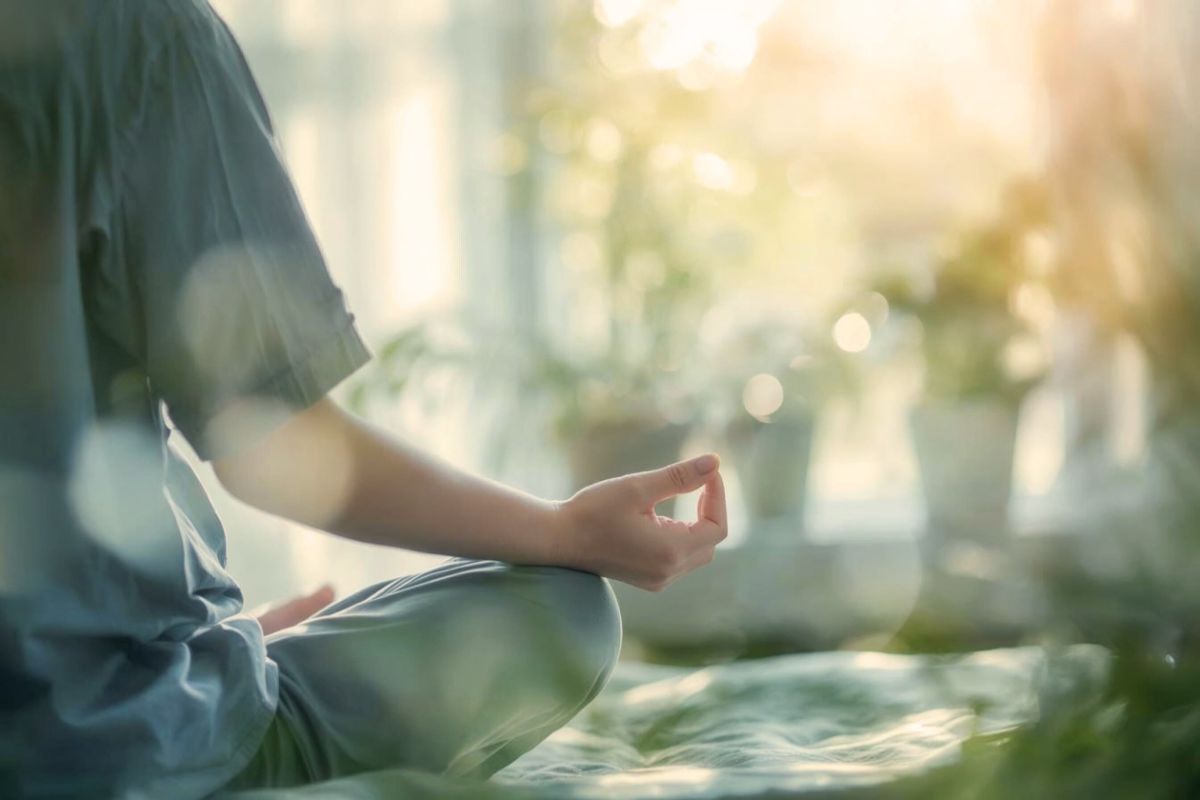
Starting your own mindfulness meditation practice does not require special conditions, advanced knowledge, or lengthy preparation—a little time, a comfortable spot, and openness to new experiences are enough. Simple mindfulness meditation, also known as “breath awareness,” is one of the easiest techniques for beginners and is the foundation for further practice. Begin by choosing a calm, quiet place where you can remain undisturbed for several minutes—this could be an armchair in your bedroom, a corner on the floor with a pillow, or even a comfortable chair at your desk. It’s important for your body to be upright but not tense: sit with a straight back, place your feet flat on the floor, and rest your hands freely on your knees or thighs. If you like, you may close your eyes to better focus on inner sensations, but you can also keep them slightly open, with a soft gaze in front of you. Be prepared for distractions—they are perfectly normal. The aim is not to eliminate thoughts or feelings but to learn to observe them without judgment or attachment. Remember this technique does not require any special accessories or skills—the most important thing is your presence and genuine willingness to try.
Sit comfortably and take a moment to notice how you feel—acknowledge bodily sensations, muscle tension, skin temperature, and current emotions without trying to change them. Then gently shift your attention to your breath. Simply feel the air entering through your nose, filling your lungs, and leaving your body with every exhale. Breathe naturally; don’t try to control the rhythm—let your breath be just as it is. When thoughts, memories, planning, or emotional reactions arise (and they certainly will), notice them gently, label them in your mind as “thought,” “planning,” or “feeling,” and—as an observer—let them go, gently redirecting your attention back to your breath. If you wish, you can count your breaths up to ten, starting over after each cycle. Don’t judge yourself if distractions are frequent—returning to the breath is the crucial part of practice, not a mistake. Continue the exercise for 5–10 minutes, and gradually extend your sessions over time. When you finish, open your eyes, stretch gently, or drink some water—notice the changes in how you feel and try to carry a bit of that mindfulness into the rest of your day. Even daily, brief practice of this form of meditation will gradually develop your concentration and accepting self-awareness without rush, pressure, or high expectations. It is a simple, natural way to improve your well-being and learn to be present in every moment of life—no need for complicated techniques or theoretical knowledge.
Daily mindfulness routine: How to incorporate mindfulness into your life
Implementing mindfulness practice into daily life is based on consistently exercising awareness not just during formal meditation, but also through consciously experiencing even the simplest activities. From the beginning of the day, you can add mindful elements—for example, instead of automatically reaching for your phone upon waking, take a minute to tune into your breath, stretch your body, or notice the sensations of your feet first touching the floor. Morning routines like brushing your teeth, taking a shower, or preparing breakfast can become short moments of mindfulness—just fully focus on the sensory experiences: the taste of toothpaste, the sound of water, the texture of the towel, the smell of coffee. It’s worth nurturing the habit of interrupting the daily rush and returning to the “here and now,” even for a moment—regularly pausing for brief reflection on your mood or surroundings. These types of micro-meditations woven into your routine are extremely effective, as they teach gentle noticing and accepting of personal experiences in the natural context of your day.
You can also develop mindfulness while doing routine tasks such as driving, walking, shopping, or talking to others. Instead of acting mechanically, try to focus on your breath, sensory impressions, as well as the thoughts and emotions that arise. What’s vital is treating yourself with kindness and patience, especially when you notice your “autopilot” taking over your reactions. One example is mindful eating: eating slowly, without distractions, intending to notice the taste, smell, and sensations of eating. Mindfulness is also useful during work—focusing on one task at a time allows for greater efficiency and lessens stress. Introduce breaks for mindful breathing or simple body scan exercises—a few times a day, if possible. In a world full of digital stimuli, practicing digital mindfulness (such as consciously using your phone, mindfully reading emails, or finding micro-breaks for self-awareness) helps regain balance and counteract overload. Adopting a daily mindfulness routine fosters a new approach to daily challenges—one that emphasizes curiosity, presence, and unconditional acceptance of your emotions and thoughts. Remember that every moment of mindfulness—whether it lasts only a few seconds or a few minutes—is a step toward peace, self-awareness, and a deeper connection with your life.
The most common beginner mistakes and how to avoid them
When starting a mindfulness practice, many beginners run into typical obstacles that can discourage further development. One of the most common mistakes is expecting immediate results, believing that practicing mindfulness will bring noticeable wellbeing or stress reduction after just a few tries. However, mindfulness is a process that requires patience and regularity—effects appear gradually and are often subtle. Many people get discouraged by the belief that the practice must be perfect or entirely free from distractions. In reality, every practice—even one full of distractions and restlessness—is valuable and a step toward deeper self-knowledge. Another mistake is focusing excessively on eliminating thoughts or feelings during meditation, leading to frustration and a sense of failure. The key is accepting whatever appears in your awareness—thoughts, emotions, and sensations—without judging, fighting, or trying to control them. It’s important to understand that distractions are part of the learning process, and returning to mindfulness is the essence of practice, not a failure.
Another common mistake is not having a clearly defined exercise routine or practicing too rarely, which makes it hard to see changes or establish new habits. It’s a good idea, especially at the beginning, to set realistic time frames, rather than trying to meditate for half an hour or perform complex techniques right away. Even short, 5–10 minute sessions done daily or several times a week allow you to build a solid foundation for practice. Refrain from comparing yourself to others or to an idealized image of someone meditating, since everyone develops at their own pace, and mindfulness is an individual path. Another error is ignoring the role of self-acceptance and kindness—perfectionism, harshness, or self-criticism can make the practice a source of pressure instead of support. It is much more effective to approach yourself gently, treating every session as an experiment and opportunity to observe. Sometimes the obstacle is the environment—a lack of suitable place to practice or a noisy setting may cause frustration. Find at least a small space where it’s quiet and comfortable for a few minutes, and accept that background sounds can become a part of meditation. Lastly, expecting “something special” to happen during a session—deep relaxation, insight, or a change of mind-state—is also a mistake. In mindfulness practice, it’s about mindfully experiencing reality as it is, rather than chasing spectacular experiences. To avoid these mistakes, keep reminding yourself that the goal is not perfection, but building the habit of returning to the present moment with curiosity, openness, and acceptance—even if that’s just a few calm breaths during the day, interrupted by recurring thoughts or feelings.
Free resources and apps to support your mindfulness practice
When starting mindfulness and mindfulness meditation, a variety of free resources and mobile apps can be extremely helpful. Digital technology provides access to quality tools that support exercise regularity, deepen theoretical knowledge, and motivate self-development. Many beginners appreciate the ability to use free guided meditations, podcasts, audio recordings, and video channels that explain step-by-step how to incorporate mindfulness into your routine. It’s worth starting with both Polish and international online courses offered by non-profit organizations or experienced mindfulness teachers, such as Mindfulness-Based Stress Reduction (MBSR) courses delivered for free by various universities and foundations. Themed meditation platforms like YouTube, Insight Timer, and SoundCloud are also popular, offering thousands of English and Polish recordings you can use at home. Reliable blogs and educational portals like Mindful.org, the Headspace Blog, and Polish pages such as Uważność.pl, provide valuable tips, inspiration, and scientific background for mindfulness practice. Besides theory, they frequently publish mindfulness challenge schedules, PDF exercise instructions, mindfulness journals for self-reflection, and practical checklists to build daily routines.
Those who prefer tech support can access a wide range of free mobile apps for Android and iOS, which are invaluable in maintaining a regular mindfulness practice. Among the most popular free tools is Insight Timer, which offers hundreds of thousands of free guided meditations in various languages, including Polish and English, with options to filter by theme or skill level. Particularly useful is the meditation timer and large support communities. Another frequently chosen app is Smiling Mind, developed with psychologists and mindfulness teachers, which provides themed courses and meditations for users of all ages. Polish users can try Uważność – Medytacja po Polsku—an app containing native speaker-guided recordings, a daily reminder feature, and simple instructions for beginners. Balance is also worth considering; this award-winning app offers all meditations for free for the first year after registration and is praised for its simplicity and functionality. Many apps, like MyLife Meditation (formerly Stop, Breathe & Think), offer mood tracking, progress monitoring, daily motivational quotes, and personalized recommendations based on wellbeing entries. For those wishing to combine mindfulness with movement, there are apps dedicated to body scan, yoga, or mindful walking, guiding you through sessions that connect mindfulness with body awareness. Online support groups on forums and social media are another advantage, where users share experiences, offer advice, and motivate each other to persistent practice. Finding the right app or resource depends on personal preference—some will prefer comprehensive, step-by-step platforms, while others will choose minimalist tools with a reminder or timer feature. The most important thing is to take advantage of what technology offers and find a form of support that enables systematic mindfulness development, greater knowledge, and deepened daily practice.
Summary
Starting a mindfulness practice does not require special skills or a lot of free time—even a few minutes a day can significantly improve your wellbeing, concentration, and stress resilience. With simple exercises and a regular routine, you can effectively take care of your mental wellbeing every day. The key to success is perseverance, patience, and conscious awareness in everyday life. Make use of free resources and apps to more easily introduce mindfulness meditation into your daily plan. Start today and see how mindfulness can change your life!