

Polycystic Ovary Syndrome (PCOS)
Polycystic ovary syndrome, more commonly known as PCOS (Polycystic Ovary Syndrome), is one of the most common hormonal disorders in women of childbearing age. It is estimated that it affects from 5% to even 20% of them, but many women remain undiagnosed for years, struggling with bothersome symptoms and not understanding their cause. PCOS is not just a gynecological problem – it is a complex endocrine and metabolic disorder that affects the entire body and well-being.
Table of contents
What exactly is polycystic ovary syndrome (PCOS)?
Despite the name, PCOS is much more than just the presence of cysts (follicles) on the ovaries. It is a syndrome, i.e. a set of interrelated symptoms that are caused by a disturbed hormonal balance. In order to fully understand the essence of PCOS, it is necessary to refer to the so-called Rotterdam Criteria, which are an international diagnostic standard. To make a diagnosis of PCOS, it is necessary to find at least two of the three symptoms of this disease. two of the following three characteristics:
- Infrequent or absent ovulation (oligoovulation or anovulation): This is manifested by irregular, infrequent menstruation (cycles longer than 35 days) or their complete disappearance. It is the leading cause of fertility problems in women with PCOS.
- Clinical and/or biochemical symptoms of androgen excess (hyperandrogenism) are important in the diagnosis of PCOS. Androgens are so-called “male” sex hormones (like testosterone), which are also found in small amounts in women. Their excess causes characteristic symptoms that the doctor may recommend for further diagnosis.
- Hirsutism: Excessive male pattern hair (e.g. on the face, chest, back).
- Acne: Persistent, often painful acne, especially in the jaw, chin and neck area, which does not respond to standard treatment.
- Androgenetic alopecia: Thinning hair on the head, especially at the top and in the receding hairline.
- Biochemically, this is confirmed by increased androgen levels in blood tests.
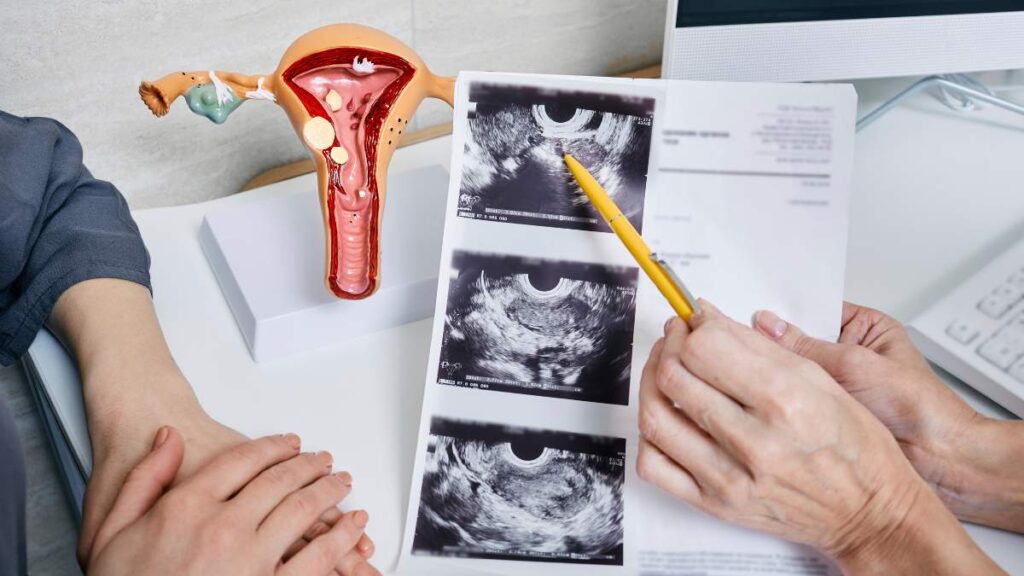
- Characteristic image of the ovaries in ultrasound (polycystic ovarian morphology): An ultrasound examination reveals the presence of at least 12-20 small follicles (2-9 mm in diameter) in one ovary or an enlarged ovarian volume (>10 ml). It is important to understand that these are not classic cysts, but immature Graafian follicles that have stopped developing due to hormonal disorders.
Importantly, the mere presence of polycystic ovaries in ultrasound, without accompanying ovulation disorders or hyperandrogenism, is not sufficient to diagnose PCOS.
Main causes of PCOS: why do I get sick?
The etiology of PCOS is complex and multifactorial. There is no single, specific cause, and a combination of genetic predispositions and environmental factors that affect the symptoms of this disease are responsible for the development of the syndrome. However, four mutually reinforcing mechanisms play a key role.
The role of insulin resistance
This is the absolute central piece of the puzzle in PCOS, occurring in about 70-80% of women with this syndrome (including those with normal body weight). Insulin resistance is a condition in which the body’s cells (muscle, fat, liver) become less sensitive to the action of insulin – the hormone responsible for transporting glucose from the blood to the inside of cells.
In response to this resistance, the pancreas begins to produce more and more insulin (hyperinsulinemia) to break the barrier and maintain normal blood sugar levels. Unfortunately, this excess insulin has serious consequences:
- It stimulates the ovaries to overproduce androgens, which directly leads to hirsutism, acne and ovulation problems.
- It inhibits the production of SHBG protein in the liver, which binds free testosterone. Less SHBG means more active, circulating testosterone, which exacerbates symptoms.
- It contributes to weight gain, which is a common symptom of polycystic ovary syndrome. especially in the abdominal area (abdominal obesity), which in turn further exacerbates insulin resistance in women with polycystic ovary syndrome. A vicious circle is created.
Genetic Factors and Inheritance
PCOS has a strong genetic basis. If your mother, sister or aunt had PCOS, had irregular cycles or type 2 diabetes, the risk of the syndrome increases significantly. Studies identify a number of candidate genes that may be involved in hormone regulation, insulin action, and follicle development.
Chronic low-grade inflammation
Women with PCOS often have elevated markers of inflammation in the body (e.g., C-reactive protein, CRP). This chronic, smoldering inflammation can be both a cause and a result of insulin resistance. It is believed that inflammatory cells can stimulate the ovaries to produce androgens, further fueling the spiral of symptoms.
Excess androgens
Although it is a symptom, the excess of androgens itself maintains the cycle of disorders. High levels of these hormones directly disrupt the delicate balance between pituitary hormones (LH and FSH), which prevents the proper growth of the dominant follicle and the ability to lead to ovulation.
The most common symptoms of PCOS: how to recognize the problem?
The clinical picture of PCOS is very diverse. Not every woman will have all the symptoms, and their severity may vary. The most commonly reported problems include menstrual cycle disorders and symptoms of insulin resistance.
- Irregular menstruation or lack of menstruation is a common symptom of PCOS that should be reported to your gynecologist. This is the most characteristic symptom. Cycles can last 40, 60, 90 days or even longer. Sometimes bleeding occurs only a few times a year.
- Hirsutism: Dark, thick hair in typically masculine places: above the upper lip (“moustache”), on the chin, cheeks, chest (around the nipples), on the abdomen (in the line from the navel down), on the back and on the inside of the thighs.
- Acne and skin problems are symptoms of this disease that often occur in patients with PCOS. Persistent acne that is often resistant to dermatological treatment. It is located mainly in the “hormonal zone” (jawline, chin, neck), which may be associated with menstrual cycle disorders. It is often accompanied by oily skin (seborrhea).
- Androgenetic alopecia: Loss of hair from the head, similar to male pattern baldness – hair becomes thinner on the top of the head and in the frontal angles (receding hairline).
- Weight problems: About 50-80% of women with PCOS are overweight or obese. The accumulation of fat tissue around the waist (abdominal obesity, “tire”) is characteristic. Even with diets, losing weight is very difficult.
- Fertility problems: Difficulties with getting pregnant are a direct result of lack of ovulation, which is one of the symptoms of polycystic ovary syndrome. PCOS is one of the leading causes of ovulatory infertility.
- Other symptoms: Many women also report chronic fatigue, mood swings, depressive states, hunger pangs (especially sweets) and keratosis nigricans – dark, velvety discoloration of the skin, most often on the neck, armpits and groin, which is a skin symptom of insulin resistance.
PCOS diagnostics: what tests should be performed?
If you suspect PCOS, a visit to a gynecologist-endocrinologist or endocrinologist is crucial. The diagnostic process is multi-stage and aims not only to confirm the diagnosis, but also to exclude other diseases that cause similar symptoms (e.g. thyroid disease, hyperprolactinemia or congenital adrenal hyperplasia).
- Detailed medical history and physical examination: Your doctor will ask about your cycle regularity, weight history, skin problems, hair growth, and a family history of similar problems. He will also assess your hair type and possible skin changes.
- Blood tests – hormonal and metabolic package: The tests should be performed on specific days of the cycle (usually between the 2nd and 5th day, if the cycle occurs). The panel of tests usually includes the diagnosis and treatment of symptoms of polycystic ovary syndrome.
- LH and FSH: In PCOS, an inverted ratio of LH to FSH (above 2:1 or 3:1) is characteristic, although it is not a necessary condition for diagnosis.
- Total and free testosterone: A key indicator of androgen excess.
- Androstenedione and DHEAS: Other androgens whose levels may be elevated.
- Prolactin (PRL): To rule out hyperprolactinemia.
- TSH, ft3, ft4: To rule out hypothyroidism.
- Glucose-insulin curve (OGTT): This is the gold standard in the diagnosis of insulin resistance. It involves measuring glucose and insulin on an empty stomach, and then 1 and 2 hours after drinking a 75g glucose solution.
- Lipidogram: (total cholesterol, HDL, LDL, triglycerides), because lipid disorders are common in PCOS.
- Vaginal ultrasound of the ovaries: It allows you to assess the morphology of the ovaries – their size and the number of follicles, which is one of the diagnostic criteria.
Polycystic Ovary Syndrome Treatment: An Individual Approach
Treatment of PCOS is a long-term process and requires a holistic approach. The therapy is always “tailor-made” and depends on the dominant symptoms of the syndrome, the patient’s procreation plans and test results. The goal is not only to alleviate the symptoms, but also to prevent long-term complications.
The foundation of therapy: lifestyle change
This is absolutely the most important and first step in the diagnosis and treatment of PCOS. Without it, pharmacotherapy often turns out to be ineffective.
Diet in PCOS
A low glycemic index diet is a key tool to fight insulin resistance and support the treatment of PCOS. The main rules are:
- Low glycemic index and load: You should choose products that do not cause sudden glucose and insulin surges. This means giving up sugar, sweets, white bread, white rice and pasta, sweet drinks, which is important for women with polycystic ovary syndrome. Instead, choose wholegrain cereal products, brown rice, groats, vegetables.
- Anti-inflammatory effects: The diet should be rich in anti-inflammatory products: oily sea fish (a source of omega-3), olive oil, avocado, nuts, seeds, as well as vegetables and fruits rich in antioxidants (especially berries).
- The right amount of protein and healthy fats: Each meal should be balanced and contain a source of protein (lean meat, fish, eggs, legumes) and healthy fat (avocado, olive oil, nuts), which slows down the absorption of carbohydrates and gives a longer feeling of satiety.
- Regularity of meals: Eating 3-4 balanced meals throughout the day helps stabilize blood sugar levels.
Physical activity
Regular exercise sensitizes tissues to insulin, helps reduce body weight and improves well-being. It is recommended to combine:
- Strength (resistance) training: Building muscle mass increases glucose “storage”, which is crucial in the fight against insulin resistance.
- Moderate Intensity Cardio Training: Brisk walking, cycling, swimming.
- Stress Management: Chronic stress raises cortisol levels, which also exacerbate insulin resistance in women with polycystic ovary syndrome. Relaxation techniques, yoga or meditation are very helpful for patients with symptoms of the syndrome.
Pharmacological treatment
Pharmacotherapy is implemented when lifestyle changes are insufficient or when symptoms are very severe.
- Metformin: First-line drug in the treatment of insulin resistance. It sensitizes cells to insulin, helps with weight reduction, can restore regular cycles and lower androgen levels.
- Combined contraceptive pills: Used in women who are not planning pregnancy. They regulate cycles, inhibit androgen production in the ovaries, and increase SHBG concentrations, which alleviates symptoms of the syndrome such as acne and hirsutism.
- Antiandrogen drugs (e.g. spironolactone): They block the action of androgens at the receptor level. Effective in the treatment of severe hirsutism and acne.
- Ovulation-stimulating drugs (e.g. treatments) are often used in patients with PCOS. clomiphene, letrozole): Used in women trying to conceive to induce ovulation.
Supplementation in PCOS – What Can Help?
Targeted supplementation can be a powerful support in the treatment of PCOS. However, it should always be consulted with a doctor.
- Inositol (myo-inositol and D-chiro-inositol): This is the most studied supplement in PCOS. It acts as an insulin signal transmitter in cells, significantly improving insulin sensitivity, lowering androgen levels, and restoring ovulation. The best results are achieved by combining myo- and D-chiro-inositol in a 40:1 ratio.
- Vitamin D3: Its deficiencies are common in women with PCOS and correlate with insulin resistance. Leveling it up is crucial.
- Omega-3 fatty acids (EPA and DHA): They have a strong anti-inflammatory effect and can help reduce triglyceride levels.
- N-Acetylcysteine (NAC): A powerful antioxidant that improves insulin sensitivity and can support ovulation.
- Berberine: It is often recommended by gynecologists as a supplement to support the treatment of PCOS. A natural compound with effects similar to metformin.
PCOS and Pregnancy and Long-Term Health Effects
With proper treatment, most women with PCOS can become pregnant. The key is to restore ovulation through lifestyle changes and, if necessary, pharmacological treatment. However, it should be remembered that pregnancy in a woman with PCOS is a high-risk pregnancy (higher risk of gestational diabetes, hypertension, preeclampsia).
Untreated PCOS has serious long-term health consequences, such as:
- Type 2 diabetes (the risk is several times higher)
- Cardiovascular diseases (hypertension, atherosclerosis) may be associated with the symptoms of polycystic ovary syndrome.
- Non-alcoholic steatohepatitis (NAFLD)
- Endometrial (endometrium) cancer due to lack of regular bleeding
- Anxiety disorders and depression
Summary
Polycystic ovary syndrome is a complex and often frustrating condition, but it’s not a death sentence. Understanding its causes, primarily the role of insulin resistance, is the key to effective therapy. A holistic approach, based on a fundamental change in diet and lifestyle, supported by wisely selected pharmacotherapy and supplementation, allows not only to alleviate bothersome symptoms, but also to regain control over one’s health, improve fertility and prevent serious diseases in the future. Remember that you are not alone, and the first step to feeling better begins with awareness and a visit to a good specialist.


