

Insomnia and nighttime anxiety negatively affect mental health, leading to sleep problems and an overall decline in well-being. Discover proven relaxation techniques and strategies that help break the vicious cycle of stress and improve the restorative quality of sleep every night.
Table of Contents
- Stress and Its Impact on Insomnia
- Manifestations of Nighttime Anxiety
- Relaxation Practices for Better Sleep
- The Link Between Mental Health and Sleep Quality
- The Value of Restorative Sleep for Daily Functioning
- Strategies to Improve Sleep Rhythm
Stress and Its Impact on Insomnia
Stress is one of the most common and at the same time most underrated factors leading to insomnia. Our body is programmed to activate the so-called “fight or flight” response in situations of threat – during which levels of cortisol and adrenaline rise, heart rate increases, breathing becomes shallower, and muscles tense to prepare the body for action. Today, however, the threat is no longer wild animals but tight deadlines at work, financial problems, relationship conflicts, or uncertainty about the future. Even though these problems are psychological and social, our brain reacts to them as if there were a real physical danger, keeping the body in a state of high alert, even in the evening and at night. When we go to bed, our body theoretically needs to switch into recovery mode: body temperature drops, heart rate slows, and brainwaves transition from a wakeful rhythm to slower, sleep-typical ones. However, if we are stressed, this switch gets stuck – the mind keeps analyzing past events, anticipating worst-case scenarios, replaying uncomfortable dialogues, or planning tomorrow’s to-do list. This leads to so-called rumination, or persistently “chewing” over thoughts, and the sense of psychological tension translates into bodily sensations: heart palpitations, chest tightness, dry throat, or stomach pressure. In this situation, falling asleep naturally takes longer – instead of gradually winding down, we stay in high gear, which leads to long tossing and turning, frequent awakenings, and the impression that sleep is shallow and unsatisfying. Moreover, even one sleepless night can increase stress: the next day we feel irritable, less emotionally resilient, and worse at handling everyday challenges, which increases the overall stress level. This creates a vicious cycle – stress causes insomnia, and insomnia intensifies stress. In the long term, chronic tension can lead to anxiety and depressive disorders, which further deteriorate sleep quality. It’s also important to note that stress is not only “strong” but also “silent” – not always associated with dramatic life events. Often, we operate for years in a state of constant mobilization: working overtime, always being online, lacking time to rest, and even feeling guilty during rare moments of relaxation. Such chronic stress raises the baseline cortisol level, making the body “unaware” when it’s time to truly relax. Evening scrolling on the phone, reading work emails, or planning tomorrow’s tasks reinforce the idea that night is not for recovery but for further processing stimuli. To this, we add the cultural belief that “one must be productive” – many people find it hard to mentally allow themselves to rest, causing them to think about obligations, judge their efficiency, compare themselves to others, and generate constant inner criticism even in bed. All these factors make stress an invisible saboteur of healthy sleep, operating both biologically and psychologically.
Anticipatory stress is particularly destructive for sleep – anxiety about what might happen tomorrow or in the undefined future. Individuals prone to this type of tension often run a “mental marathon” at night, mentally scrolling through hundreds of possible scenarios: from fear of a work presentation, to worrying about finances, to concern for their own or loved ones’ health. The brain, instead of treating the day as finished, sees night as an ideal time to intensively solve problems – finally, it’s quiet and no one interrupts. Unfortunately, analysis and worrying are not the same as constructive problem solving; it’s more like endlessly amplifying the spiral of anxiety, which further boosts arousal in the body. In response, the nervous system maintains a high level of sympathetic activation, which not only hinders falling asleep but also affects the structure of sleep: more micro-awakenings, shorter duration of deep sleep, and reduced REM phase, when we process emotions most intensely. The individual wakes up feeling “unrested” in the morning, even though enough hours have been spent in bed. Stress also affects sleep indirectly, through habits intended as forms of relief, which actually worsen the issue. In response to tension, many people reach for alcohol “to relax” or sweet snacks. Alcohol may indeed initially aid falling asleep but significantly reduces sleep quality in the second half of the night, increasing awakenings and fragmenting deep sleep. Heavy, fatty, or very sweet meals cause digestive discomfort, heartburn, palpitations, or glucose spikes, which also disrupt continuous, restorative sleep. Excessive caffeine intake throughout the day, often used as a way to cope with fatigue, also prolongs the time it takes to fall asleep by several hours at higher doses. Stress leads to most of the day being spent in a rush and task mode, giving the nervous system no time to gradually “wind down.” If there are no “microbreaks” for breathing, movement, or short relaxation throughout the day, evening unwinding becomes an impossible task – the body cannot suddenly switch from alarm mode to calm. Then, the bed starts to be associated not with recovery but with frustration and tension: anxiety about another sleepless night, counting hours until the alarm, constantly watching the clock. Over time, the mere act of going to bed can trigger a stress response – the heart beats faster, anxiety appears, and the thought “I won’t fall asleep again” becomes a self-fulfilling prophecy. This is called conditioned insomnia, where stress no longer relates to specific life events, but revolves around sleep itself. Understanding how stress affects the brain, body, and daily habits is crucial to breaking this vicious cycle – only then can you effectively implement relaxation techniques, lifestyle changes, and natural ways to reduce stress to support your body’s natural sleep mechanisms.
Manifestations of Nighttime Anxiety
Nighttime anxiety can take many forms – from seemingly “harmless” procrastination before going to bed, to severe panic attacks that occur just before falling asleep. One of the most typical signs is escalating tension in the evening: the closer bedtime gets, the more anxiety appears (“I won’t fall asleep again,” “I’ll wake up every hour again,” “I won’t be able to cope at work tomorrow”). This so-called anticipatory anxiety triggers an avalanche of catastrophic thoughts that fuel stress, making the body shift into readiness instead of relaxation. People struggling with this anxiety often experience an increased heart rate, shallow breathing, the feeling of a “lump in the throat,” or muscle tension, particularly in the neck and jaw. This, in turn, can lead to avoiding going to bed: many people suddenly “discover” numerous evening chores, grab their phone, watch TV shows or work, just to delay turning off the lights. Another characteristic manifestation of nighttime anxiety is excessive monitoring of the body and clock – constantly checking the time, counting the remaining hours of sleep, analyzing every palpitation or change in position. Although these behaviors are meant to give a sense of control, in practice, they deepen the tension by reinforcing the belief that sleep is “a problem to solve.” It is worth paying attention to the inner language a person uses before sleep: it is full of compulsion (“I must fall asleep now”), self-criticism (“I failed again, I can’t sleep normally”), and catastrophizing (“if I don’t sleep tonight, everything will fall apart tomorrow”). On a behavioral level, nighttime anxiety is also expressed through various control rituals – repeatedly checking if the door is locked, the gas turned off, the alarm set, or an obsessive need for “perfect conditions” for sleep (absolute silence, a specific temperature, a certain position), without which falling asleep seems impossible. For some people, nighttime anxiety takes the form of intense nightmares or vivid, terrifying dreams that leave them waking up with a racing heart and a sense of threat, unable to fall back asleep for a long time. Although nightmares can be symptoms of other issues (such as trauma), they often maintain the vicious circle of anxiety: the more someone is afraid of the night, the more the brain “produces” intense dreams that reinforce that anxiety.
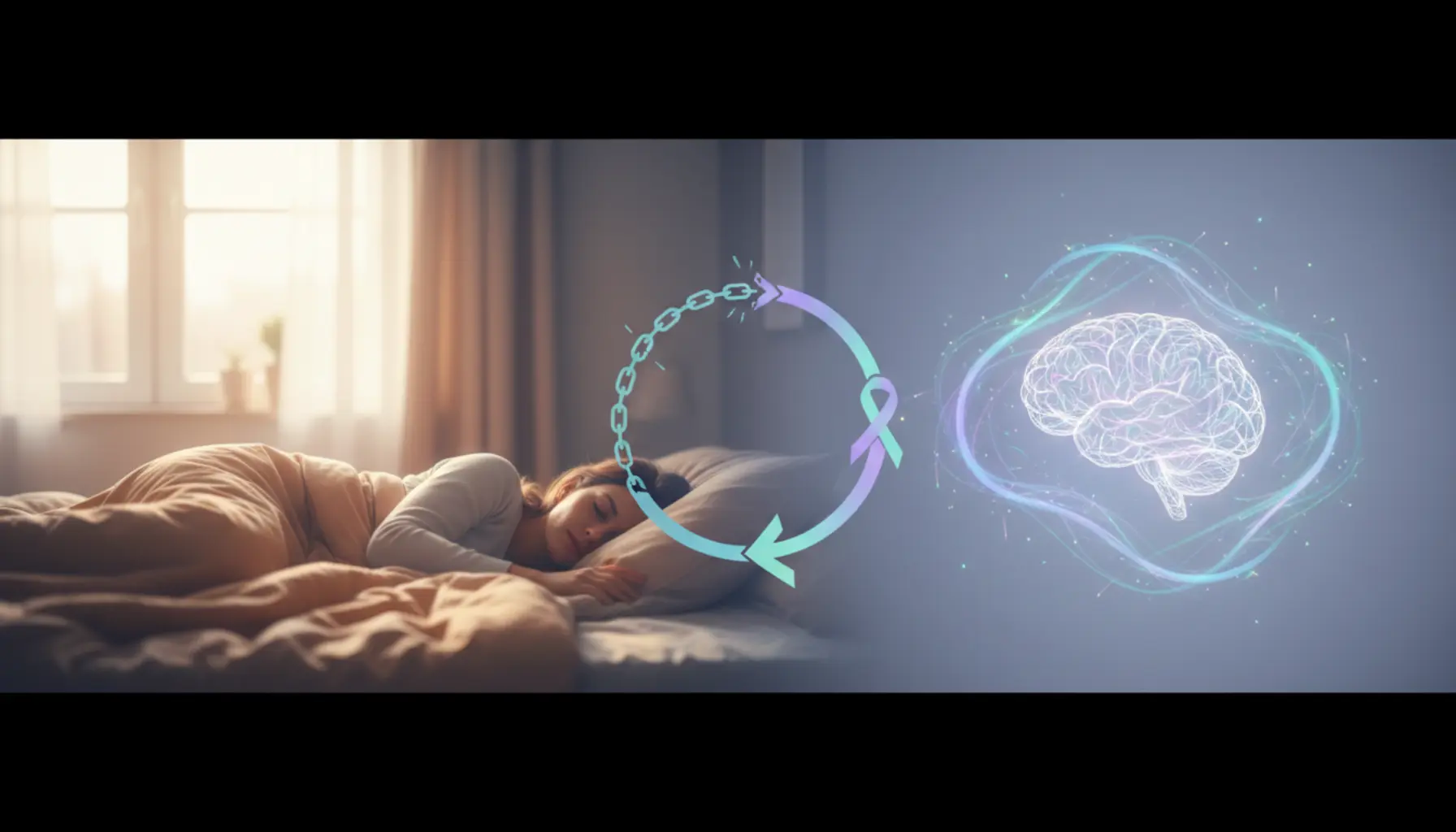
Another important sign of anxiety related to the night is concentration disturbances and excessive alertness before sleep. Instead of letting thoughts drift, the person circles back to the same topics: analyzing the day, dissecting conversations, dwelling on mistakes, or creating mental scenarios of difficult situations that may occur tomorrow or further into the future. This “thought noise” is particularly troublesome when we operate in a constant rush during the day – only at night do unresolved emotions and matters “catch up to us” with doubled strength. Nighttime anxiety may also manifest through somatic complaints that intensify in the evening: stomachaches, nausea, chest tightness, headaches, or the feeling of “shaking inside.” Some people interpret these symptoms as signs of serious illness, which further fuels anxiety and blocks relaxation. There is also the phenomenon called “night watch” – the person wakes up in the middle of the night (often at a similar hour) with an intense sense of tension, alertness, or worry, then cannot fall back asleep, immediately going into analysis and worrying mode. Prolonged night anxiety negatively affects functioning during the day: irritability rises, stress tolerance drops, relationship problems develop (outbursts of anger, withdrawal, social isolation), and there is a tendency to seek “quick fixes” for calming down before sleep, such as alcohol, sleeping pills, or overeating. It is important to note that not every symptom must be severe at once – nighttime anxiety often starts with mild restlessness and occasional sleep difficulties, gradually turning into the dominant thought in the evening. Recognizing and naming these signs is crucial: this is not “laziness” or “lack of willpower,” but a real anxiety state that affects the body, emotions, thoughts, and behavior. Understanding how anxiety manifests for you – whether more through physical symptoms, thought overload, or avoiding the bed – is the first step to choosing effective coping strategies and gradually regaining a sense of safety after dark.
Relaxation Practices for Better Sleep
Relaxation practices are among the most effective and safest ways to calm the nervous system before sleep and break the vicious cycle of tension and insomnia. Unlike “self-soothing” with phones, alcohol, or TV shows, relaxation techniques act directly on the physiology of stress – lowering cortisol levels, slowing heart rate, deepening breathing, and activating the parasympathetic nervous system (the “rest-and-digest” system). Importantly, you don’t have to dedicate hours to see results – consistency, not perfection, is key. Just 10–15 minutes of practice in the evening can form a clear boundary between “day mode” and “sleep mode,” sending a clear signal to the body: “now it’s time for regeneration.” Many people suffering from nighttime anxiety start with simple breathing exercises because they are discreet, can be done in bed, and require no equipment. A popular technique is the 4–7–8 breath: inhale through the nose for 4 seconds, hold for 7 seconds, then exhale slowly through the mouth for 8 seconds. After just a few cycles, many notice reduced heart palpitations and a slight “softening” of body tension. Another approach is diaphragmatic (abdominal) breathing, which focuses on expanding the belly during inhalation instead of raising the chest – this activates the vagus nerve and promotes internal calm. Remember, initial attempts may involve impatience or boredom – this is a normal reaction of an overloaded, “overstimulated” mind. Regular practice gradually increases tolerance for internal quiet and makes silence less threatening and more restful.
Effective sleep-supportive relaxation practices also include progressive muscle relaxation – consciously tensing and relaxing consecutive muscle groups. A simple variation of Jacobson’s progressive relaxation involves, while lying in bed, tensing your feet for about 5–7 seconds, then completely relaxing them for 10–15 seconds, moving on to calves, thighs, glutes, abdomen, hands, arms, neck, and facial muscles. People struggling with chronic stress are often surprised by how tense their bodies were, without noticing before. This technique helps recognize and “let go” of jaw clenching, hunched shoulders, or a tight stomach, which transmit a “danger” signal and make it harder to fall asleep. Another effective way to relax is visualization – consciously imagining calm, safe places or situations. You can “replay” a walk by the sea, lying in a hammock in the forest, or a holiday memory in your mind, focusing on details: sounds, smells, and skin sensations. For the brain, imagination is often nearly as powerful as reality, so by engaging the senses enough, the body starts to respond by calming down. Many people combine visualization with breathing – for example, releasing tension to ocean waves or the wind with each slow exhale. Mindfulness practices and short guided meditations, available as audio recordings, are also increasingly popular. Their goal isn’t to “turn off thoughts” but to gently change the relationship with them: instead of entering the spiral of worry (“I won’t sleep again, tomorrow will be a disaster”), you learn to see them as passing clouds and return your attention to the breath or body sensations. It may seem difficult at first, but even 5 minutes of such practice before sleep can reduce the intensity of internal dialogue. Additionally, quiet, calm sounds – ocean waves, forest sounds, white noise – can help “mask” sudden outside noises and create a more predictable acoustic background, crucial with nighttime anxiety. It’s important to treat all these techniques not as another to-do but as a self-care ritual. Choose 1–2 methods that speak to you most and include them in a consistent evening routine – always at a similar time, in the same place, with a similar sequence (e.g., a brief bath, 10 minutes of breathing, 5 minutes of muscle relaxation). The brain likes predictability, so a repetitive ritual eventually becomes a strong safety cue, weakening the anxiety response and facilitating a gentler transition to sleep.
The Link Between Mental Health and Sleep Quality
Sleep quality and mental health are closely interconnected in both directions – how we sleep affects our mood, anxiety levels, and ability to handle emotions, while our psychological state determines whether our sleep will be deep and restorative or shallow and fragmented. Studies show that people experiencing chronic stress, anxiety, or depression are much more likely to suffer from insomnia, night awakenings, difficulty falling back asleep, and nightmares. Biologically, the nervous and hormonal systems play a key role: chronic mental tension maintains elevated cortisol (the stress hormone) and adrenaline, causing the body to stay in an alert state instead of moving into the natural mode of “rest and repair.” This sustained ‘fight or flight’ activation disrupts sleep architecture – there is less deep sleep and less REM sleep, which are essential for memory consolidation, emotional processing, and general psychological balance. When we sleep too little or restlessly, the brain has limited capacity to “organize” impressions from the day, while areas responsible for emotional regulation – especially the prefrontal cortex and the amygdala – begin to function less efficiently. In practice, this shows as greater irritability, catastrophic thinking, overreacting to minor stimuli, and difficulty “shutting off” a hyperactive thought stream. Even a single sleepless night can worsen mood, but weeks or months of poor sleep increase the risk of developing full-blown anxiety and depressive disorders, and existing mental health problems become more resistant to treatment.
The relationship between sleep and mental health forms a vicious cycle: anxiety, worry, emotional tension, and depression make falling asleep harder and cause more awakenings, and growing fatigue, “brain fog,” and the sense of lost control over your own sleep reinforce anxiety and helplessness. A common scenario is the person fearing the very act of going to bed – worrying that they won’t fall asleep, will toss and turn, and will spend the next day irritated and tense; this anticipatory anxiety becomes a self-fulfilling prophecy, gradually turning into an ingrained pattern of thinking and reacting. Many people with mood or anxiety disorders also show an irregular circadian rhythm: late bedtimes, “rescue naps” during the day, chaotic sleep hours on weekends – this further disrupts the body clock, intensifying mood swings, fatigue, and concentration problems. On the other hand, implementing consistent sleep hygiene, relaxation techniques, and conscious work with thoughts (e.g., cognitive-behavioral elements) can genuinely improve both sleep and mental state. Regular, peaceful nights promote greater emotional stability, better frustration tolerance, more creativity, better decision-making, and reduced anxiety symptoms. A brain that gets enough rest becomes “less reactive” – stimuli that previously provoked a flood of negative emotions are now perceived more neutrally; strategies for coping with daytime stress are easier to use, breaking the tension spiral fueling insomnia. Sleep should be viewed as a foundation for mental health prevention: just as a balanced diet or physical activity, regular, deep sleep acts as a natural “stabilizer” for mood and the nervous system. Any long-term deterioration in sleep quality should not be seen as a minor inconvenience but as a vital alarm signal that your psyche needs support and more attentive care.
The Value of Restorative Sleep for Daily Functioning
Restorative sleep is not just “rest,” but a complex biological process during which the brain and body go through a series of precisely programmed stages. In deep sleep phases, there is intense cell regeneration, repair of tiny muscle and tissue damage, blood vessel renewal, and regulation of hormones responsible for appetite, mood, and stress response. Growth hormone production peaks then, promoting cellular rejuvenation and slowing aging processes. In practice, people who sleep too little or too lightly feel the effects of physical exhaustion faster: decreased immunity, slower wound healing, higher risk of infections, muscle pain, or tension headaches. Lack of sleep also disrupts the cardiovascular system – blood pressure rises, inflammation increases, and heart disease risk grows. From the standpoint of daily functioning, this means less physical performance, more rapid fatigue, and a higher injury risk for everyday activity. Restorative sleep is also key to maintaining stable body weight. When we sleep too little, ghrelin (the hunger hormone) increases and leptin (the satiety hormone) decreases, triggering cravings – especially for sweet and fatty foods. That’s why after a poor night’s sleep, we not only feel “off,” but also reach more often for quick, high-calorie snacks, increasing the risk of overweight and type 2 diabetes in the long run. In contrast, a good night’s sleep stabilizes blood sugar, reduces snacking, and makes it easier to maintain healthy eating habits. Sleep is also one of the cheapest and most effective “miracle cures” for chronic fatigue and tension – no amount of coffee can compensate for several hours of deep, uninterrupted rest, during which muscles relax and the nervous system switches from mobilization to recovery mode. The result: the next day, we have more energy, willingness to move, and greater motivation for self-care. Restorative sleep also affects the immune system: immune memory strengthens during sleep, the body “learns” to recognize pathogens more efficiently, and antibody production becomes more effective. Chronically sleep-deprived people catch colds more often, tolerate even mild infections less well, and need more time to regain strength, which further deepens the sense of exhaustion and increases health-related anxiety.
Equally important as the physical is the value of restorative sleep for mental health, focus, and everyday emotional regulation. During sleep, the brain organizes information, “transfers” memories from short- to long-term storage, and filters out the less important. Without the right number of sleep cycles, especially NREM and REM phases, our capacity to learn, remember, and creatively solve problems declines. A sleep-deprived person struggles to maintain focus, makes more errors, and reacts more slowly – which can be dangerous not only at work but also when driving or caring for children. Emotionally, restorative sleep acts as a “natural regulator”: in REM phase, the brain processes daily events, lessens the emotional charge of memories, and helps integrate them in a less threatening way. Without this process, we’re more likely to overreact, be tearful, have anger outbursts, or become more irritable. Tiny daily frustrations become overwhelming, and difficulties that would normally be manageable seem insurmountable. For those struggling with anxiety and insomnia, lack of restorative sleep is especially acute: the nervous system does not get a chance to “calm down,” while cortisol levels stay high and the brain remains alert. A vicious cycle appears: anxiety impairs falling asleep, while lack of sleep increases anxiety and the propensity for negative thoughts. Chronic sleep deprivation increases the risk of depression, anxiety disorders, and general burnout. Restorative sleep plays a huge role in social interactions and job performance. When rested, we express patience, empathy, and understanding more easily, and in conflict situations, we are likelier to respond calmly instead of impulsively. Rested people are more productive at work, collaborate better, learn new tasks faster, and make fewer costly mistakes. Experiencing restorative sleep regularly increases the sense of agency and psychological security: waking up convinced you have the resources to tackle daily challenges makes it easier to plan, make decisions, and set boundaries. All this means sleep is not “wasted time,” but the foundation of daily psychological resilience, ability to focus, and overall quality of life – especially for those battling insomnia and nighttime anxiety, for whom every restorative morning is a real step toward balance.
Strategies to Improve Sleep Rhythm
Improving your sleep rhythm starts with understanding that the body operates according to an internal biological clock – the circadian rhythm. This natural mechanism is primarily regulated by light, activity, body temperature, and habits related to eating and rest. Therefore, one of the most important steps is to introduce regularity: go to bed and get up at similar times each day, weekends included. Irregular sleep hours confuse the body, which then doesn’t know when to regenerate, leading to insomnia and shallow sleep. Set a consistent, realistic bedtime, tailored to your daily schedule, and stick with it for at least a few weeks before assessing results. Pay attention to your exposure to light – in the morning, try to get daylight as soon as possible by opening curtains or going for a short walk. Light suppresses melatonin production and sends a “time for activity” signal to the brain to shift the body clock in the right direction. In the evening, however, limit bright, blue light from screens – smartphones, computers, TVs – for at least an hour before sleep, using night mode or blue-light-filtering glasses if stopping devices completely isn’t realistic. Regular meal times also influence sleep rhythm: heavy, greasy meals late evening burden the digestive system and hinder falling asleep, so dinner should be at least 2–3 hours before bedtime, featuring light, easy-to-digest foods. Coffee, strong tea, energy drinks, or nicotine are stimulating long after consumption, so insomniacs should limit caffeine to early afternoon or abstain entirely. Alcohol is equally deceptive – it may bring a sense of quicker sleep onset but disrupts sleep structure, causing awakenings and shallow recovery, worsening sleep and nighttime anxiety in the long term. Be mindful of physical activity: regular exercise during the day, ideally in the morning or afternoon, helps “tire out” the body in a healthy way, making sleep easier. However, intense evening workouts can over-stimulate the nervous system and interfere with settling down, so gentle movement – a walk, stretching, relaxing yoga – is better in the evening. The key is consistency: even moderate but daily activity influences sleep rhythm more profoundly than sporadic, vigorous workouts.
A crucial part of improving sleep rhythm is establishing a predictable, soothing evening ritual that acts as a bridge between daytime activity and rest. The brain needs a sign that the “action mode” is ending – a repetitive sequence of simple activities (such as shower, herbal tea, 10 minutes of stretching, reading a calm book) acts as a safety anchor and gradually teaches the body that bedtime is near. This ritual should be free from strong sensory or emotional stimuli: avoid intense discussions, work, crime shows, or checking work emails, as these stimulate the cortex and maintain alertness. The environment is equally important – the bedroom should be mainly associated with sleep and relaxation, not work, eating, or TV. If possible, do not keep a desk, TV, or document pile in it; minimize visual distractions and opt for simplicity, order, and subdued colors. The room temperature should be somewhat cooler than during the day (about 17–20°C), and the bedroom should be dark – blackout curtains or a sleep mask help reduce street light, which may interrupt sleep. If noise bothers you, consider earplugs or background noise (e.g., white noise or soft nature sounds) to mask sudden sounds. Regarding sleep rhythm, it’s important how you respond to sleepless nights. Lying in bed tense, tossing and turning, and obsessively checking the time trains the brain to associate the bed with stress, not rest. If you can’t fall asleep after 20–30 minutes, get up, go into another dimly lit room, and do something relaxing (reading, calm music, breathing exercises), returning to bed only when you feel drowsy. This practice gradually shifts negative associations, restoring the bed’s function as a place to sleep. It’s also important to tune your daily rhythm to your own chronotype – not everyone is a “lark” or “owl,” but everyone has their natural highs. When possible, plan your most demanding tasks for the hours when you naturally feel energized, and leave the evening for gentler activities. Extended daytime naps can disrupt evening sleepiness – if you must nap, limit it to 15–20 minutes, no later than early afternoon. Remember, sleep rhythms don’t normalize overnight – it takes a few weeks of consistency for the body to trust the new routine and respond with deeper, more restorative sleep.
Summary
Insomnia and stress are mutually reinforcing sources of health problems, which can negatively affect our daily lives. Identifying the impact of stress and anxiety on our sleep is key to improving our mental well-being. The first step is to use relaxation practices, such as meditation or deep breathing, which can significantly improve sleep quality. Understanding the relationship between mental health and sleep allows for better adjustment of daily routines, which subsequently leads to more restorative sleep and an overall improvement in circadian rhythm. It’s worth investing time to learn sleep improvement strategies and incorporate them into your daily routine.